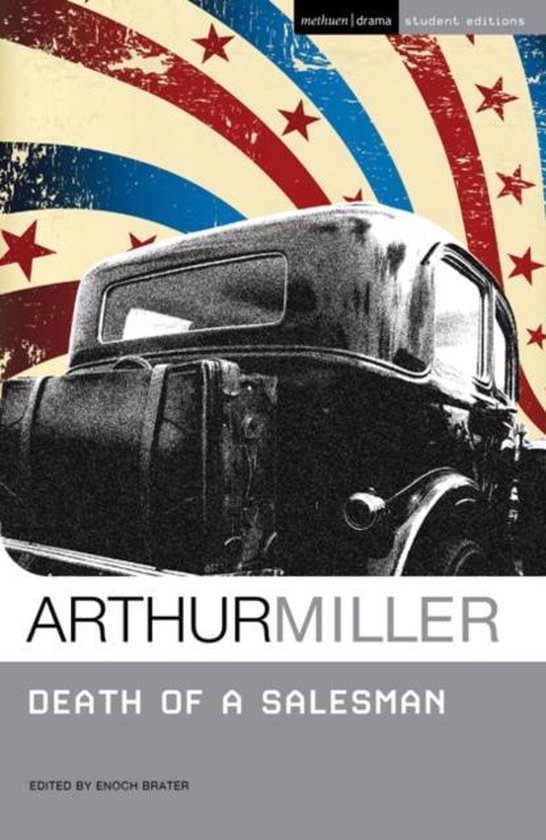
Death of a Salesman
Context
The American Dream
Since the Declaration of Independence, the American Dream evolved:
1. The right to life, liberty and a the pursuit of happiness
2. Ownership of land and independence (Manifest Destiny)
3. Ownership of money (as land became harder to come by)
By the 20th century, the Dream had been replaced by capitalism and meritocracy.
Americans sought independence through wealth – money became a symbol of
success.
In Death of a Salesman, the Loman family’s dissatisfaction mirrors the American
psychology. Success and ‘promised land’ always seems to be just over the
horizon, as values and expectations constantly change. Willy yearns for the
outdoors, and escape from the claustrophobic city, but the new American Dream
prevents him from doing this.
The Great Depression
Arthur Miller was born in 1915, so he grew up during the Great Depression. This
period saw steep declines in industrial output and employment rates. By 1933,
around 15 million Americans were unemployed, and half of the banks had failed.
Miller said ‘the Depression is my book’, meaning that it defines and inspires his
work. His experiences of his family’s financial difficulties – and a resulting strain
on relationships – left him with a deep sense of guilt.
Capitalism
Miller expressed criticism against capitalism and meritocracy “We’re ranking
everybody every minute of the day” (Paris Review, 1966)
Death of a Salesman was described as an attack on capitalism. Because capitalism
defined America by this point, this is the equivalent of the play being an attack on
America. America was in a state of political paranoia when the play came out in
1949 – the criticise American ideology was risky, and would have damaged his
career.
However, Miller downplayed the scale of his criticism. He claimed that the play
doesn’t aim to overthrow American ideology and politics. Instead, he claimed to
be criticising the failure of the American Dream.
In Death of a Salesman, he uses literary symbols to downplay the criticism –
these are objects, words or actions that represent a significantly deeper idea.
Context
The American Dream
Since the Declaration of Independence, the American Dream evolved:
1. The right to life, liberty and a the pursuit of happiness
2. Ownership of land and independence (Manifest Destiny)
3. Ownership of money (as land became harder to come by)
By the 20th century, the Dream had been replaced by capitalism and meritocracy.
Americans sought independence through wealth – money became a symbol of
success.
In Death of a Salesman, the Loman family’s dissatisfaction mirrors the American
psychology. Success and ‘promised land’ always seems to be just over the
horizon, as values and expectations constantly change. Willy yearns for the
outdoors, and escape from the claustrophobic city, but the new American Dream
prevents him from doing this.
The Great Depression
Arthur Miller was born in 1915, so he grew up during the Great Depression. This
period saw steep declines in industrial output and employment rates. By 1933,
around 15 million Americans were unemployed, and half of the banks had failed.
Miller said ‘the Depression is my book’, meaning that it defines and inspires his
work. His experiences of his family’s financial difficulties – and a resulting strain
on relationships – left him with a deep sense of guilt.
Capitalism
Miller expressed criticism against capitalism and meritocracy “We’re ranking
everybody every minute of the day” (Paris Review, 1966)
Death of a Salesman was described as an attack on capitalism. Because capitalism
defined America by this point, this is the equivalent of the play being an attack on
America. America was in a state of political paranoia when the play came out in
1949 – the criticise American ideology was risky, and would have damaged his
career.
However, Miller downplayed the scale of his criticism. He claimed that the play
doesn’t aim to overthrow American ideology and politics. Instead, he claimed to
be criticising the failure of the American Dream.
In Death of a Salesman, he uses literary symbols to downplay the criticism –
these are objects, words or actions that represent a significantly deeper idea.