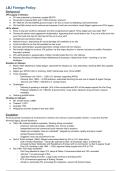
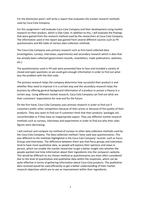
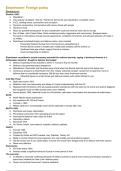
LBJ Foreign Policy:
Background
JFK Legacy in Vietnam:
● SV was protected by American created SEATO
● Governed by General Minh with 17000 American ‘advisors’
● BY 1968 the US had 535000 ground troops in SV but no closer to defeating Communist threat
● LBJ had little choice but to continue war because of cold war convictions, weak Saigon regime and JFK’s legacy
LBJ’s stance:
● Knew a long war would be unpopular and lose congressional support. Knew saigon gov was weak BUT
● Communist nations were aggressive dictatorships. Appeasing them would lead to war ‘if you let a bully come into
your front yard one day the next day he’ll be up in your yard’
● Containment and domino theory
● National honour- abandoning SV would damage US credibility as an ally
● Could not afford to be the first president to lose a war
● Kennedy administration assassinated DIem morally locked US into Vietnam
● Felt morally obliged to continue JFK policies ‘my first major decision in vietnam had been to reaffirm Presdient
Kennedy's policies’
● JFK administration’s assassination of Diem morally locked the U.S. into Vietnam.
● Retained Secretary of Defense Robert McNamara & Secretary of State Dean Rusk—resulting in no new
strategies.
Situation in Vietnam:
● March 1964: McNamara visited Saigon, described the situation as "very disturbing", deeming Minh less capable
than Diem.
● Saigon gov ARVN, USA vs Vietcong, North Vietnamese army, China USSR
● Troop increases
- Eisenhower (Jan 1961) – 1,000 U.S. advisors supporting ARVN.
- Kennedy (Nov 1963) – 16,000 advisors, authorized returning fire and use of napalm & Agent Orange.
- Johnson (Jan 1969) – 550,000 U.S. combat troops.
● Challenges-
- Vietcong is growing in strength- 30% of the countryside and 50% of the people support the Viet Cong
- POlitical instability in SV: 1964-65, 8 governments. Coup d’etat- takeover of government. Caused
instability.
● Vietcong guerilla tactics
US Allies in Vietnam:
● SK- 50,000 troops (1968)
● Thailand 11,570
● Australia 7700
● Philippines and New Zealand- less than 3000
Escalation:
Kennedy greatly increased US involvement in Vietnam and Johnson would escalate it further,. It was here that the
Kennedy legacy proved disastrous.
● 1964: LBJ ordered situation evaluation; Working Group concluded:
- American 'national prestige, credibility, and honour at stake’
- Independent and anti communist south vietnam vital to america
- Saigon gov incapable ‘close to a standstill’, ‘plagued by confusion, apathy and poor morale’
- Advised heavier bombing
- Suggests it was not just johnson's war
● Gulf of Tonkin Incident (1964): Alleged unprovoked attack by NV on U.S. ships led to:
- Gulf of Tonkin Resolution – Gave LBJ authority to take “all necessary steps” to defend SV.
- Accused by Barry Goldwater and Republicans of being ‘soft on communism’ so had to appear tough
- First U.S. bombing in late 1964 → LBJ’s approval rating surged from 42% to 72%.
● Feb 1965: First major escalation
- Viet Cong attacked a major U.S. camp at Pleiku- 8 Americans killed and 100+ wounded
- Johnson: ‘I’ve had enough of this.’
- ‘Operation Rolling Thunder’: Large-scale continuous bombing of NV.
- 67% of Americans approved of Rolling Thunder.
- Aimed to- demoralise NV, encourage SV resistance, secure US bomber bases
Background
JFK Legacy in Vietnam:
● SV was protected by American created SEATO
● Governed by General Minh with 17000 American ‘advisors’
● BY 1968 the US had 535000 ground troops in SV but no closer to defeating Communist threat
● LBJ had little choice but to continue war because of cold war convictions, weak Saigon regime and JFK’s legacy
LBJ’s stance:
● Knew a long war would be unpopular and lose congressional support. Knew saigon gov was weak BUT
● Communist nations were aggressive dictatorships. Appeasing them would lead to war ‘if you let a bully come into
your front yard one day the next day he’ll be up in your yard’
● Containment and domino theory
● National honour- abandoning SV would damage US credibility as an ally
● Could not afford to be the first president to lose a war
● Kennedy administration assassinated DIem morally locked US into Vietnam
● Felt morally obliged to continue JFK policies ‘my first major decision in vietnam had been to reaffirm Presdient
Kennedy's policies’
● JFK administration’s assassination of Diem morally locked the U.S. into Vietnam.
● Retained Secretary of Defense Robert McNamara & Secretary of State Dean Rusk—resulting in no new
strategies.
Situation in Vietnam:
● March 1964: McNamara visited Saigon, described the situation as "very disturbing", deeming Minh less capable
than Diem.
● Saigon gov ARVN, USA vs Vietcong, North Vietnamese army, China USSR
● Troop increases
- Eisenhower (Jan 1961) – 1,000 U.S. advisors supporting ARVN.
- Kennedy (Nov 1963) – 16,000 advisors, authorized returning fire and use of napalm & Agent Orange.
- Johnson (Jan 1969) – 550,000 U.S. combat troops.
● Challenges-
- Vietcong is growing in strength- 30% of the countryside and 50% of the people support the Viet Cong
- POlitical instability in SV: 1964-65, 8 governments. Coup d’etat- takeover of government. Caused
instability.
● Vietcong guerilla tactics
US Allies in Vietnam:
● SK- 50,000 troops (1968)
● Thailand 11,570
● Australia 7700
● Philippines and New Zealand- less than 3000
Escalation:
Kennedy greatly increased US involvement in Vietnam and Johnson would escalate it further,. It was here that the
Kennedy legacy proved disastrous.
● 1964: LBJ ordered situation evaluation; Working Group concluded:
- American 'national prestige, credibility, and honour at stake’
- Independent and anti communist south vietnam vital to america
- Saigon gov incapable ‘close to a standstill’, ‘plagued by confusion, apathy and poor morale’
- Advised heavier bombing
- Suggests it was not just johnson's war
● Gulf of Tonkin Incident (1964): Alleged unprovoked attack by NV on U.S. ships led to:
- Gulf of Tonkin Resolution – Gave LBJ authority to take “all necessary steps” to defend SV.
- Accused by Barry Goldwater and Republicans of being ‘soft on communism’ so had to appear tough
- First U.S. bombing in late 1964 → LBJ’s approval rating surged from 42% to 72%.
● Feb 1965: First major escalation
- Viet Cong attacked a major U.S. camp at Pleiku- 8 Americans killed and 100+ wounded
- Johnson: ‘I’ve had enough of this.’
- ‘Operation Rolling Thunder’: Large-scale continuous bombing of NV.
- 67% of Americans approved of Rolling Thunder.
- Aimed to- demoralise NV, encourage SV resistance, secure US bomber bases