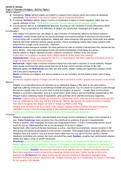
5.1 Financial objectives
Definition of financial objectives:
– a specific goal or target related to financial performance, resources
and structure of a business
Key benefits of using financial objectives
– A focus for the entire business (all internal stakeholders?)
– Important measure of success or failure
– Reduce the risk of business failure
– Provide transparency for shareholders about their investment
– Help coordinate the different business functions
– Key context for making investment decisions
The role of the Finance Functional Department
– track how the money is spent
– track money entering the business
– make financial decisions
– measure performance
– advise other employees
Main types of financial objectives
– Profit: Revenue > cost
○ fixed costs and variable costs :))) varies with output or no
– Revenue objectives
– Costs objectives
– Cash flow objectives
– Investment objectives
– Capital structure objectives
Balance of payments
Gross profit: revenue (generated from sales) - costs of sales (variable costs)
Expenses / overheads (fixed costs)
Operating profit / net profit: Gross profit - expenses
Profit of the year / profit before tax: Operating profit - interests (finance
costs)
Profit after tax: …self explanatory duh
, Profit objectives
Ways to increase profit:
– Increase revenue
– Decrease costs
– R>C
○ Revenue increase more than costs increase
○ Revenue decrease less than costs decrease
Return on investment (ROI)
Formula: [ (Profit - Investment) / Investment ] x 100%
Cash flow objectives
Cash flow = inflow - outflow
Revenue: recorded when sales are made
Cash flow: recorded when the money actually moves
Payable: business owes money to suppliers
– businesses buying materials on credit
Receivable: customers owe business money
– customers buying goods / services on credit
5.2 Analysing financial performance
Budgeting
Definition of budget:
– a financial plan that outlines expected expenditure and income of a
business
○ could be split up by department, area/location, employees,
projects, products, strategies, etc.
Uses of budgets:
– to ensure the business doesn’t overspend and reduce risk
– establish priorities and set targets —> better planning
– turn objectives into practical reality
– provide direction and coordination
– assign responsibilities
– allocate resources
– communicate targets
– motivate staff
Definition of financial objectives:
– a specific goal or target related to financial performance, resources
and structure of a business
Key benefits of using financial objectives
– A focus for the entire business (all internal stakeholders?)
– Important measure of success or failure
– Reduce the risk of business failure
– Provide transparency for shareholders about their investment
– Help coordinate the different business functions
– Key context for making investment decisions
The role of the Finance Functional Department
– track how the money is spent
– track money entering the business
– make financial decisions
– measure performance
– advise other employees
Main types of financial objectives
– Profit: Revenue > cost
○ fixed costs and variable costs :))) varies with output or no
– Revenue objectives
– Costs objectives
– Cash flow objectives
– Investment objectives
– Capital structure objectives
Balance of payments
Gross profit: revenue (generated from sales) - costs of sales (variable costs)
Expenses / overheads (fixed costs)
Operating profit / net profit: Gross profit - expenses
Profit of the year / profit before tax: Operating profit - interests (finance
costs)
Profit after tax: …self explanatory duh
, Profit objectives
Ways to increase profit:
– Increase revenue
– Decrease costs
– R>C
○ Revenue increase more than costs increase
○ Revenue decrease less than costs decrease
Return on investment (ROI)
Formula: [ (Profit - Investment) / Investment ] x 100%
Cash flow objectives
Cash flow = inflow - outflow
Revenue: recorded when sales are made
Cash flow: recorded when the money actually moves
Payable: business owes money to suppliers
– businesses buying materials on credit
Receivable: customers owe business money
– customers buying goods / services on credit
5.2 Analysing financial performance
Budgeting
Definition of budget:
– a financial plan that outlines expected expenditure and income of a
business
○ could be split up by department, area/location, employees,
projects, products, strategies, etc.
Uses of budgets:
– to ensure the business doesn’t overspend and reduce risk
– establish priorities and set targets —> better planning
– turn objectives into practical reality
– provide direction and coordination
– assign responsibilities
– allocate resources
– communicate targets
– motivate staff