Vicarious Liability
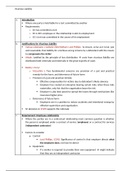
a. Introduction
Where one party is held liable for a tort committed by another
Requirements:
o D1 has committed a tort
o D1 is D2’s employee or the relationship is akin to employment
o D1’s tort was committed in the course of his employment
b. Justifications for Vicarious Liability
Various Claimants v Catholic Child Welfare: Lord Phillips: ‘to ensure, so far as it is fair, just
and reasonable, that liability for a tortious wrong is borne by a defendant with the means
to compensate the victim’
Atiyah: Justified by the principle of loss distribution costs from vicarious liability are
distributed both internally and externally in the great majority of cases
Bazley v Curry:
o McLachlin J: Two fundamental concerns are provision of a just and practical
remedy for the harm, and deterrence of future harm
o Provision of a just and practical remedy
Effective compensation for victims due to defendant’s likely solvency
Employer has created an enterprise bearing certain risks; when these risks
materialise, only fair that the organisation bears the risk
Employer is also best posed to spread the losses through mechanisms like
insurance/higher price
o Deterrence of future harm
Employers are in a position to reduce accidents and intentional wrongs by
effective supervision and organisation
SC decisions in CCWS supports this rationale
c. Requirement: Employee relationship
Where the parties are in a contractual relationship most common question is whether
the person is employed under a contract of service (employee) or a contract for services
(independent contractor)
Factors to consider
o Control
Lord Phillips, CCWS: Significance of control is that employer directs what
the employee does, not how he does it
o Equipment
If a worker is required to provide their own equipment might indicate
that they are an independent contractor
a. Introduction
Where one party is held liable for a tort committed by another
Requirements:
o D1 has committed a tort
o D1 is D2’s employee or the relationship is akin to employment
o D1’s tort was committed in the course of his employment
b. Justifications for Vicarious Liability
Various Claimants v Catholic Child Welfare: Lord Phillips: ‘to ensure, so far as it is fair, just
and reasonable, that liability for a tortious wrong is borne by a defendant with the means
to compensate the victim’
Atiyah: Justified by the principle of loss distribution costs from vicarious liability are
distributed both internally and externally in the great majority of cases
Bazley v Curry:
o McLachlin J: Two fundamental concerns are provision of a just and practical
remedy for the harm, and deterrence of future harm
o Provision of a just and practical remedy
Effective compensation for victims due to defendant’s likely solvency
Employer has created an enterprise bearing certain risks; when these risks
materialise, only fair that the organisation bears the risk
Employer is also best posed to spread the losses through mechanisms like
insurance/higher price
o Deterrence of future harm
Employers are in a position to reduce accidents and intentional wrongs by
effective supervision and organisation
SC decisions in CCWS supports this rationale
c. Requirement: Employee relationship
Where the parties are in a contractual relationship most common question is whether
the person is employed under a contract of service (employee) or a contract for services
(independent contractor)
Factors to consider
o Control
Lord Phillips, CCWS: Significance of control is that employer directs what
the employee does, not how he does it
o Equipment
If a worker is required to provide their own equipment might indicate
that they are an independent contractor