

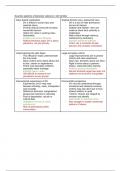
Examine patterns of domestic violence in UK families
Class based explanation Radical feminist view- patriarchal view
- DV is linked to social class and - DV is a tool of male dominance
material stress - Across all classes
- Poverty and job insecurity increase - Dobash and dobash- men use
household tension violence when their authority is
- Higher DV rates in working class challenged
households - Male control through violence,
- Explains economic influence reinforced by institutions
- Radical feminists argue DV is about - Explains gendered patterns
patriarchy, not just poverty - Critics say it overlooks female
abusers and complex motivations
-
Underreporting the dark figure Legal and policy reform
- The official DV stats underestimate - Legal improvements aim to protect
the true scale victims and raise awareness
- Many victims done report abuse due - Clairs law, domestic abuse act 2021
to fear, shame or dependence - Right to know about a partners
- Police may downplay incidents, history, improved police training
especially within marriage - Reflects growing recognition
- Explains gaps in data - Marxist feminists argue law does not
- Still difficult to measure true address root economic inequalities
prevalence across groups
Intersectional experiences of DV Personal life perspective
- Experiences of DV may vary - DV must be understood through
between ethnicity, class, immigration emotional and relational contexts
and sexuality - Victims may stay alive due to love,
- Difference feminists; marginalised shared children or guild
groups face barriers to reporting - ‘Victims’ choices are shaped by
- Fear of deportation, racism or emotion and identify
cultural bias - Adds depth to structural views
- Highlights diversity of victim - May struggle to explain systematic
experiences patterns of abuse
- Risk of generalising within
communities
Class based explanation Radical feminist view- patriarchal view
- DV is linked to social class and - DV is a tool of male dominance
material stress - Across all classes
- Poverty and job insecurity increase - Dobash and dobash- men use
household tension violence when their authority is
- Higher DV rates in working class challenged
households - Male control through violence,
- Explains economic influence reinforced by institutions
- Radical feminists argue DV is about - Explains gendered patterns
patriarchy, not just poverty - Critics say it overlooks female
abusers and complex motivations
-
Underreporting the dark figure Legal and policy reform
- The official DV stats underestimate - Legal improvements aim to protect
the true scale victims and raise awareness
- Many victims done report abuse due - Clairs law, domestic abuse act 2021
to fear, shame or dependence - Right to know about a partners
- Police may downplay incidents, history, improved police training
especially within marriage - Reflects growing recognition
- Explains gaps in data - Marxist feminists argue law does not
- Still difficult to measure true address root economic inequalities
prevalence across groups
Intersectional experiences of DV Personal life perspective
- Experiences of DV may vary - DV must be understood through
between ethnicity, class, immigration emotional and relational contexts
and sexuality - Victims may stay alive due to love,
- Difference feminists; marginalised shared children or guild
groups face barriers to reporting - ‘Victims’ choices are shaped by
- Fear of deportation, racism or emotion and identify
cultural bias - Adds depth to structural views
- Highlights diversity of victim - May struggle to explain systematic
experiences patterns of abuse
- Risk of generalising within
communities


