

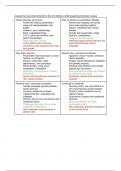
Assess the view that family life in the UK reflects a shift towards postmodern values
Family diversity and choice Role of women in postmodern families
- Family life reflects postmodern - Women are shaping new family
values of individualisation and forms and resisting tradition
fluidity - Stacey- matrifocal and chosen
- Giddens- pure relationships families
- Beck- negotiated family - Female led households, single
- LAT’s, same-sex families, lone- mothers, cohabitation
parent households - Suggests female agency
- Shows growth in choice - Feminists argue women still face the
- Critics believe this overlooks triple shift and deep rooted
persistent social structures like class inequality
and gender
New right concerns Marxist view- structural constraints
- Postmodern diversity leads to social - Apparent ‘choice’ masks continued
decline, not progress class inequality
- Murray- underclass, state - Engels- family reproduces capitalism
dependency, lone parenting and private property
- Moral decline, rising crime, - Working class families face limited
breakdown of discipline options due to poverty
- Highlights consequences of family - Economic factors shape the choices
breakdown an individual can make
- Ignores the benefits and functions of - Overlooks cultural shifts and family
non nuclear families variation
Feminist view- structural constraints Continuity in family life
- Gender inequality persists despite - Diversity exists, but most still live in
family diversity neo-conventional nuclear families
- Leonard- patriarchy in family - Chester- minor variations but no
- Liberal feminists- inequality post radical change
childbirth - Dual-earner couples with traditional
- Women still do more housework and structure
emotional labour - Structure stability, not a full
- Challenges the idea of truly equal, postmodern shift
negotiated relationships - May understate growing acceptance
- May underplay some progress in of new family forms
gender roles
Family diversity and choice Role of women in postmodern families
- Family life reflects postmodern - Women are shaping new family
values of individualisation and forms and resisting tradition
fluidity - Stacey- matrifocal and chosen
- Giddens- pure relationships families
- Beck- negotiated family - Female led households, single
- LAT’s, same-sex families, lone- mothers, cohabitation
parent households - Suggests female agency
- Shows growth in choice - Feminists argue women still face the
- Critics believe this overlooks triple shift and deep rooted
persistent social structures like class inequality
and gender
New right concerns Marxist view- structural constraints
- Postmodern diversity leads to social - Apparent ‘choice’ masks continued
decline, not progress class inequality
- Murray- underclass, state - Engels- family reproduces capitalism
dependency, lone parenting and private property
- Moral decline, rising crime, - Working class families face limited
breakdown of discipline options due to poverty
- Highlights consequences of family - Economic factors shape the choices
breakdown an individual can make
- Ignores the benefits and functions of - Overlooks cultural shifts and family
non nuclear families variation
Feminist view- structural constraints Continuity in family life
- Gender inequality persists despite - Diversity exists, but most still live in
family diversity neo-conventional nuclear families
- Leonard- patriarchy in family - Chester- minor variations but no
- Liberal feminists- inequality post radical change
childbirth - Dual-earner couples with traditional
- Women still do more housework and structure
emotional labour - Structure stability, not a full
- Challenges the idea of truly equal, postmodern shift
negotiated relationships - May understate growing acceptance
- May underplay some progress in of new family forms
gender roles


