World Economy – Revolutions in Agriculture & Proto-Industry
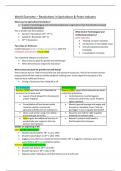
What was the Agricultural Revolution?
• A series of technological and institutional advances in agriculture that dramatically increased
productivity and output.
This is broken into three phases: What kind of Technological and
• Yeoman’s Revolution (16th-17th C) Institutional advances?
• Landlord’s Revolution (18th C) Some examples:
• 19th C Revolution • ‘floating’ of water meadows
• Introduction of new fodder crops
Two views on Enclosure • Animal husbandry (selective
Conflict between Goths/ Vandals of open fields AND THE breeding)
civilisation of enclosures (Young 1809).
• Consolidation of estates
Two important debates on enclosure:
• Was enclosure good for growth and well-being?
• When did enclosure impact the economy?
Were enclosures good for growth and well-being?
The Enclosure Acts of 1750 increased the rate and spread of enclosures. This led to Yeomen farmers
being pushed off their land by wealthy landlords seeking rents. Some argue this was good as the
Yeomen were inefficient farmers.
• Timing of Enclosure Acts linked AR to IR
Pro- enclosures Anti-enclosures
Overton (1996) says there are 3 channels for Neeson (1993) argues that enclosures are more
enclosure to increase prod. costly than productive.
• Layout of land allowed for draining and • Contemporaries revolted against
proper irrigation enclosures where they could. Property
rights exploited.
• Consolidation of land meant arable • Neeson ignored average real wages and
could be used for commercial focused on inequality. Even if the pie
agriculture (EofS) and not subsistence got bigger it was unequally distributed.
• Open used system using more fallow – • Peasants also had the right to gather
enclosures got rid of this. firewood on common land
• Allen argues the additional increase in • Neeson’s research only based in
productivity was marginal. Gains by Northamptonshire however.
yeomen were greater.
Debate on beginning of AR
Allen and Neo-Revisionists:
• Growth was fast before 18th C up to 1740
• Growth slowed down in 18th C after 1740
• Suggests real advances created by Yeomen before 18th C. Suggests enclosures were only
useful before 18th C or completely useless.
Overton and Counter-Revisionists:
• Growth slow before 18th C till 1740
• Growth was fast in 18th C after 1740
• Advances didn’t take place until after Enclosure Acts enforced.
What was the Agricultural Revolution?
• A series of technological and institutional advances in agriculture that dramatically increased
productivity and output.
This is broken into three phases: What kind of Technological and
• Yeoman’s Revolution (16th-17th C) Institutional advances?
• Landlord’s Revolution (18th C) Some examples:
• 19th C Revolution • ‘floating’ of water meadows
• Introduction of new fodder crops
Two views on Enclosure • Animal husbandry (selective
Conflict between Goths/ Vandals of open fields AND THE breeding)
civilisation of enclosures (Young 1809).
• Consolidation of estates
Two important debates on enclosure:
• Was enclosure good for growth and well-being?
• When did enclosure impact the economy?
Were enclosures good for growth and well-being?
The Enclosure Acts of 1750 increased the rate and spread of enclosures. This led to Yeomen farmers
being pushed off their land by wealthy landlords seeking rents. Some argue this was good as the
Yeomen were inefficient farmers.
• Timing of Enclosure Acts linked AR to IR
Pro- enclosures Anti-enclosures
Overton (1996) says there are 3 channels for Neeson (1993) argues that enclosures are more
enclosure to increase prod. costly than productive.
• Layout of land allowed for draining and • Contemporaries revolted against
proper irrigation enclosures where they could. Property
rights exploited.
• Consolidation of land meant arable • Neeson ignored average real wages and
could be used for commercial focused on inequality. Even if the pie
agriculture (EofS) and not subsistence got bigger it was unequally distributed.
• Open used system using more fallow – • Peasants also had the right to gather
enclosures got rid of this. firewood on common land
• Allen argues the additional increase in • Neeson’s research only based in
productivity was marginal. Gains by Northamptonshire however.
yeomen were greater.
Debate on beginning of AR
Allen and Neo-Revisionists:
• Growth was fast before 18th C up to 1740
• Growth slowed down in 18th C after 1740
• Suggests real advances created by Yeomen before 18th C. Suggests enclosures were only
useful before 18th C or completely useless.
Overton and Counter-Revisionists:
• Growth slow before 18th C till 1740
• Growth was fast in 18th C after 1740
• Advances didn’t take place until after Enclosure Acts enforced.