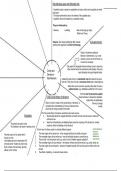
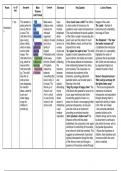
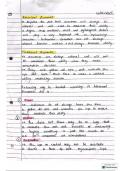
Neo-Marxists agree with Marxists that:
- Capitalist society is based on exploitation and class conflict and inequalities of wealth
and power.
- The state make/enforce laws in the interest of the capitalist class
- Capitalism should be replaced by a classless society.
They are influenced by:
- Marxism - Labelling - New Criminology by Taylor,
Walton and Young
However, their views significantly differ, instead Anti-determinism
dubbing their approach as Critical Criminology.
Taylor et al believes traditional
Marxism is deterministic, e.g. it sees
workers as driven to commit crime out
of economic necessity.
They reject this alongside theories claiming crime is caused by
other external factors like subcultures and labelling. They also
Crime and reject biological and psychological factors.
Deviance -
Neo-Marxism Instead they take more of a voluntaristic view (the idea that we have
free will). They view crime as a conscious choice and a meaningful act.
Rather than out of economic necessity. More often it’s due to
political choice (e.g. redistribute wealth from rich to poor).
Criminals aren’t just passive puppets
A fully social theory of deviance whose behaviour is shaped by capitalism,
instead they are deliberately
Taylor et al aim to create a ‘fully social theory of deviance’; a thriving to change
comprehensive understanding of crime and deviance that society.
would help to change society for the better.
The ‘fully social theory of deviance’ would have two main sources:
Evaluation ● Marxist ideas about the unequal distribution of wealth and who has the power to make and
enforce the law
● Ideas from interactionism and labelling theory about the meaning of the deviant act, societal
- Too general to explain crime
reactions, effects of labelling on the individual
- Too idealistic to be useful in tackling crime.
In their view, this theory needs to unite six different aspects: (all interrelated and
need to be
- Feminists say that it is ‘gender blind’ - 1. The wider origins of the deviant act - in the unequal distribution of wealth and power understood
focuses on men. 2. The immediate origins of the deviant act - how the individual decides to commit the act together as a
single theory)
- Left realists say that it romanticises W/C 3. The act itself - and meaning for actor e.g. was it a form of rebellion against capitalism?
criminals as the ‘modern day robin hood’. 4. The immediate origins of social reaction - the reaction of those around the deviant, e.g. police, family, etc.
- Does not take crime seriously, ignoring 5. The wider origins of social reaction - structure of capitalist society. Who has the power to define actions as
effects on W/C victims deviant
6. The effects of labelling - on deviants future actions.
- Capitalist society is based on exploitation and class conflict and inequalities of wealth
and power.
- The state make/enforce laws in the interest of the capitalist class
- Capitalism should be replaced by a classless society.
They are influenced by:
- Marxism - Labelling - New Criminology by Taylor,
Walton and Young
However, their views significantly differ, instead Anti-determinism
dubbing their approach as Critical Criminology.
Taylor et al believes traditional
Marxism is deterministic, e.g. it sees
workers as driven to commit crime out
of economic necessity.
They reject this alongside theories claiming crime is caused by
other external factors like subcultures and labelling. They also
Crime and reject biological and psychological factors.
Deviance -
Neo-Marxism Instead they take more of a voluntaristic view (the idea that we have
free will). They view crime as a conscious choice and a meaningful act.
Rather than out of economic necessity. More often it’s due to
political choice (e.g. redistribute wealth from rich to poor).
Criminals aren’t just passive puppets
A fully social theory of deviance whose behaviour is shaped by capitalism,
instead they are deliberately
Taylor et al aim to create a ‘fully social theory of deviance’; a thriving to change
comprehensive understanding of crime and deviance that society.
would help to change society for the better.
The ‘fully social theory of deviance’ would have two main sources:
Evaluation ● Marxist ideas about the unequal distribution of wealth and who has the power to make and
enforce the law
● Ideas from interactionism and labelling theory about the meaning of the deviant act, societal
- Too general to explain crime
reactions, effects of labelling on the individual
- Too idealistic to be useful in tackling crime.
In their view, this theory needs to unite six different aspects: (all interrelated and
need to be
- Feminists say that it is ‘gender blind’ - 1. The wider origins of the deviant act - in the unequal distribution of wealth and power understood
focuses on men. 2. The immediate origins of the deviant act - how the individual decides to commit the act together as a
single theory)
- Left realists say that it romanticises W/C 3. The act itself - and meaning for actor e.g. was it a form of rebellion against capitalism?
criminals as the ‘modern day robin hood’. 4. The immediate origins of social reaction - the reaction of those around the deviant, e.g. police, family, etc.
- Does not take crime seriously, ignoring 5. The wider origins of social reaction - structure of capitalist society. Who has the power to define actions as
effects on W/C victims deviant
6. The effects of labelling - on deviants future actions.