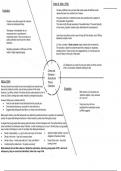
Walter B. Miller (1958)
Evaluation He takes a different view, and sees that society exists with different social
classes that each have a distinct set of values.
He argues that there is a distinctive lower-class subculture that is passed on
- Provides a view that answers the criticisms from generation to generation.
of strain and subcultural theory This came to light through experience of low-skilled labour. This would typically
involve boring, repetitive, dead-end jobs, distributed with unemployment.
- Techniques of neutralisation do not
necessarily show a commitment to
Lower class subcultures provide a way of living with this situation, and of finding
mainstream values. They may simply be a
satisfaction outside of work.
public justification and excuse for criminal
behaviour.
L/C have a number of focal concerns (major interests and involvements).
This includes: a desire for excitement and thrills, emphasis on toughness,
- Simplistic explanation of drift does not fit the
outwitting others. These concerns are exaggerated by L/C men because of a
reality of highly organised gangs
desire for status in the eyes of their peers.
L/C delinquency is a result of young men acting out of the concerns
of the L/C subculture; therefore breaking the law.
Crime and
Deviance -
Subcultural
Matza (1964) Theory
Previous theories have tended to see crime resulting from external forces Criticisms
beyond an individual’s control, such as being a prisoner of the social Evaluation
structure. E.g. Merton; bottom of the class structure under pressure to turn to - Miller pictures L/C subculture as a
crime and Cohen; working-class males directed by delinquent subculture. ‘distinctive tradition, many centuries
old’ - but is it?
However, Matza saw 3 problems with this:
● Tends to make deviants more distinctive than they actually are. - Young men may not be as
● Over-predicts delinquency, accounts for more than there is. separated from mainstream society
● Suggests that delinquents have little or no choice over their behaviour. as Miller suggests.
Matza rejects Cohen’s view that delinquents have distinctive subcultures that are in opposition to mainstream
society. He argues that delinquent behaviour is often directed by values found throughout society.
He argues that young people often express guilt and shame over their delinquent acts. This implies that they have
some commitment to mainstream values.Therefore, in order for delinquency to occur in the first place, young people
use a number of techniques in order to ‘neutralise’ their delinquent behaviour:
● Denial of responsibility - e.g. got in with a bad crowd, not his fault. ● Appeal to higher loyalties - duty and
● Denial of the victim - ‘they had it coming to them’ obligation to friends and family
● Denial of injury - ‘nobody was really hurt’, ‘they could afford it’ ● Denial of the victim - ‘they had it
● Condemning the condemners - ‘the police are corrupt’ coming to them’
Matza believes there is little evidence of distinctive subcultures, and many young people ‘drift’ in and out of
delinquency; they are casual and intermittent, rather than a way of life.
Evaluation He takes a different view, and sees that society exists with different social
classes that each have a distinct set of values.
He argues that there is a distinctive lower-class subculture that is passed on
- Provides a view that answers the criticisms from generation to generation.
of strain and subcultural theory This came to light through experience of low-skilled labour. This would typically
involve boring, repetitive, dead-end jobs, distributed with unemployment.
- Techniques of neutralisation do not
necessarily show a commitment to
Lower class subcultures provide a way of living with this situation, and of finding
mainstream values. They may simply be a
satisfaction outside of work.
public justification and excuse for criminal
behaviour.
L/C have a number of focal concerns (major interests and involvements).
This includes: a desire for excitement and thrills, emphasis on toughness,
- Simplistic explanation of drift does not fit the
outwitting others. These concerns are exaggerated by L/C men because of a
reality of highly organised gangs
desire for status in the eyes of their peers.
L/C delinquency is a result of young men acting out of the concerns
of the L/C subculture; therefore breaking the law.
Crime and
Deviance -
Subcultural
Matza (1964) Theory
Previous theories have tended to see crime resulting from external forces Criticisms
beyond an individual’s control, such as being a prisoner of the social Evaluation
structure. E.g. Merton; bottom of the class structure under pressure to turn to - Miller pictures L/C subculture as a
crime and Cohen; working-class males directed by delinquent subculture. ‘distinctive tradition, many centuries
old’ - but is it?
However, Matza saw 3 problems with this:
● Tends to make deviants more distinctive than they actually are. - Young men may not be as
● Over-predicts delinquency, accounts for more than there is. separated from mainstream society
● Suggests that delinquents have little or no choice over their behaviour. as Miller suggests.
Matza rejects Cohen’s view that delinquents have distinctive subcultures that are in opposition to mainstream
society. He argues that delinquent behaviour is often directed by values found throughout society.
He argues that young people often express guilt and shame over their delinquent acts. This implies that they have
some commitment to mainstream values.Therefore, in order for delinquency to occur in the first place, young people
use a number of techniques in order to ‘neutralise’ their delinquent behaviour:
● Denial of responsibility - e.g. got in with a bad crowd, not his fault. ● Appeal to higher loyalties - duty and
● Denial of the victim - ‘they had it coming to them’ obligation to friends and family
● Denial of injury - ‘nobody was really hurt’, ‘they could afford it’ ● Denial of the victim - ‘they had it
● Condemning the condemners - ‘the police are corrupt’ coming to them’
Matza believes there is little evidence of distinctive subcultures, and many young people ‘drift’ in and out of
delinquency; they are casual and intermittent, rather than a way of life.