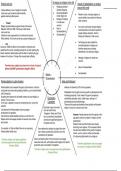
Poland and Iran Its impact on religion in the UK Impact of globalisation on religion
● Religious pluralism - around the world
Cultural defence is one of religion’s functions. Spiritual shopping
It has been used to defend national identity ● De-territorialisation;
● Western culture, including religious or
against external political power. online religion etc.
secular beliefs, have started to influence
● Merging of religions
other countries.
- Poland to create new
Religion provides defence against Soviet communism. versions
● As a result, previously strongly religious
Between 1945 and 1989, Poland was under Soviet ● Rise of
countries/cultures have been exposed to
communist rule. fundamentalism
greater religious pluralism, which is
Catholicism was suppressed but it continued to embody ● Secularisation
diluting the influence in that country.
Polish identity. The church served as a popular rallying point.
● Technology has also enabled the
- Iran
de-territorialisation of religion and
During the 1960s the Shah of Iran decided to modernise and
therefore people are accessing
westernise the country, including banning the veil and replacing the
alternatives to the dominant religion
Muslim calendar. Modernisation had the effect of widening the gap
between rich and poor. Change often caused great suffering.
● Merging of religions to create new
versions
Therefore here, religion has shown to be a form of cultural
● Rise of fundamentalism
defence AGAINST globalisation (Negative Effect)
● Secularisation
Beliefs -
Globalisation
Pentecostalism in Latin America India and Hinduism
Pentecostalism has increased throughout Latin America. It tends to Hinduism is followed by 85% of the population.
incorporate local and existing religious beliefs (e.g. evil spirits blended
Globalisation has brought economic growth and development and
with Christianity).
increasing prosperity. It has created a huge and prosperous,
Accepting the existence of old beliefs creates new local religion (a
East Asia’s scientifically educated, urban, middle class, working in IT,
mixture of old and new).
In this way, it appeals to everyone including the poor, not just the Capitalism pharmaceuticals and biotechnology.
These are the people secularisation theory predicts will abandon
powerful. East Asian ‘tiger economies’ religion in favour of a secular world view.
It is believed that Pentecostalism has encouraged such as South Korea,
development of capitalism. Singapore, Taiwan and China However, Nanda observes that the majority of the
Latin American pentecostalists embrace a work ethic and have successfully industrialised population continue to believe in religion and the
lifestyle which encourages members to become more mobile and become significant players in supernatural.
and prosper. the global economy. Research has found that Indians are actually
becoming more religious. This increased interest
For example, in Chile and Brazil there is now a growing Some believe that religion has played the same
has also been reflected in the growth of religious
Pentecostalist middle class. role in these countries that Calvinism did in the
tourism, such as visits to shrines and temples.
development of capitalism.
(It is becoming fashionable to be religious)
Therefore religion has helped capitalism China’s old belief system (‘Post-Confucian’) encourages
and encouraged economic globalisation values like hard work, self discipline and frugality which lead to
Therefore globalisation has encouraged
(Positive Effect) productivity and accumulation of capitalism.
an increase in religion (Positive Effect)
Therefore religion has encouraged economic globalisation
(Positive Effect)
● Religious pluralism - around the world
Cultural defence is one of religion’s functions. Spiritual shopping
It has been used to defend national identity ● De-territorialisation;
● Western culture, including religious or
against external political power. online religion etc.
secular beliefs, have started to influence
● Merging of religions
other countries.
- Poland to create new
Religion provides defence against Soviet communism. versions
● As a result, previously strongly religious
Between 1945 and 1989, Poland was under Soviet ● Rise of
countries/cultures have been exposed to
communist rule. fundamentalism
greater religious pluralism, which is
Catholicism was suppressed but it continued to embody ● Secularisation
diluting the influence in that country.
Polish identity. The church served as a popular rallying point.
● Technology has also enabled the
- Iran
de-territorialisation of religion and
During the 1960s the Shah of Iran decided to modernise and
therefore people are accessing
westernise the country, including banning the veil and replacing the
alternatives to the dominant religion
Muslim calendar. Modernisation had the effect of widening the gap
between rich and poor. Change often caused great suffering.
● Merging of religions to create new
versions
Therefore here, religion has shown to be a form of cultural
● Rise of fundamentalism
defence AGAINST globalisation (Negative Effect)
● Secularisation
Beliefs -
Globalisation
Pentecostalism in Latin America India and Hinduism
Pentecostalism has increased throughout Latin America. It tends to Hinduism is followed by 85% of the population.
incorporate local and existing religious beliefs (e.g. evil spirits blended
Globalisation has brought economic growth and development and
with Christianity).
increasing prosperity. It has created a huge and prosperous,
Accepting the existence of old beliefs creates new local religion (a
East Asia’s scientifically educated, urban, middle class, working in IT,
mixture of old and new).
In this way, it appeals to everyone including the poor, not just the Capitalism pharmaceuticals and biotechnology.
These are the people secularisation theory predicts will abandon
powerful. East Asian ‘tiger economies’ religion in favour of a secular world view.
It is believed that Pentecostalism has encouraged such as South Korea,
development of capitalism. Singapore, Taiwan and China However, Nanda observes that the majority of the
Latin American pentecostalists embrace a work ethic and have successfully industrialised population continue to believe in religion and the
lifestyle which encourages members to become more mobile and become significant players in supernatural.
and prosper. the global economy. Research has found that Indians are actually
becoming more religious. This increased interest
For example, in Chile and Brazil there is now a growing Some believe that religion has played the same
has also been reflected in the growth of religious
Pentecostalist middle class. role in these countries that Calvinism did in the
tourism, such as visits to shrines and temples.
development of capitalism.
(It is becoming fashionable to be religious)
Therefore religion has helped capitalism China’s old belief system (‘Post-Confucian’) encourages
and encouraged economic globalisation values like hard work, self discipline and frugality which lead to
Therefore globalisation has encouraged
(Positive Effect) productivity and accumulation of capitalism.
an increase in religion (Positive Effect)
Therefore religion has encouraged economic globalisation
(Positive Effect)