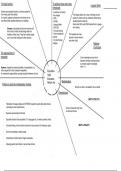
Formula funding To achieve these aims they
League tables
introduced:
Schools are allocated funds by a formula based on - A national curriculum
how many pupils they attract. - Key stages The league tables are a way of ranking schools
As a result, popular schools get more funds and so - SATs based on criteria such as academic performance,
can afford better qualified teachers and facilities. - GCSEs student:teacher ratios etc.
- League tables Exams like SATs and GCSEs allow them to guage
However, unpopular schools lose income and - OFSTED this ranking.
find it hard to match the teaching skills and - Formula funding
facilities of their rivals. They fail to attract pupils - Grant maintained The facilities also help
and in turn their funding is further reduced. schools parents to know where to
- City technology send their child.
colleges National
Curriculum
The reproduction of
inequality Core knowledge around which
teachers develop exciting lessons
to promote pupils’ knowledge.
However, despite the claimed benefits of marketisation, its Year 1-11
critics argue that it has increased inequalities. Education-
An example is league tables causing inequality between schools
1988
Education
Reform Act Marketisation
Policies to promote marketisation include:
Schools run like a competition; like a market
Parentocracy
(NOT A POLICY)
- Publication of league tables and OFSTED inspection reports that rank schools
according to exam performance Choice of parents; they have
an informed choice
- Business sponsorship of schools
- Specialist schools that specialise in IT, languages etc. to widen parental choice
- Formula funding, where schools receive the same amount of funding per pupil. (NOT A POLICY)
- Schools competing to attract pupils
- Introduction of tuition fees for higher education.
- Allowing parents and others to set up free schools.
League tables
introduced:
Schools are allocated funds by a formula based on - A national curriculum
how many pupils they attract. - Key stages The league tables are a way of ranking schools
As a result, popular schools get more funds and so - SATs based on criteria such as academic performance,
can afford better qualified teachers and facilities. - GCSEs student:teacher ratios etc.
- League tables Exams like SATs and GCSEs allow them to guage
However, unpopular schools lose income and - OFSTED this ranking.
find it hard to match the teaching skills and - Formula funding
facilities of their rivals. They fail to attract pupils - Grant maintained The facilities also help
and in turn their funding is further reduced. schools parents to know where to
- City technology send their child.
colleges National
Curriculum
The reproduction of
inequality Core knowledge around which
teachers develop exciting lessons
to promote pupils’ knowledge.
However, despite the claimed benefits of marketisation, its Year 1-11
critics argue that it has increased inequalities. Education-
An example is league tables causing inequality between schools
1988
Education
Reform Act Marketisation
Policies to promote marketisation include:
Schools run like a competition; like a market
Parentocracy
(NOT A POLICY)
- Publication of league tables and OFSTED inspection reports that rank schools
according to exam performance Choice of parents; they have
an informed choice
- Business sponsorship of schools
- Specialist schools that specialise in IT, languages etc. to widen parental choice
- Formula funding, where schools receive the same amount of funding per pupil. (NOT A POLICY)
- Schools competing to attract pupils
- Introduction of tuition fees for higher education.
- Allowing parents and others to set up free schools.