Lecture 2
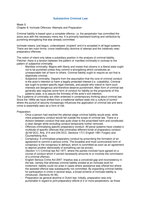
A Classic View of the Nature of Crime
- Deals with the most serious social harms
- Public wrongs against the state and entire community, not just an individual
- Stigma and blame from conviction
- Potential for serious punishment
Criminal Process in England and Wales
1. Investigation (local police force)
2. Charge and prosecution (CPS)
3. Conviction (Magistrates’ or Crown Court trial) – proof beyond a reasonable doubt
4. Sentence (imprisonment, fines, preventative orders)
Criminal Trials and Appeals
Murder: indictable offence – Crown Court trial (judge and jury), mandatory life sentence
- Usually appeals on points of law to the Court of Appeal and then Supreme Court
Battery: summary offence – Magistrates Court trial (lay magistrates or district judge), maximum
six months imprisonment
- Usually appeals on points of law to the High Court (Queen’s Bench) and then Supreme
Court
Sources of Criminal Offences
Common law offences → judge made offences
- Murder, manslaughter, assault and battery
Statute-based offences → written/codified legislation
- Sections 18, 20 and 47 of the Offences against the Person Act 1861
- Theft, fraud and related property offences (Theft Acts, Fraud Act)
- Non-consensual sex offences (Sexual Offences Act)
The Reality of Criminalisation in England and Wales Today
- Well over 9000 offences in operation in England and Wales
o Very large proportion are ‘regulatory’ or ‘quasi-criminal offences’ often dealing
with minor infractions
o Health and safety at work, food hygiene, commercial licensing, trading standards,
low-level anti-social behaviour
The Problem of Over-Criminalisation
- Over-criminalisation dilutes and undermines the symbolic power of the criminal sanction
(authoritarian argument)
A Classic View of the Nature of Crime
- Deals with the most serious social harms
- Public wrongs against the state and entire community, not just an individual
- Stigma and blame from conviction
- Potential for serious punishment
Criminal Process in England and Wales
1. Investigation (local police force)
2. Charge and prosecution (CPS)
3. Conviction (Magistrates’ or Crown Court trial) – proof beyond a reasonable doubt
4. Sentence (imprisonment, fines, preventative orders)
Criminal Trials and Appeals
Murder: indictable offence – Crown Court trial (judge and jury), mandatory life sentence
- Usually appeals on points of law to the Court of Appeal and then Supreme Court
Battery: summary offence – Magistrates Court trial (lay magistrates or district judge), maximum
six months imprisonment
- Usually appeals on points of law to the High Court (Queen’s Bench) and then Supreme
Court
Sources of Criminal Offences
Common law offences → judge made offences
- Murder, manslaughter, assault and battery
Statute-based offences → written/codified legislation
- Sections 18, 20 and 47 of the Offences against the Person Act 1861
- Theft, fraud and related property offences (Theft Acts, Fraud Act)
- Non-consensual sex offences (Sexual Offences Act)
The Reality of Criminalisation in England and Wales Today
- Well over 9000 offences in operation in England and Wales
o Very large proportion are ‘regulatory’ or ‘quasi-criminal offences’ often dealing
with minor infractions
o Health and safety at work, food hygiene, commercial licensing, trading standards,
low-level anti-social behaviour
The Problem of Over-Criminalisation
- Over-criminalisation dilutes and undermines the symbolic power of the criminal sanction
(authoritarian argument)