
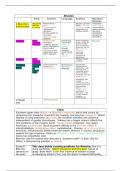
Allusion
Point Context Language Analysis Narrative
theories
1 Blanche’s Negatively Mental illness – Blanche: genuine Aristotelian –
affected Rose belief, pride and unity of place
introduction by reality. Socially realistic confidence in her social realism,
relationship imagination vs setting remains
dynamics Stanley conflict. the same,
Fantasy unable to atmosphere
overcome changed by
objective reality characters.
(Stanley).
3 Poker Poetry Southern belle Formal lexis. Private imaginings
act as a shield. No
Maxims
maintains innocence, Flaunts the
happiness creativity, women maxim of fantasy to begin
with, no need for it
not for intelligence, quality at the end. For her
but for looks. through the boundaries
Appearance and metaphor, permeate
imagination stuns which flaunts eventually.
Mitch, opposite. the maxim of Inevitable
manner. conclusion of
depravation.
6 Mitch Poetry Positive impact
maintains on Mitch.
happiness
10 Bday Eventually Common themes in
history of the
More anxious, Survival tool/
antidote for her
changes disjointed
party her American dream… language. personality + ego:
the issue: has
external convinced herself,
reality which manifests
into others, who are
on an objective,
overseeing
wavelength. Self-
centred -
reconstructs others'
opinions of her as is
insecure deep
down. (conclusion
of depravation:
past failure -->
insecurity --> lies
to cover up both
problems -->
further failure)
11Tragic Institutionalised
end
Class
Southern upper-class failure --> Blanche's insecurity, which she covers by
reclaiming her 'powerful' class BUT the majority (society) has moved on. Whilst
Stanley is a big proprietor, as a man, the northern attitudes are collective
independent of gender stereotypes. Stanley has a bigger impact reflects the
new problems of the modern world - Social realism projected - the classic
American, social divide. Socio-economic effects of the Civil war 1860s =
industrialisation, immigration influx, capitalisation. Stanley: second-generation
American, influenced by 1940s American dream. Blanche + Stanley: prejudices
against his type of person. Stella as (Princess + hero - Propps' Structuralist NT)
hones her empathetic side
Blanche: Like his mother who was also a "southern belle" vs Stan: like his
father, a domineering gambler = parents.
Scene 6 - The class divide causing problems for Blanche: she is a
Blanche: living confliction. Hasn’t moved on from the past, failure to
laments on grasp 'Belle Reve' is the first instance of modern society
the past: accelerating ahead of her, but she doesn’t respond efficiently,
, she doesn’t conform = problematic. Doesn’t meet anybody who
relates - reminds her of 'her' failure to withhold love. Constant
insecurities she doesn’t battle head on and never does…
Scene 10 The class divide causing physical conflict: Blanche's class
Blanche is (belief in related power) vs Stanley's working-class pride and
racist: gender (belief in power + effective resultant assertion)
prejudices against each other. Pursues the archetypal Southern
Gothic plot --> pursuing the dark, illogical, transgressive
characters --> blurs lines between what is truly socially
acceptable. This style (Southern Gothic) creates a grotesque
protagonist.
Scene 1 – Old vs New South (not North): direct infliction of
Her modernisation upon Blanche, 'upon' her as she sees it to be
entrance. form her self-interested perspective. Pursued by Stanley's alpha
masculinity and patriotism vs Blanche's self-worth and
superiority gained from southern aristocracy. She enters the
'cosmopolitan' melting pot, despite being an outsider others
adopt her (Eunice interactions, colloquial, conversational and
natural), but still active, casual racism. Her witnessing of this
racial intermingling is shocking to her and evinces the beginning
of her downfall.
Scene 6 – Ranging power imbalances: classes become indifferent:
date with male vs female. Whilst being a 'southern belle', she accepts into
Mitch. her definition that she should be bounded by society due to her
Performativ gender = innocent, domestic, stupid etc. Williams creates her to
e overperform and dramatize this innocence as a false infliction of
innocence. her reality, false because it's of the past, so she is confused by
Stanley who doesn’t rejects as it is all she knows. This is a big
factor which plays into her utopia of southern aristocratic living.
Tragedy = she thought her class would win her over, but times
have changed, and powers are 'balancing out' but are they?...
Balance between symbolism and naturalism
Conclusion: we are conflicted between whether to sympathise with Blanche's
gender discrimination and lack of education and her innocent, traditional
attitudes or sympathise with Stanley. Ultimately everyone is determined by
past psychological, biological factors, from upbringing and youth for example,
is anyone to blame. Tragic end of rape represents the ultimate destruction of
the south. Foreword-thinking Social realism --> whilst society moves forward
from the class system, women are still being squashed by alpha-masculinity =
a pyrrhic victory: protest at a cost.
Point Context Language Analysis Narrative
theories
1 Blanche’s Negatively Mental illness – Blanche: genuine Aristotelian –
affected Rose belief, pride and unity of place
introduction by reality. Socially realistic confidence in her social realism,
relationship imagination vs setting remains
dynamics Stanley conflict. the same,
Fantasy unable to atmosphere
overcome changed by
objective reality characters.
(Stanley).
3 Poker Poetry Southern belle Formal lexis. Private imaginings
act as a shield. No
Maxims
maintains innocence, Flaunts the
happiness creativity, women maxim of fantasy to begin
with, no need for it
not for intelligence, quality at the end. For her
but for looks. through the boundaries
Appearance and metaphor, permeate
imagination stuns which flaunts eventually.
Mitch, opposite. the maxim of Inevitable
manner. conclusion of
depravation.
6 Mitch Poetry Positive impact
maintains on Mitch.
happiness
10 Bday Eventually Common themes in
history of the
More anxious, Survival tool/
antidote for her
changes disjointed
party her American dream… language. personality + ego:
the issue: has
external convinced herself,
reality which manifests
into others, who are
on an objective,
overseeing
wavelength. Self-
centred -
reconstructs others'
opinions of her as is
insecure deep
down. (conclusion
of depravation:
past failure -->
insecurity --> lies
to cover up both
problems -->
further failure)
11Tragic Institutionalised
end
Class
Southern upper-class failure --> Blanche's insecurity, which she covers by
reclaiming her 'powerful' class BUT the majority (society) has moved on. Whilst
Stanley is a big proprietor, as a man, the northern attitudes are collective
independent of gender stereotypes. Stanley has a bigger impact reflects the
new problems of the modern world - Social realism projected - the classic
American, social divide. Socio-economic effects of the Civil war 1860s =
industrialisation, immigration influx, capitalisation. Stanley: second-generation
American, influenced by 1940s American dream. Blanche + Stanley: prejudices
against his type of person. Stella as (Princess + hero - Propps' Structuralist NT)
hones her empathetic side
Blanche: Like his mother who was also a "southern belle" vs Stan: like his
father, a domineering gambler = parents.
Scene 6 - The class divide causing problems for Blanche: she is a
Blanche: living confliction. Hasn’t moved on from the past, failure to
laments on grasp 'Belle Reve' is the first instance of modern society
the past: accelerating ahead of her, but she doesn’t respond efficiently,
, she doesn’t conform = problematic. Doesn’t meet anybody who
relates - reminds her of 'her' failure to withhold love. Constant
insecurities she doesn’t battle head on and never does…
Scene 10 The class divide causing physical conflict: Blanche's class
Blanche is (belief in related power) vs Stanley's working-class pride and
racist: gender (belief in power + effective resultant assertion)
prejudices against each other. Pursues the archetypal Southern
Gothic plot --> pursuing the dark, illogical, transgressive
characters --> blurs lines between what is truly socially
acceptable. This style (Southern Gothic) creates a grotesque
protagonist.
Scene 1 – Old vs New South (not North): direct infliction of
Her modernisation upon Blanche, 'upon' her as she sees it to be
entrance. form her self-interested perspective. Pursued by Stanley's alpha
masculinity and patriotism vs Blanche's self-worth and
superiority gained from southern aristocracy. She enters the
'cosmopolitan' melting pot, despite being an outsider others
adopt her (Eunice interactions, colloquial, conversational and
natural), but still active, casual racism. Her witnessing of this
racial intermingling is shocking to her and evinces the beginning
of her downfall.
Scene 6 – Ranging power imbalances: classes become indifferent:
date with male vs female. Whilst being a 'southern belle', she accepts into
Mitch. her definition that she should be bounded by society due to her
Performativ gender = innocent, domestic, stupid etc. Williams creates her to
e overperform and dramatize this innocence as a false infliction of
innocence. her reality, false because it's of the past, so she is confused by
Stanley who doesn’t rejects as it is all she knows. This is a big
factor which plays into her utopia of southern aristocratic living.
Tragedy = she thought her class would win her over, but times
have changed, and powers are 'balancing out' but are they?...
Balance between symbolism and naturalism
Conclusion: we are conflicted between whether to sympathise with Blanche's
gender discrimination and lack of education and her innocent, traditional
attitudes or sympathise with Stanley. Ultimately everyone is determined by
past psychological, biological factors, from upbringing and youth for example,
is anyone to blame. Tragic end of rape represents the ultimate destruction of
the south. Foreword-thinking Social realism --> whilst society moves forward
from the class system, women are still being squashed by alpha-masculinity =
a pyrrhic victory: protest at a cost.


