

Theme 3 Topic 8
Decision Trees
Decision Trees
Diagrams which set out all the options available when making a decision, plus an estimate of their
likelihood of occurring.
Sets out a logical process for making a decision.
Explores the various options and tries to determine the likelihood of success/failure of each option.
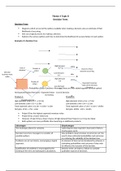
Example of a Decision Tree
High Demand £16m
Cost of Product A 0.7 Chance of that
decision (£2m) outcome occurring
Decision Low Demand
business must £6m
0.3
make
High Demand
£12m
Product B 0.6
Expected monetary
(£2m)
value of the decision.
Low Demand £4m
Expected Value = Probability of Each Outcome x Revenue Revenue
0.4 (these are then added together for each option)
Net Expected Value (Net Gain) = Expected Value – Cost of decision
Do Nothing
Product A: £0 B:
Product
Possible outcome
High demand: £16m x 0.7 = £11.2m High demand: £12m x 0.6 = £7.2m
Low demand: £6m x 0.3 = £1.8m Low demand: £4m x 0.4 = £1.6m
Total expected value: £11.2m + £1.8m = £13m Total expected value: £7.2m + £1.6m = £8.8m
Net gain: £13m - £7m = £6m Net gain: £8.8m - £2m = £6.8m
Project B has the highest expected monetary value
Project B has a lower initial cost
However, Project B has a lower chance of high demand than Project A so it may be riskier.
Both options are more profitable than launching no additional products.
Advantages Disadvantages
The technique allows for certainty. Gathering the data required is hard and is likely to
involve guess work.
Decision trees force managers to consider all New problems mean previous occurrences can’t be
possible options. used to base estimated probabilities and outcomes
on, reducing the reliability of the decision tree.
Problems are set out clearly, encouraging a logical An element of bias can be introduced by whoever is
approach. estimating probabilities and outcomes if they wish
to influence the outcome of the decision.
Qualification of problems is encouraged by the Decision trees can lead to a failure to consider
drawing of the tree and subsequent calculations. qualitative aspects of decisions.
Decision Trees
Decision Trees
Diagrams which set out all the options available when making a decision, plus an estimate of their
likelihood of occurring.
Sets out a logical process for making a decision.
Explores the various options and tries to determine the likelihood of success/failure of each option.
Example of a Decision Tree
High Demand £16m
Cost of Product A 0.7 Chance of that
decision (£2m) outcome occurring
Decision Low Demand
business must £6m
0.3
make
High Demand
£12m
Product B 0.6
Expected monetary
(£2m)
value of the decision.
Low Demand £4m
Expected Value = Probability of Each Outcome x Revenue Revenue
0.4 (these are then added together for each option)
Net Expected Value (Net Gain) = Expected Value – Cost of decision
Do Nothing
Product A: £0 B:
Product
Possible outcome
High demand: £16m x 0.7 = £11.2m High demand: £12m x 0.6 = £7.2m
Low demand: £6m x 0.3 = £1.8m Low demand: £4m x 0.4 = £1.6m
Total expected value: £11.2m + £1.8m = £13m Total expected value: £7.2m + £1.6m = £8.8m
Net gain: £13m - £7m = £6m Net gain: £8.8m - £2m = £6.8m
Project B has the highest expected monetary value
Project B has a lower initial cost
However, Project B has a lower chance of high demand than Project A so it may be riskier.
Both options are more profitable than launching no additional products.
Advantages Disadvantages
The technique allows for certainty. Gathering the data required is hard and is likely to
involve guess work.
Decision trees force managers to consider all New problems mean previous occurrences can’t be
possible options. used to base estimated probabilities and outcomes
on, reducing the reliability of the decision tree.
Problems are set out clearly, encouraging a logical An element of bias can be introduced by whoever is
approach. estimating probabilities and outcomes if they wish
to influence the outcome of the decision.
Qualification of problems is encouraged by the Decision trees can lead to a failure to consider
drawing of the tree and subsequent calculations. qualitative aspects of decisions.


