Theme 3 Topic 15
Human Resources and Competitiveness
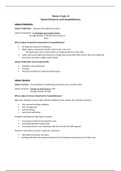
Labour Productivity
Labour Productivity – measures the output per worker
Labour Productivity = Total Output (per period of time)
Average Number of Workers (per period of
time)
Why is Labour Productivity Important for Competitiveness?
An important measure of efficiency
Higher labour productivity should result in lower unit costs
- The fixed salary costs of each worker are being spread over more units
Lower unit costs enables the business to charge lower prices than their rivals or they can charge the
same price and enjoy a higher profit margin
Labour Productivity Can be Improved By:
Investing in new machinery
Training
Financial incentives for improved performance
Labour Turnover
Labour Turnover – the proportion of staff leaving a business over a period of time
Labour Turnover = Number of Staff Leaving x 100
Average Number of Staff
Why is Labour Turnover Important for Competitiveness?
High rates of labour turnover often indicate problems of low morale. This could be caused by:
Poor pay and working conditions
Poor management
Lack of training
Lack of job satisfaction
Problems resulting from high labour turnover:
Increased recruitment and selection costs
Increased induction training costs
Low productivity as new employees take time to learn the skill required
However, some labour turnover is good for a business:
New staff can bring in new ideas
Existing staff who have worked a long time for the business may become set in their ways
Human Resources and Competitiveness
Labour Productivity
Labour Productivity – measures the output per worker
Labour Productivity = Total Output (per period of time)
Average Number of Workers (per period of
time)
Why is Labour Productivity Important for Competitiveness?
An important measure of efficiency
Higher labour productivity should result in lower unit costs
- The fixed salary costs of each worker are being spread over more units
Lower unit costs enables the business to charge lower prices than their rivals or they can charge the
same price and enjoy a higher profit margin
Labour Productivity Can be Improved By:
Investing in new machinery
Training
Financial incentives for improved performance
Labour Turnover
Labour Turnover – the proportion of staff leaving a business over a period of time
Labour Turnover = Number of Staff Leaving x 100
Average Number of Staff
Why is Labour Turnover Important for Competitiveness?
High rates of labour turnover often indicate problems of low morale. This could be caused by:
Poor pay and working conditions
Poor management
Lack of training
Lack of job satisfaction
Problems resulting from high labour turnover:
Increased recruitment and selection costs
Increased induction training costs
Low productivity as new employees take time to learn the skill required
However, some labour turnover is good for a business:
New staff can bring in new ideas
Existing staff who have worked a long time for the business may become set in their ways