Theme 1 Topic 4
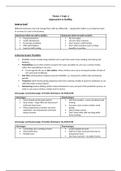
Approaches to Staffing
Asset or Cost?
Different businesses view and manage their staff very differently – viewing them either as an important asset
or as more of a cost to the business.
Businesses which see staff as ASSETS… Businesses which see staff as COSTS…
Pay good pensions Pay low wages
Avoid redundancies Use zero hour contracts
Encourage socialising Don’t invest in staff training
Offer paid holidays Don’t offer incentives such as fringe
Invest in staff training benefits or overtime
Achieving Greater Flexibility
Flexibility can be created using methods such as part-time work, home working, job sharing and
flexitime.
Multiskilling occurs when workers are given the scope and ability to carry out a variety of tasks,
rather than specialising in one area
Encouraged by the use of job rotation, where workers carry out an increased number of tasks at
the same level of difficulty
Part-time working allows employers greater flexibility, e.g. having extra staff in place during busy
periods
Temporary work involves giving employees short term contracts (makes it easier for employers to cut
staff when their contract lapses)
Outsourcing involves finding another external business to carry out part of the production process, in
order to cut costs or achieve a better level of service
Advantages and Disadvantages of Flexible Working for the EMPLOYER
Advantages Disadvantages
More relaxed and focused workers Part-time workers = more recruitment and
Save money – large office not necessary if training
staff work from home Increases costs as more workers need
More productivity as workers are more paying
motivated = less absenteeism and lower Hard to keep control
labour turnover Don’t know what staff are doing while
home working
Advantages and Disadvantages of Flexible Working for the EMPLOYEE
Advantages Disadvantages
Commuting cut is working at home Lonely/isolated at home
More family time Paid less if they work part time due to
Flexible hours doing fewer hours
Zero hour contract = no stable income
Approaches to Staffing
Asset or Cost?
Different businesses view and manage their staff very differently – viewing them either as an important asset
or as more of a cost to the business.
Businesses which see staff as ASSETS… Businesses which see staff as COSTS…
Pay good pensions Pay low wages
Avoid redundancies Use zero hour contracts
Encourage socialising Don’t invest in staff training
Offer paid holidays Don’t offer incentives such as fringe
Invest in staff training benefits or overtime
Achieving Greater Flexibility
Flexibility can be created using methods such as part-time work, home working, job sharing and
flexitime.
Multiskilling occurs when workers are given the scope and ability to carry out a variety of tasks,
rather than specialising in one area
Encouraged by the use of job rotation, where workers carry out an increased number of tasks at
the same level of difficulty
Part-time working allows employers greater flexibility, e.g. having extra staff in place during busy
periods
Temporary work involves giving employees short term contracts (makes it easier for employers to cut
staff when their contract lapses)
Outsourcing involves finding another external business to carry out part of the production process, in
order to cut costs or achieve a better level of service
Advantages and Disadvantages of Flexible Working for the EMPLOYER
Advantages Disadvantages
More relaxed and focused workers Part-time workers = more recruitment and
Save money – large office not necessary if training
staff work from home Increases costs as more workers need
More productivity as workers are more paying
motivated = less absenteeism and lower Hard to keep control
labour turnover Don’t know what staff are doing while
home working
Advantages and Disadvantages of Flexible Working for the EMPLOYEE
Advantages Disadvantages
Commuting cut is working at home Lonely/isolated at home
More family time Paid less if they work part time due to
Flexible hours doing fewer hours
Zero hour contract = no stable income