Theme 1 Topic 14
Product/Service Design
Design
Design – finding the right balance between creating a product or service that people desire to have, that they
can afford to buy and that works reliably
Designers work to a design brief, which tells them the criteria for looks, costs and quality. Larger firms have
their own design teams, but smaller firms tend to rely on design consultants.
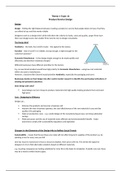
The Design Brief
Aesthetics – the look, feel, smell or taste – the appeal to the senses.
Function – does it work? Is it reliable, strong enough, or light enough for the
customers purpose?
Economic Manufacture – is the design simple enough to be made quickly and
efficiently and therefore relatively cheaply?
Different businesses have different priorities for the factors:
E.g. an own brand product would have high priority for Economic Manufacture – using low-cost materials
which are easy to manufacture.
However, a business like Channel would prioritise Aesthetics, especially the packaging and scent.
Businesses decide on their design mix after careful market research to identify the purchasing motivations of
existing and potential customers.
Does design add value?
Good design can turn cheap-to-produce materials into high quality looking products that command
high price.
Cost – Designing for Efficiency
Design can…
Enhance the products and services a business sell
Improve the way a business operates, the cost effectiveness of the raw materials it uses and the
quality of its packaging
Help cut production costs – e.g. careful design of the manufacturing process can bring substantial
savings
Make processes and the use of materials more efficient and environmentally friendly – helps
businesses comply with sustainability regulations and legislation
Changes in the Elements of the Design Mix to Reflect Social Trends
Sustainability – means that the purchase you make will not affect long-term supplies of the product e.g. by
planting a tree for every one you fell
One key issue for businesses is that as resources deplete, their prices will rise. This will be the signal for
designers to try to find alternative solutions based on different materials.
e.g. recycling companies are testing substitute for oil as this is the basis for all plastics. If plastic runs out, there
may be a need to switch back to glass.
Product/Service Design
Design
Design – finding the right balance between creating a product or service that people desire to have, that they
can afford to buy and that works reliably
Designers work to a design brief, which tells them the criteria for looks, costs and quality. Larger firms have
their own design teams, but smaller firms tend to rely on design consultants.
The Design Brief
Aesthetics – the look, feel, smell or taste – the appeal to the senses.
Function – does it work? Is it reliable, strong enough, or light enough for the
customers purpose?
Economic Manufacture – is the design simple enough to be made quickly and
efficiently and therefore relatively cheaply?
Different businesses have different priorities for the factors:
E.g. an own brand product would have high priority for Economic Manufacture – using low-cost materials
which are easy to manufacture.
However, a business like Channel would prioritise Aesthetics, especially the packaging and scent.
Businesses decide on their design mix after careful market research to identify the purchasing motivations of
existing and potential customers.
Does design add value?
Good design can turn cheap-to-produce materials into high quality looking products that command
high price.
Cost – Designing for Efficiency
Design can…
Enhance the products and services a business sell
Improve the way a business operates, the cost effectiveness of the raw materials it uses and the
quality of its packaging
Help cut production costs – e.g. careful design of the manufacturing process can bring substantial
savings
Make processes and the use of materials more efficient and environmentally friendly – helps
businesses comply with sustainability regulations and legislation
Changes in the Elements of the Design Mix to Reflect Social Trends
Sustainability – means that the purchase you make will not affect long-term supplies of the product e.g. by
planting a tree for every one you fell
One key issue for businesses is that as resources deplete, their prices will rise. This will be the signal for
designers to try to find alternative solutions based on different materials.
e.g. recycling companies are testing substitute for oil as this is the basis for all plastics. If plastic runs out, there
may be a need to switch back to glass.