

HCCA CHC Exam Prep (2025) ACTUAL EXAM COMPREHENSIVE
HCCA CHC Exam Prep
QUESTIONS AND VERIFIED ACCURATE SOLUTION (DETAILED &
Study online at https://quizlet.com/_bkzvcg
ELABORATED) |GET IT 100% ACCURATE!! 2025 TEST!!
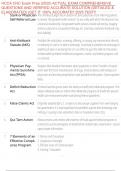
1. Stark or Physician The Omnibus Budget Reconciliation Act bans physicians from referring patients
Self-Referral Law to receive "designated health services" to any entity with which the physician has
a financial relationship. Designated health services include lab testing, imaging
services, physical or occupational therapy, etc. (civil only, medicare/medicaid only,
strict liability)
2. Anti-Kickback Prohibits the solicitation, receiving, offering, or paying any remuneration directly
Statute (AKS) or indirectly in cash or in kind in exchange. Essentially it prohibits the exchange of
anything of value in exchange for or in an effort to gain the referral of business
reimbursable by federal healthcare programs. (intent, any federal program, civil
or criminal)
3. Physician Pay- Requires that detailed information about payments or other "transfers of value"
ments Sunshine worth over $10 from manufacturers of drugs, medical devices and biologics to
Act (PPSA) physicians and teaching hospitals be made available to the public. (Open payment
data).
4. Deficit Reduction A Federal law that grants states the ability to modify their Medicaid programs. This
Act allows individual states to reform their Medicaid programs to fit with the present
health care environment while maintaining federal guidelines.
5. False Claims Act Originally adopted byt U.S. Congress to discourage suppliers from overcharging
the government, it is now legislation that prohibits anyone from knowingly sub-
mitting or causing to be submitted a false or fraudulent claim. DOJ.
6. Qui Tam Action Allows persons and entities with evidence of fraud against federal programs or
contracts to sue the wrongdoer on behalf of the United States Government - based
upon private information.
7. 7 Elements of an 1. Policies and Procedures
Effective Compli- 2. Compliance Oversight
ance Program 3. Effective Lines of Communication
4. Training / Education
, HCCA CHC Exam Prep
Study online at https://quizlet.com/_bkzvcg
5. Internal Monitoring and Auditing
6. Enforcing standards through consistent disciplinary guidelines
7. Responding timely to detracted offenses.
8. HIPAA Privacy A covered entity may not use of disclose protected health information except for
Rule when it is required or permitted.
9. HIPAA Security Essentially outlines how to protect PHI in an electronic form (only applies to ePHI).
Rule 3 main safeguards: administrative, technical, and physical.
10. Reportable 1. breach of privacy rule
Breach 2. unsecured PHI
3. more than "low probability of compromise"
11. Breach Notifica- 1. Notify individual in writing
tion -if less than 10 are undeliverable, alternate notification method (like email) may be
use
-if more than 10 are undeliverable, must post contact info to web page.
2. Must notify OCR within 60 days of the end of the calendar year
-if it involves 500+ people, must notify OCR immediately
3. Org. must notify media if 501+ individuals in same jurisdiction/state are involved
in breach.
12. Patient Rights o Request for restriction of PHI Use - as long as it is reasonable i.e. can restrict
Under HIPAA that information is not given to insurance company, given that the pt. requests in
writing, self-pays, and the info would be typically given to the insurance company.
o Request for confidential communication (i.e. no voicemails)
o Request Access/Copy of medical record
o Request for Medical Record amendment
o Request to review accounting of disclosures
HCCA CHC Exam Prep
QUESTIONS AND VERIFIED ACCURATE SOLUTION (DETAILED &
Study online at https://quizlet.com/_bkzvcg
ELABORATED) |GET IT 100% ACCURATE!! 2025 TEST!!
1. Stark or Physician The Omnibus Budget Reconciliation Act bans physicians from referring patients
Self-Referral Law to receive "designated health services" to any entity with which the physician has
a financial relationship. Designated health services include lab testing, imaging
services, physical or occupational therapy, etc. (civil only, medicare/medicaid only,
strict liability)
2. Anti-Kickback Prohibits the solicitation, receiving, offering, or paying any remuneration directly
Statute (AKS) or indirectly in cash or in kind in exchange. Essentially it prohibits the exchange of
anything of value in exchange for or in an effort to gain the referral of business
reimbursable by federal healthcare programs. (intent, any federal program, civil
or criminal)
3. Physician Pay- Requires that detailed information about payments or other "transfers of value"
ments Sunshine worth over $10 from manufacturers of drugs, medical devices and biologics to
Act (PPSA) physicians and teaching hospitals be made available to the public. (Open payment
data).
4. Deficit Reduction A Federal law that grants states the ability to modify their Medicaid programs. This
Act allows individual states to reform their Medicaid programs to fit with the present
health care environment while maintaining federal guidelines.
5. False Claims Act Originally adopted byt U.S. Congress to discourage suppliers from overcharging
the government, it is now legislation that prohibits anyone from knowingly sub-
mitting or causing to be submitted a false or fraudulent claim. DOJ.
6. Qui Tam Action Allows persons and entities with evidence of fraud against federal programs or
contracts to sue the wrongdoer on behalf of the United States Government - based
upon private information.
7. 7 Elements of an 1. Policies and Procedures
Effective Compli- 2. Compliance Oversight
ance Program 3. Effective Lines of Communication
4. Training / Education
, HCCA CHC Exam Prep
Study online at https://quizlet.com/_bkzvcg
5. Internal Monitoring and Auditing
6. Enforcing standards through consistent disciplinary guidelines
7. Responding timely to detracted offenses.
8. HIPAA Privacy A covered entity may not use of disclose protected health information except for
Rule when it is required or permitted.
9. HIPAA Security Essentially outlines how to protect PHI in an electronic form (only applies to ePHI).
Rule 3 main safeguards: administrative, technical, and physical.
10. Reportable 1. breach of privacy rule
Breach 2. unsecured PHI
3. more than "low probability of compromise"
11. Breach Notifica- 1. Notify individual in writing
tion -if less than 10 are undeliverable, alternate notification method (like email) may be
use
-if more than 10 are undeliverable, must post contact info to web page.
2. Must notify OCR within 60 days of the end of the calendar year
-if it involves 500+ people, must notify OCR immediately
3. Org. must notify media if 501+ individuals in same jurisdiction/state are involved
in breach.
12. Patient Rights o Request for restriction of PHI Use - as long as it is reasonable i.e. can restrict
Under HIPAA that information is not given to insurance company, given that the pt. requests in
writing, self-pays, and the info would be typically given to the insurance company.
o Request for confidential communication (i.e. no voicemails)
o Request Access/Copy of medical record
o Request for Medical Record amendment
o Request to review accounting of disclosures


