Holism and Reductionism Debate
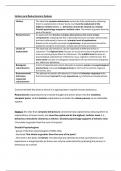
Holism The idea that complex behaviours cannot be fully explained by reducing
them to explanations at lower levels, but must be explained at the
highest, holistic level (i.e., behaviour should be viewed as a whole).
Gestalt psychology supports a holistic view: ‘the whole is greater than the
sum of its parts.’
Reductionism An approach that breaks complex phenomena into more simple
components, implying that this is desirable because complex phenomena
are best understood in terms of a simpler level of explanation.
Based on the scientific principle of parsimony: all phenomena should be
explained using the most basic, simple (lowest level) principles.
Levels of The idea that any behaviour can be explained at different levels of
explanation reduction. The highest level focuses on social and cultural explanations of
how our social groups affect our behaviour. The middle level focuses on
psychological explanations of behaviour (e.g. cognitive, behavioural). The
lower level focuses on biological explanations of how hormones and genes
etc. affect our behaviour.
Biological A form of reductionism which attempts to explain social and psychological
reductionism phenomena at a lower biological level (in terms of the actions of genes,
hormones, etc.)
Environmental The attempt to explain all behaviour in terms of stimulus-response links
(stimulus- that have been learned through experience e.g. behaviourist explanations.
response)
reductionism
Concerned with the level at which it is appropriate to explain human behaviour.
Reductionist explanations try to break thought and action down into the smallest,
simplest parts, whilst holistic explanations consider the whole person as an indivisible
system.
Holism: the idea that complex behaviours cannot be fully explained by reducing them to
explanations at lower levels, but must be explained at the highest, holistic level (i.e.,
behaviour should be viewed as a whole). Gestalt psychology supports a holistic view:
‘the whole is greater than the sum of its parts.’
Gestalt Psychologists
- group of German psychologists (1920s-30s)
- declared ‘the whole is greater than the sum of its parts’
- this view is the basis of holism: the idea that any attempt to break up behaviour and
experience is inappropriate as these can only be understood by analysing the person or
behaviour as a whole
, - view shared by humanistic psychologists who saw successful therapy as bringing
together all aspects of the whole person
- Advocates looking at the whole person
- Human behaviour is far more complex – necessary to consider the person from a
less-reductionist level
- Less scientific, makes behaviour harder to predict
- Does not ignore complexity of human behaviour
A03
Examples:
Humanistic psychology: focuses on the whole person, Maslow’s hierarchy of needs
Memory: memory is a complex system (multi-store model is holistic)
Reductionism: an approach that breaks complex phenomena into more simple
components, implying that this is desirable because complex phenomena are best
understood in terms of a simpler level of explanation.
Based on the scientific principle of parsimony: all phenomena should be explained using
the most basic, simple (lowest level) principles.
Reductionism
- analyses behaviour by breaking it down into its constituent parts
- based on the scientific principle of parsimony: that all phenomena should be explained
using the most basic principles
- simplest, easiest, economical level of explanation
- suggests there is no need to explain behaviour in terms of complex processes –
explanations should be as simple as possible
Biological reductionism: A form of reductionism which attempts to explain social and
psychological phenomena at a lower biological level (in terms of the actions of genes,
hormones, etc.)
- more precise/simple
A03
Examples:
Holism The idea that complex behaviours cannot be fully explained by reducing
them to explanations at lower levels, but must be explained at the
highest, holistic level (i.e., behaviour should be viewed as a whole).
Gestalt psychology supports a holistic view: ‘the whole is greater than the
sum of its parts.’
Reductionism An approach that breaks complex phenomena into more simple
components, implying that this is desirable because complex phenomena
are best understood in terms of a simpler level of explanation.
Based on the scientific principle of parsimony: all phenomena should be
explained using the most basic, simple (lowest level) principles.
Levels of The idea that any behaviour can be explained at different levels of
explanation reduction. The highest level focuses on social and cultural explanations of
how our social groups affect our behaviour. The middle level focuses on
psychological explanations of behaviour (e.g. cognitive, behavioural). The
lower level focuses on biological explanations of how hormones and genes
etc. affect our behaviour.
Biological A form of reductionism which attempts to explain social and psychological
reductionism phenomena at a lower biological level (in terms of the actions of genes,
hormones, etc.)
Environmental The attempt to explain all behaviour in terms of stimulus-response links
(stimulus- that have been learned through experience e.g. behaviourist explanations.
response)
reductionism
Concerned with the level at which it is appropriate to explain human behaviour.
Reductionist explanations try to break thought and action down into the smallest,
simplest parts, whilst holistic explanations consider the whole person as an indivisible
system.
Holism: the idea that complex behaviours cannot be fully explained by reducing them to
explanations at lower levels, but must be explained at the highest, holistic level (i.e.,
behaviour should be viewed as a whole). Gestalt psychology supports a holistic view:
‘the whole is greater than the sum of its parts.’
Gestalt Psychologists
- group of German psychologists (1920s-30s)
- declared ‘the whole is greater than the sum of its parts’
- this view is the basis of holism: the idea that any attempt to break up behaviour and
experience is inappropriate as these can only be understood by analysing the person or
behaviour as a whole
, - view shared by humanistic psychologists who saw successful therapy as bringing
together all aspects of the whole person
- Advocates looking at the whole person
- Human behaviour is far more complex – necessary to consider the person from a
less-reductionist level
- Less scientific, makes behaviour harder to predict
- Does not ignore complexity of human behaviour
A03
Examples:
Humanistic psychology: focuses on the whole person, Maslow’s hierarchy of needs
Memory: memory is a complex system (multi-store model is holistic)
Reductionism: an approach that breaks complex phenomena into more simple
components, implying that this is desirable because complex phenomena are best
understood in terms of a simpler level of explanation.
Based on the scientific principle of parsimony: all phenomena should be explained using
the most basic, simple (lowest level) principles.
Reductionism
- analyses behaviour by breaking it down into its constituent parts
- based on the scientific principle of parsimony: that all phenomena should be explained
using the most basic principles
- simplest, easiest, economical level of explanation
- suggests there is no need to explain behaviour in terms of complex processes –
explanations should be as simple as possible
Biological reductionism: A form of reductionism which attempts to explain social and
psychological phenomena at a lower biological level (in terms of the actions of genes,
hormones, etc.)
- more precise/simple
A03
Examples: