The Function of the Endocrine System
The Nervous System vs The Endocrine System
The nervous system (our primary internal communication system) is based on electrical
and chemical neural signals whereas the endocrine system (our secondary internal
communication system) is based on hormones.
The endocrine system works alongside the nervous system to control vital functions in the
body. The nervous system acts more rapidly than the endocrine system, but they are
both very fast. The nervous system’s average response time is 0.25 seconds but may be
as quick as 100 milliseconds. The endocrine responses are slower because hormones
have to travel through the bloodstream (about 2 or 3 seconds) but last longer.
Definitions
Endocrine system: A chemical system of communication in the body that instructs
glands to manufacture and release hormones directly into the bloodstream. It uses
blood vessels to deliver hormones towards their target organs in the body. The hormones
then bind with specific receptors in order to regulate cell or organ activity and control
vital physiological processes in the body.
Hormones: The body’s chemical messengers which travel through the bloodstream and
are carried to target sites throughout the body. Hormones influence many different
physiological processes, including mood, the stress response and bonding between
mother and newborn baby.
Hypothalamus
(controls the pituitary gland)
Releasing hormone (1)
Pituitary Gland
release of hormone 1
Feedback inhibits
("master gland" - influences the release
of hormones from other glands)
Feedback inhibits release
Stimulating hormone (2)
of hormone 2
Target Gland
(e.g. adrenal gland)
Target gland hormone
e.g. oestrogen
Into the bloodstream
, (Hypothalamus + pituitary gland are in the brain)
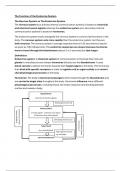
The endocrine system is regulated by feedback similar to how a thermostat regulates
temperature in a room.
For example, a signal is sent from the hypothalamus to the pituitary gland to secrete a
‘stimulating hormone’ into the bloodstream. This hormone then signals the target glands
(e.g. adrenal glands) to secrete its hormone (e.g. adrenaline).
As levels of this hormone rise in the bloodstream, the hypothalamus shuts down
secretion of the releasing hormone and the pituitary gland then shuts down secretion
of the stimulating hormone. This subsequently slows down secretion of the target
gland’s hormone, resulting in stable concentrations of hormones circulating in the blood
stream. This is called negative feedback and prevents hormone levels from rising too high.
Gland Hormone released Effect/function
Pituitary gland Anterior pituitary gland: Known as the ‘master gland’ as it controls
(only one in the - Adrenocorticotrophic the release of hormones from all the other
brain – rules all hormone (ACTH) endocrine glands in the body.
other glands) - Lutenising hormone ACTH is involved in the stress response by
(LH) stimulating the production and release of
- Follicle-stimulating cortisol from the adrenal cortex.
hormone (LSH) LH and FSH stimulate the ovaries to
Posterior pituitary gland: produce oestrogen and progesterone and
- Oxytocin stimulate the testes to produce
testosterone and sperm.
Oxytocin stimulates contraction of the
uterus during childbirth and is important in
mother-infant bonding.
Pineal gland Melatonin Melatonin helps regulate the body’s internal
clock (your circadian rhythm), including the
sleep-wake cycle. It is a sleep-inducing
hormone. It is produced when it is dark,
making you sleepy.
Thyroid gland Thyroxine Thyroxine is responsible for regulating your
body’s metabolism, the process in which
your body transforms the food you eat into
energy. It controls how much energy your
body uses (the metabolic rate).
Adrenal glands Adrenal medulla (inner part): Adrenaline and noradrenaline prepare the
- Adrenaline body for fight or flight. Adrenaline helps the
- Noradrenaline body respond to a stressful situation,
Adrenal cortex (outer part): increasing heart rate and blood flow to your
- Cortisol muscles and brain and helping with the
- Aldosterone
The Nervous System vs The Endocrine System
The nervous system (our primary internal communication system) is based on electrical
and chemical neural signals whereas the endocrine system (our secondary internal
communication system) is based on hormones.
The endocrine system works alongside the nervous system to control vital functions in the
body. The nervous system acts more rapidly than the endocrine system, but they are
both very fast. The nervous system’s average response time is 0.25 seconds but may be
as quick as 100 milliseconds. The endocrine responses are slower because hormones
have to travel through the bloodstream (about 2 or 3 seconds) but last longer.
Definitions
Endocrine system: A chemical system of communication in the body that instructs
glands to manufacture and release hormones directly into the bloodstream. It uses
blood vessels to deliver hormones towards their target organs in the body. The hormones
then bind with specific receptors in order to regulate cell or organ activity and control
vital physiological processes in the body.
Hormones: The body’s chemical messengers which travel through the bloodstream and
are carried to target sites throughout the body. Hormones influence many different
physiological processes, including mood, the stress response and bonding between
mother and newborn baby.
Hypothalamus
(controls the pituitary gland)
Releasing hormone (1)
Pituitary Gland
release of hormone 1
Feedback inhibits
("master gland" - influences the release
of hormones from other glands)
Feedback inhibits release
Stimulating hormone (2)
of hormone 2
Target Gland
(e.g. adrenal gland)
Target gland hormone
e.g. oestrogen
Into the bloodstream
, (Hypothalamus + pituitary gland are in the brain)
The endocrine system is regulated by feedback similar to how a thermostat regulates
temperature in a room.
For example, a signal is sent from the hypothalamus to the pituitary gland to secrete a
‘stimulating hormone’ into the bloodstream. This hormone then signals the target glands
(e.g. adrenal glands) to secrete its hormone (e.g. adrenaline).
As levels of this hormone rise in the bloodstream, the hypothalamus shuts down
secretion of the releasing hormone and the pituitary gland then shuts down secretion
of the stimulating hormone. This subsequently slows down secretion of the target
gland’s hormone, resulting in stable concentrations of hormones circulating in the blood
stream. This is called negative feedback and prevents hormone levels from rising too high.
Gland Hormone released Effect/function
Pituitary gland Anterior pituitary gland: Known as the ‘master gland’ as it controls
(only one in the - Adrenocorticotrophic the release of hormones from all the other
brain – rules all hormone (ACTH) endocrine glands in the body.
other glands) - Lutenising hormone ACTH is involved in the stress response by
(LH) stimulating the production and release of
- Follicle-stimulating cortisol from the adrenal cortex.
hormone (LSH) LH and FSH stimulate the ovaries to
Posterior pituitary gland: produce oestrogen and progesterone and
- Oxytocin stimulate the testes to produce
testosterone and sperm.
Oxytocin stimulates contraction of the
uterus during childbirth and is important in
mother-infant bonding.
Pineal gland Melatonin Melatonin helps regulate the body’s internal
clock (your circadian rhythm), including the
sleep-wake cycle. It is a sleep-inducing
hormone. It is produced when it is dark,
making you sleepy.
Thyroid gland Thyroxine Thyroxine is responsible for regulating your
body’s metabolism, the process in which
your body transforms the food you eat into
energy. It controls how much energy your
body uses (the metabolic rate).
Adrenal glands Adrenal medulla (inner part): Adrenaline and noradrenaline prepare the
- Adrenaline body for fight or flight. Adrenaline helps the
- Noradrenaline body respond to a stressful situation,
Adrenal cortex (outer part): increasing heart rate and blood flow to your
- Cortisol muscles and brain and helping with the
- Aldosterone