
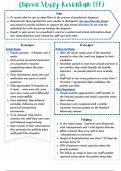
Classic Study: Rosenhan 1973
Aims:
To reveal what he saw as deep flaws in the process of psychiatric diagnosis.
Demonstrate that psychiatrists were unable to distinguish ‘the sane from the insane’
and aimed to provide evidence to support the idea mental disorders lie not with the
individual but with the person making the diagnosis.
Sought to gain access to a psychiatric ward as a patient and obtain information about
how clients/patients were treated by staff and each other.
Procedure: Procedure:
Initial Study: Follow-up Study:
Pseudo patients - 3 females and 5 After the initial study some of the hospitals
males. wanted to show this could not happen in their
Each person presented themselves workplace.
at a psychiatric hospital Rosenhan agreed to send more pseudo patients to
complaining about the same see whether they could identify the healthy
symptoms. imposters - no pseudo patients were actually
False information about jobs and sent.
medication was given to avoid Staff had to rate every patient on a scale from 1-
suspicion. 10 where 1 represented high confidence the
They approached 12 hospitals on patient was fake.
5 states - some were old, some Mini Experiment:
were new, some well staffed and Pseudo patients approached a staff member in
some understaffed. the hospital grounds and asked a question about
Once admitted, they behaved their release.
normally, following an initial Responses were compared with a similar
period of unsurprising encounter between people on the Stanford
nervousness. University campus.
To be released, they had to
convince the staff they were sane Findings:
and behaved cooperatively.
In the initial study, 7 patients were diagnosed
Kept records of their observations
with schizophrenia and 1 with bipolar disorder.
first privately but publicly when
When released they were said to have
staff paid little attention.
‘schizophrenia in remission’.
Length of hospitalisation was from 7-52 days the
average being 19.
30% of patients voiced suspicion about the
pseudo patients.
The follow up study at least one staff member
reported wrong about the patient being fake.
Aims:
To reveal what he saw as deep flaws in the process of psychiatric diagnosis.
Demonstrate that psychiatrists were unable to distinguish ‘the sane from the insane’
and aimed to provide evidence to support the idea mental disorders lie not with the
individual but with the person making the diagnosis.
Sought to gain access to a psychiatric ward as a patient and obtain information about
how clients/patients were treated by staff and each other.
Procedure: Procedure:
Initial Study: Follow-up Study:
Pseudo patients - 3 females and 5 After the initial study some of the hospitals
males. wanted to show this could not happen in their
Each person presented themselves workplace.
at a psychiatric hospital Rosenhan agreed to send more pseudo patients to
complaining about the same see whether they could identify the healthy
symptoms. imposters - no pseudo patients were actually
False information about jobs and sent.
medication was given to avoid Staff had to rate every patient on a scale from 1-
suspicion. 10 where 1 represented high confidence the
They approached 12 hospitals on patient was fake.
5 states - some were old, some Mini Experiment:
were new, some well staffed and Pseudo patients approached a staff member in
some understaffed. the hospital grounds and asked a question about
Once admitted, they behaved their release.
normally, following an initial Responses were compared with a similar
period of unsurprising encounter between people on the Stanford
nervousness. University campus.
To be released, they had to
convince the staff they were sane Findings:
and behaved cooperatively.
In the initial study, 7 patients were diagnosed
Kept records of their observations
with schizophrenia and 1 with bipolar disorder.
first privately but publicly when
When released they were said to have
staff paid little attention.
‘schizophrenia in remission’.
Length of hospitalisation was from 7-52 days the
average being 19.
30% of patients voiced suspicion about the
pseudo patients.
The follow up study at least one staff member
reported wrong about the patient being fake.


