
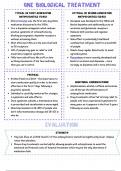
One Biological Treatment
Typical or first-generation Atypical or second-generation
antipsychotics (fgas): antipsychotics (sgas):
Chlorpromazine was the first anti-psychotic Clozapine was developed in the 1960s and
medication discovered in the 1950s. blocks dopamine and additionally acts on
It is a dopamine antagonist which reduces serotonin and glutamate receptors.
positive symptoms of schizophrenia by Reduces both positive and negative
blocking postsynaptic dopamine receptors symptoms.
without activating them. Side effect is potentially fatal blood
Most effective FAGs are the ones that bind condition but still gives relief to around 60%
to D2 receptors. of people.
40% of people may gain no relief or still Clients have regular blood tests to avoid
experience negative symptoms. agranulocytosis.
FAGs have side effects like stiff or slow Risperidone is more recently developed and
writhing movements of the face and body binds to serotonin and dopamine - more
that you can’t control. strongly to dopamine and is more affective.
Protocol:
Krishna Patel et al 2014 - the importance to
start medication quickly in order to be most Additional considerations:
effective in the first 7 days following a Amphetamines, alcohol, caffeine and nicotine
psychotic episode. can all disrupt the effectiveness of
Individual is carefully monitored for changes antipsychotic medication.
in symptoms and side effects. Drug treatments often fail to bring relief to
Once symptoms subside, a maintenance dose people who have experienced symptoms for
is prescribed and socialisation is encouraged. many years as it appears in the first 5 years
Mood improvement in 60-80% of people who following an acute episode.
don’t take maintenance dosage and 18-32% in
who do.
evaluation
strength:
Ying Jiao Zhao et al 2016 found 17 of the antipsychotics tested had significantly lower relapse
rates than placebos.
Shows drug treatments can be helpful, allowing people with schizophrenia to avoid the
emotional and financial costs of hospital treatment which may be the only alternative if
medication fails.
Typical or first-generation Atypical or second-generation
antipsychotics (fgas): antipsychotics (sgas):
Chlorpromazine was the first anti-psychotic Clozapine was developed in the 1960s and
medication discovered in the 1950s. blocks dopamine and additionally acts on
It is a dopamine antagonist which reduces serotonin and glutamate receptors.
positive symptoms of schizophrenia by Reduces both positive and negative
blocking postsynaptic dopamine receptors symptoms.
without activating them. Side effect is potentially fatal blood
Most effective FAGs are the ones that bind condition but still gives relief to around 60%
to D2 receptors. of people.
40% of people may gain no relief or still Clients have regular blood tests to avoid
experience negative symptoms. agranulocytosis.
FAGs have side effects like stiff or slow Risperidone is more recently developed and
writhing movements of the face and body binds to serotonin and dopamine - more
that you can’t control. strongly to dopamine and is more affective.
Protocol:
Krishna Patel et al 2014 - the importance to
start medication quickly in order to be most Additional considerations:
effective in the first 7 days following a Amphetamines, alcohol, caffeine and nicotine
psychotic episode. can all disrupt the effectiveness of
Individual is carefully monitored for changes antipsychotic medication.
in symptoms and side effects. Drug treatments often fail to bring relief to
Once symptoms subside, a maintenance dose people who have experienced symptoms for
is prescribed and socialisation is encouraged. many years as it appears in the first 5 years
Mood improvement in 60-80% of people who following an acute episode.
don’t take maintenance dosage and 18-32% in
who do.
evaluation
strength:
Ying Jiao Zhao et al 2016 found 17 of the antipsychotics tested had significantly lower relapse
rates than placebos.
Shows drug treatments can be helpful, allowing people with schizophrenia to avoid the
emotional and financial costs of hospital treatment which may be the only alternative if
medication fails.


