PART 2 – MAJOR PLAYERS IN THE GLOBAL FINANCIAL CRISIS
15/10
Low interest rates
After the dot.com bubble and again after 9/11 Greenspan kept US rates very low. His
concern was primarily about job creation and corrosive deflation. From a peak of 6.5% in
2000, Greenspan cut the rates aggressively to 1.25% in November 2002 where it stayed until
June 2003 when the Fed cut rates to 1% the lowest rate since 1958. With inflation running
at 2% real interest rates were actually negative. It was only in June of 2004 that the Fed
started to raise rates and then only gradually.
There was a political reason why US rates were kept so low relating to the poor safety net in
the US. US unemployment benefits are much lower than those of other countries. In the US
benefits ran out after 6 months, in France 3 years. The US did not have a free health service.
Therefore recessions are less tolerated, and more severe and hence a greater desire or
pressure to stimulate economies through tax cuts, spending increases and through
monetary policies.
By a simple “Taylor*” rule official US rates in 2003 were “super loose” [or too low] by 250
bps (or 2.5%) and after the cuts post 9/11 by 3.5%. The Taylor Rule is a monetary policy rule
that stipulates how much the central bank would or should change interest rates in
response to actual inflation compared to targeted inflation and actual GDP compared to
target GDP. In Europe rates were super loose by 1.75% in 2004 and 1.50% in 2006. The issue
in Europe was that there was a single interest rate for mature developed countries (France
and Germany) and for other more developing countries such as Ireland, Spain and Portugal.
16/10
We know that short term interest rates as set by both the FED and the ECB were too low.
We know the political reason behind why the US kept rates low to avoid recessions and that
in Europe rates were set for mature countries like France and Germany.
External factors
Outside influences that can impact a business, various external factors can impact the ability
of a business. Another important factor keeping long term interest rates low in the US was
the global savings glut (flow of funds) flowing from China, Japan, Germany and the oil
exporters that kept long term interest rates in the US low.
After the Asian crisis in 1997 many of the emerging countries made a concerted effort to
accumulate official reserves denominated in currencies unlikely to be affected by
speculative behaviour and could be used to defend their currency (a flight to quality of
sorts).
Global savings glut
Ben Bernake – in March 2005 when still a Fed Governor – delivered a paper titled “The
Global Saving Glut and the US Current Account Deficit”. Bernake said that “it is impossible to
understand the crisis without reference to the global imbalances in trade and capital flows
that began in the latter half of the 1990s”
,After the Asian crisis in 1997 many of the emerging countries made a concerted effort to
accumulate official reserves denominated in currencies unlikely to be affected by
speculative behaviour and could be used to defend their currency (a flight to quality of
sorts).
Before the Asian crisis many emerging countries required substantial investment in plant,
equipment and land and building and needed to borrow money to finance from world
financial markets to finance this growth. When the crisis hit - investors pulled their
investments out on-masse which resulted in the crisis and the consequent IMF bailouts. A
number of countries decided to “abandon grand investment projects and debt fuelled
expansion. A number decided to boost exports by maintaining an undervalued currency. In
buying foreign currency to keep their exchange rate down, they also built large foreign
exchange reserves which could serve as rainy day fund if foreign lenders ever panicked
again”. “In buying foreign currency to keep their exchange rate down, they also built large
foreign exchange reserves which could serve as rainy day fund if foreign lenders ever
panicked again”
Why into US dollars
As Bernanke noted “Because the dollar is the leading international currency reserve
currency, and because some emerging-market countries use the dollar as a reference point
when managing the values of their own currencies, the saving flowing out of the developing
world has been directed relatively more into dollar-denominated assets, such as US
Treasury securities” – as they are considered extremely safe, they were doing this to keep
their currency low. “The effects of the saving outflows may thus have been felt
disproportionately on US interest rates and the US dollar.” Strong demand for US bonds
kept bond prices high and interest rates low (there is an inverse relationship between bond
prices and interest rates).
Effect of the savings glut
The FED started to raise rates when the economy started to overheat. It had no impact on
longer term rates (which drive mortgages and longer time lending) there is so much money
coming into the economy the price of the securities is kept higher and keeping the yield the
same. What the global savings glut did was to neutralise the FEDs number 1 technique for
adjusting the economy, changing interest rates. “The availability of foreign funding negated
FEDs efforts to raise interest rates”.
Chinese and the US
The Chinese alone have, it is estimated, accumulated US$2.5 trillion of US treasuries. The
impact of this demand was to drive prices higher and hence keep interest rates low in the
US which made spending cheaper and credit more available.
What was the impact on low interest rates?
Low interest rates made it easier for borrowers to take out mortgages and other forms of
debt such as credit cards and unsecured loans. It also increased the search for yield through
demand for structured products such as CDO and MBS which offered slightly higher yield
than competing products. The search for yield by banks in particular was exacerbated by
two further developments. The development of electronic trading platforms which reduced
, bank commissions and the intro of the € in 1999 which reduced transactions banks could
make from foreign exchange and the convergence of government yields.
However, research by the Fed showed that if the US had kept rates at the Taylor rate during
2003-2005 the effect of this would have been to raise mortgage payments by an additional
$75 a month. This doesn’t seem like a lot to affect buyers behaviour. Finally, house prices
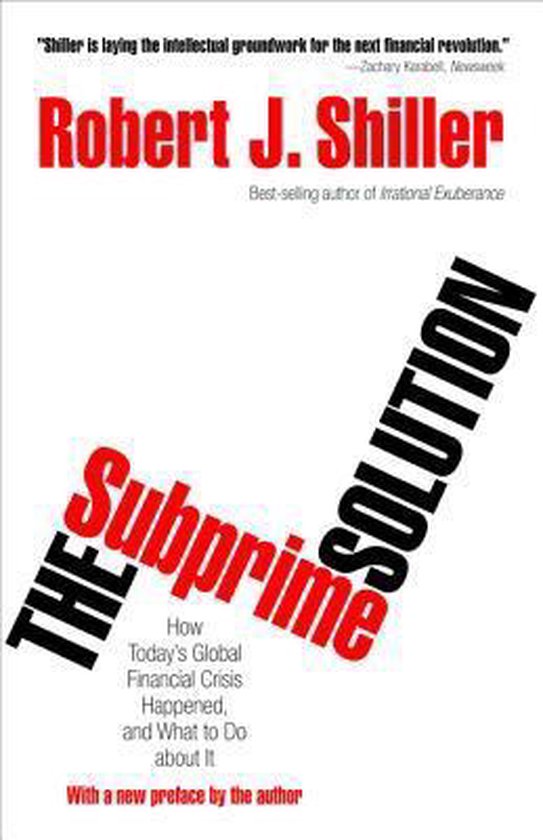
began to accelerate in 1998 before the Fed’s 2001 rate hike. In addition, as Shiller points
out, Fed did raise rates from 2004 but house prices continued to rise. Low interest rates
fuelled the fire but whether they were the primary cause of the housing bubble is
debatable.
Deregulation and Innovation
Deregulation
Minsky highlighted that as the economy was stable there would a move towards a
relaxation of regulation and also moves by financial institutions to circumvent deregulation.
Deregulation is based on the ideology of efficient markets. Markets are self-regulating and
can police themselves rather than needing this to be done externally. This relies upon a firm
belief in the efficiency of markets. “Authorities should not interfere with the pollinating bees
of Wall Street” – Greenspan’s opinion. “The market – stabilizing private regulatory forces
should gradually displace many cumbersome, increasingly ineffective government
structures” quote from Greenspan. After the crisis Greenspan, said where he went wrong
was his belief in organisations being best at knowing what was right for them.
Gramm-Leach Bliley Act
In the US the passing of the Gramm-Leach-Bliley Act at the end of 1999 was an important
milestone in the process of deregulation. In the UK in 1986 as a Thatcher initiative there was
a significant deregulation of the financial sector aimed at making the UK more attractive as a
financial sector. Inter alia allowed investment banks and retail banks to merge (dealers and
advisors) and foreign firms to purchase UK brokers.
Glass-Steagall Act abolished
The Gramm Bill effectively repealed the Glass-Steagall Act of 1933. Glass-Steagall Act was a
consequence of the Great Depression and intended to provide better bank regulation and
protections. Importantly Glass-Steagall had separated commercial banks (that lend money
and took deposits) from investment banks, so investment banks wouldn’t have access to
retail customer- mums and pops. The final catalyst in the repeal of Glass-Steagall was the
proposed merger of Travellers with Citi.
Deregulation and Concentration
Stieglitz points out that, in the years after the passage of the Gramm Bill, the market share
of the five largest US banks grew from 8% in 1995 to 30% in 2009. Not only was the financial
sector becoming more concentrated it was also becoming more significant to global growth.
Firms grew as they gained access (as public companies not partnerships) to pools of
institutional funds and also because of their belief in their ability to manage risk (through
financial innovations). In 2006 global banking profits were US$788 billion, over US$150
15/10
Low interest rates
After the dot.com bubble and again after 9/11 Greenspan kept US rates very low. His
concern was primarily about job creation and corrosive deflation. From a peak of 6.5% in
2000, Greenspan cut the rates aggressively to 1.25% in November 2002 where it stayed until
June 2003 when the Fed cut rates to 1% the lowest rate since 1958. With inflation running
at 2% real interest rates were actually negative. It was only in June of 2004 that the Fed
started to raise rates and then only gradually.
There was a political reason why US rates were kept so low relating to the poor safety net in
the US. US unemployment benefits are much lower than those of other countries. In the US
benefits ran out after 6 months, in France 3 years. The US did not have a free health service.
Therefore recessions are less tolerated, and more severe and hence a greater desire or
pressure to stimulate economies through tax cuts, spending increases and through
monetary policies.
By a simple “Taylor*” rule official US rates in 2003 were “super loose” [or too low] by 250
bps (or 2.5%) and after the cuts post 9/11 by 3.5%. The Taylor Rule is a monetary policy rule
that stipulates how much the central bank would or should change interest rates in
response to actual inflation compared to targeted inflation and actual GDP compared to
target GDP. In Europe rates were super loose by 1.75% in 2004 and 1.50% in 2006. The issue
in Europe was that there was a single interest rate for mature developed countries (France
and Germany) and for other more developing countries such as Ireland, Spain and Portugal.
16/10
We know that short term interest rates as set by both the FED and the ECB were too low.
We know the political reason behind why the US kept rates low to avoid recessions and that
in Europe rates were set for mature countries like France and Germany.
External factors
Outside influences that can impact a business, various external factors can impact the ability
of a business. Another important factor keeping long term interest rates low in the US was
the global savings glut (flow of funds) flowing from China, Japan, Germany and the oil
exporters that kept long term interest rates in the US low.
After the Asian crisis in 1997 many of the emerging countries made a concerted effort to
accumulate official reserves denominated in currencies unlikely to be affected by
speculative behaviour and could be used to defend their currency (a flight to quality of
sorts).
Global savings glut
Ben Bernake – in March 2005 when still a Fed Governor – delivered a paper titled “The
Global Saving Glut and the US Current Account Deficit”. Bernake said that “it is impossible to
understand the crisis without reference to the global imbalances in trade and capital flows
that began in the latter half of the 1990s”
,After the Asian crisis in 1997 many of the emerging countries made a concerted effort to
accumulate official reserves denominated in currencies unlikely to be affected by
speculative behaviour and could be used to defend their currency (a flight to quality of
sorts).
Before the Asian crisis many emerging countries required substantial investment in plant,
equipment and land and building and needed to borrow money to finance from world
financial markets to finance this growth. When the crisis hit - investors pulled their
investments out on-masse which resulted in the crisis and the consequent IMF bailouts. A
number of countries decided to “abandon grand investment projects and debt fuelled
expansion. A number decided to boost exports by maintaining an undervalued currency. In
buying foreign currency to keep their exchange rate down, they also built large foreign
exchange reserves which could serve as rainy day fund if foreign lenders ever panicked
again”. “In buying foreign currency to keep their exchange rate down, they also built large
foreign exchange reserves which could serve as rainy day fund if foreign lenders ever
panicked again”
Why into US dollars
As Bernanke noted “Because the dollar is the leading international currency reserve
currency, and because some emerging-market countries use the dollar as a reference point
when managing the values of their own currencies, the saving flowing out of the developing
world has been directed relatively more into dollar-denominated assets, such as US
Treasury securities” – as they are considered extremely safe, they were doing this to keep
their currency low. “The effects of the saving outflows may thus have been felt
disproportionately on US interest rates and the US dollar.” Strong demand for US bonds
kept bond prices high and interest rates low (there is an inverse relationship between bond
prices and interest rates).
Effect of the savings glut
The FED started to raise rates when the economy started to overheat. It had no impact on
longer term rates (which drive mortgages and longer time lending) there is so much money
coming into the economy the price of the securities is kept higher and keeping the yield the
same. What the global savings glut did was to neutralise the FEDs number 1 technique for
adjusting the economy, changing interest rates. “The availability of foreign funding negated
FEDs efforts to raise interest rates”.
Chinese and the US
The Chinese alone have, it is estimated, accumulated US$2.5 trillion of US treasuries. The
impact of this demand was to drive prices higher and hence keep interest rates low in the
US which made spending cheaper and credit more available.
What was the impact on low interest rates?
Low interest rates made it easier for borrowers to take out mortgages and other forms of
debt such as credit cards and unsecured loans. It also increased the search for yield through
demand for structured products such as CDO and MBS which offered slightly higher yield
than competing products. The search for yield by banks in particular was exacerbated by
two further developments. The development of electronic trading platforms which reduced
, bank commissions and the intro of the € in 1999 which reduced transactions banks could
make from foreign exchange and the convergence of government yields.
However, research by the Fed showed that if the US had kept rates at the Taylor rate during
2003-2005 the effect of this would have been to raise mortgage payments by an additional
$75 a month. This doesn’t seem like a lot to affect buyers behaviour. Finally, house prices
began to accelerate in 1998 before the Fed’s 2001 rate hike. In addition, as Shiller points
out, Fed did raise rates from 2004 but house prices continued to rise. Low interest rates
fuelled the fire but whether they were the primary cause of the housing bubble is
debatable.
Deregulation and Innovation
Deregulation
Minsky highlighted that as the economy was stable there would a move towards a
relaxation of regulation and also moves by financial institutions to circumvent deregulation.
Deregulation is based on the ideology of efficient markets. Markets are self-regulating and
can police themselves rather than needing this to be done externally. This relies upon a firm
belief in the efficiency of markets. “Authorities should not interfere with the pollinating bees
of Wall Street” – Greenspan’s opinion. “The market – stabilizing private regulatory forces
should gradually displace many cumbersome, increasingly ineffective government
structures” quote from Greenspan. After the crisis Greenspan, said where he went wrong
was his belief in organisations being best at knowing what was right for them.
Gramm-Leach Bliley Act
In the US the passing of the Gramm-Leach-Bliley Act at the end of 1999 was an important
milestone in the process of deregulation. In the UK in 1986 as a Thatcher initiative there was
a significant deregulation of the financial sector aimed at making the UK more attractive as a
financial sector. Inter alia allowed investment banks and retail banks to merge (dealers and
advisors) and foreign firms to purchase UK brokers.
Glass-Steagall Act abolished
The Gramm Bill effectively repealed the Glass-Steagall Act of 1933. Glass-Steagall Act was a
consequence of the Great Depression and intended to provide better bank regulation and
protections. Importantly Glass-Steagall had separated commercial banks (that lend money
and took deposits) from investment banks, so investment banks wouldn’t have access to
retail customer- mums and pops. The final catalyst in the repeal of Glass-Steagall was the
proposed merger of Travellers with Citi.
Deregulation and Concentration
Stieglitz points out that, in the years after the passage of the Gramm Bill, the market share
of the five largest US banks grew from 8% in 1995 to 30% in 2009. Not only was the financial
sector becoming more concentrated it was also becoming more significant to global growth.
Firms grew as they gained access (as public companies not partnerships) to pools of
institutional funds and also because of their belief in their ability to manage risk (through
financial innovations). In 2006 global banking profits were US$788 billion, over US$150