
Succession
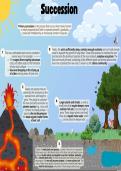
Primary succession is the process that occurs when newly formed
or newly exposed land (with no species present) is gradually
colonised (inhabited) by an increasing number of species
5 Finally, the soil is sufficiently deep, contains enough nutrients and can hold enough
1 This new uninhabited land can be created in water to support the growth of large trees. These final species to colonise the new
several ways. For example: land become the dominant species of the now relatively complex ecosystem. The
The magma from erupting volcanoes final community formed, containing all the different plant and animal species that
cools and often leads to the formation have now colonised the new land, is known as the climax community
of new rock surfaces
Sea-level dropping or the drying up
of a lake, leaving areas of bare rock
2
Seeds and spores that are
carried by the wind land on the
exposed rock and begin to
grow. They begin to colonise 4
the new land and are known as Larger plants and shrubs, as well as
pioneer species (e.g., moss and small trees that require deeper, more
lichens). As these pioneer nutrient-rich soil, can now begin to
species die and decompose, grow. These larger plants and small
the dead organic matter forms trees also require more water, which
a basic soil can be stored in deeper soils
3
..........
Seeds of small plants and grasses, carried in the wind or transported
other ways (e.g. in bird faeces) land on this basic soil and begin to grow
(these smaller plants are adapted to survive in shallow, relatively
nutrient-poor soils). As these small plants and shrubs die and
decompose, the new soil becomes deeper and more nutrient-rich. The
roots of these small plants and shrubs also form a network that helps to
hold the soil in place and prevent it from being washed away
Primary succession is the process that occurs when newly formed
or newly exposed land (with no species present) is gradually
colonised (inhabited) by an increasing number of species
5 Finally, the soil is sufficiently deep, contains enough nutrients and can hold enough
1 This new uninhabited land can be created in water to support the growth of large trees. These final species to colonise the new
several ways. For example: land become the dominant species of the now relatively complex ecosystem. The
The magma from erupting volcanoes final community formed, containing all the different plant and animal species that
cools and often leads to the formation have now colonised the new land, is known as the climax community
of new rock surfaces
Sea-level dropping or the drying up
of a lake, leaving areas of bare rock
2
Seeds and spores that are
carried by the wind land on the
exposed rock and begin to
grow. They begin to colonise 4
the new land and are known as Larger plants and shrubs, as well as
pioneer species (e.g., moss and small trees that require deeper, more
lichens). As these pioneer nutrient-rich soil, can now begin to
species die and decompose, grow. These larger plants and small
the dead organic matter forms trees also require more water, which
a basic soil can be stored in deeper soils
3
..........
Seeds of small plants and grasses, carried in the wind or transported
other ways (e.g. in bird faeces) land on this basic soil and begin to grow
(these smaller plants are adapted to survive in shallow, relatively
nutrient-poor soils). As these small plants and shrubs die and
decompose, the new soil becomes deeper and more nutrient-rich. The
roots of these small plants and shrubs also form a network that helps to
hold the soil in place and prevent it from being washed away


