

Written by students who passed Immediately available after payment Read online or as PDF Wrong document? Swap it for free 4.6 TrustPilot
logo-home
Document preview thumbnail
Preview 1 out of 3 pages
Summary

Cell Biology summary

Document preview thumbnail
Preview 1 out of 3 pages

This university-level cell biology document provides a comprehensive and in-depth overview of cellular structure, function, and molecular processes. It begins with the foundational principles of cell theory and distinguishes between prokaryotic and eukaryotic cells in terms of organization, genetic material, and organelles. The document elaborates on the structure and function of the plasma membrane, describing the fluid mosaic model and various transport mechanisms including passive and active transport, endocytosis, and exocytosis. It covers all major organelles in detail, such as the nucleus, mitochondria, endoplasmic reticulum, Golgi apparatus, lysosomes, peroxisomes, and the cytoskeleton, explaining their roles in maintaining cell function and homeostasis. The notes also explore the processes of gene expression, from DNA transcription to RNA processing and protein synthesis, highlighting post-translational modifications that regulate protein function. Cell signaling is thoroughly discussed, including types of cell communication (autocrine, paracrine, endocrine, and juxtacrine), receptor-ligand interactions, and major signaling pathways involving second messengers like cAMP and calcium ions. The document explains the cell cycle in depth, including its regulation by checkpoints and the processes of mitosis and apoptosis. It also addresses cellular metabolism, covering glycolysis, the citric acid cycle, oxidative phosphorylation, and anaerobic fermentation. In addition, the extracellular matrix and cell adhesion mechanisms are outlined, with emphasis on integrins and various cell junctions. Advanced topics include cancer cell biology, focusing on oncogenes, tumor suppressor genes, and the hallmarks of cancer such as uncontrolled proliferation and resistance to cell death. The notes integrate modern techniques used in cell biology research, such as microscopy (light, fluorescence, confocal, electron), Western blotting, PCR, immunostaining, flow cytometry, and cell fractionation. Overall, the document serves as a detailed academic resource ideal for university courses in cell biology, biochemistry, or molecular biology, and is useful for both exam preparation and research foundations.

Content preview

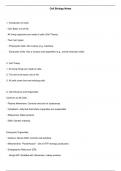
Cell Biology Notes


1. Introduction to Cells

- Cell: Basic unit of life.

- All living organisms are made of cells (Cell Theory).

- Two main types:

- Prokaryotic Cells: No nucleus (e.g., bacteria).

- Eukaryotic Cells: Has a nucleus and organelles (e.g., animal and plant cells).


2. Cell Theory

1. All living things are made of cells.

2. The cell is the basic unit of life.

3. All cells come from pre-existing cells.


3. Cell Structure and Organelles

Common to All Cells:

- Plasma Membrane: Controls entry/exit of substances.

- Cytoplasm: Jelly-like fluid where organelles are suspended.

- Ribosomes: Make proteins.

- DNA: Genetic material.


Eukaryotic Organelles:

- Nucleus: Stores DNA, controls cell activities.

- Mitochondria: "Powerhouse" - site of ATP (energy) production.

- Endoplasmic Reticulum (ER):

- Rough ER: Studded with ribosomes; makes proteins.

Document information

Study
Unknown
Uploaded on
May 27, 2025
Number of pages
3
Written in
2024/2025
Type
Summary
£7.96

Wrong document? Swap it for free Within 14 days of purchase and before downloading, you can choose a different document. You can simply spend the amount again.
Written by students who passed
Immediately available after payment
Read online or as PDF

Sold
0
Followers
0
Items
1
Last sold
-


Why students choose Stuvia

Created by fellow students, verified by reviews

Quality you can trust: written by students who passed their exams and reviewed by others who've used these revision notes.

Didn't get what you expected? Choose another document

No problem! You can straightaway pick a different document that better suits what you're after.

Pay as you like, start learning straight away

No subscription, no commitments. Pay the way you're used to via credit card and download your PDF document instantly.

Student with book image

“Bought, downloaded, and smashed it. It really can be that simple.”

Alisha Student

Working on your references?

Create accurate citations in APA, MLA and Harvard with our free citation generator.

Working on your references?

Frequently asked questions

