

Books 1
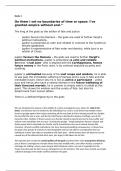
On them I set no boundaries of time or space: I’ve
granted empire without end.”
The king of the gods as the arbiter of fate and justice
- Jupiter favours the Romans – the gods are used to further Vergil’s
political motivations.
- Jupiter is presented as calm and reliable in contrast to the hysterical
female goddesses
- Jupiter is representative of fate order and destiny, while Juno is an
arbiter of Chaos
Jupiter favours the Romans – the gods are used to further Vergil’s
political motivations. Jupiter is presented as calm and reliable
whereas “cruel Juno” who is aligned with the Carthaginians, Romes
future enemy in the Punic wars, is by contrast depicted as petty and
scathing
Jupiter is untroubled because of his vast scope and wisdom, he is able
to see past the immediate suffering of Aeneas and is sure in fate and the
inevitable future, hence why he is not as active a participant – unlike
Juno and Venus who have a vested interest in the future wellbeing of
their favoured mortals, he is content to simply watch it unfold at this
point. This shows his wisdom and the surety of fate, but also his
detachment from human affairs.
There is a defined Higharchy to the gods
We are introduced to Aeneas in the middle of a storm arranged by Juno, where he ‘falls to his
knees’ and laments how he wished to die defending Troy. Juno’s cruel divine intervention stems
from her grudge against the trojans stemming all the way back to Paris refusing to pick her, despite
the fact that the war is won, and the fact that Rome is destined to destroy Carthage, one of her
favourite cities. Neither of these reasons are directly related to Aeneid and yet he must suffer and
endure many hardships sent my Juno “nursing her grudge.” Vergil juxtaposes Aeneas’ despair and
divine power that is excerted over his life, and it characterises Juno as an almost human-like
character, driven by selfish motivations, her furor having devastating consequences. It shows how
the gods view groups of mortals as interchangeable and are not able to conceptualise them as
individuals in their own right or empathise with their pain – while Aeneas does not deserve has not
caused any of the offences that drive Juno, her anger is still taken out on him.
This episode also reveals the careful politics of the gods and how there exist among them divisions,
just as there is amongst the mortals whose lives they meddle with. Juno offers Aeolus a nymph in
exchange for setting a storm, upon Aeneas which Neptune calms, not out of sympathy for the
Trojan’s but because he felt it was an infringement on his territory. This sows how mortals are simply
collateral damage in the wider conflicts between the gods.
, Him grieving his men but carrying on anyway
– piet asand leadership how he embodies the stoic roman ideal of a hero who represses suffering in
order to maintain face and lead his men for the sake of the greater good
“He feigns hope on his face”
Meeting Venus in the forest disguised as huntress - the disconnection between mortals and the gods
showing how Venus isn’t able to empathise with him and sees Aeneas as a tool of fate to fulfil the
greater destiny of Rome
“Annoyed at his complaints Venus cut off his laments saying I’m sure the gods don’t hate you”
Seeing the fresco of the fighting at Troy at Junos temple in Carthage
Book 2
Hector showing up in Aeneas dream - shows the forceful inevitability of fate - “get out.. goddess
born save yourself from the flames.. if there was anything I could have done to defend our great city
I would have done it” + the pitiful imagery of him brutalised “his legs pierced and swollen” -> the
futility of resisting fate, he encourages Aeneas to flee and protect himself rather than rushing into
heroism - Aeneas has to put aside his personal despair and desire for heroism in order to conform
to the greater force of fate and its plan, however the fact that Aeneas dies not immediately
respond to this guidance ands instead rallies his men hows that early in the epic he is still resistant
to the fate being pushed onto him, and whiled he might show some resentment later (“grumbling
he turned to the Tyrian town”) he is eventually worn down into accepting it pushing down his own
emotions for the same of a greater good.
Hector’s plea also shows how this is greater than just Aeneas a singular individual, by protecting
himself and fleeing he is carrying with him Troy’s hopes and Legacy creating a place for “or son’s
son’s to live”
Aeneas and his men wanting to die in battle
Aeneas speaks to his men with fatalist despairing language of “certain death” and “the city you love
burns, lets die by plunging into the war”
His tone is nihilistic and there is a juxtaposition between how Aeneas “rouses” his men and the
inevitable death he presents as the only option, showing how by knowing that Troy’s destruction is
imminent completely makes them lose all hope and will to carry on beyond its destruction, their only
hope to die trying to hopelessly defend it
“You piety does nothing panthus”
Priam being killed at the alter with his son polities in front of his family
The subversion of a son being killed before his father, a motif that is continued through
with Pallas, showing how war cuts off young lives and potential, destroying family units
and bringing unimaginable grief
This mindset is present within Priam as well and his age is emphasised within the lines
where he prepares to fight through the descriptors “old man,” “long neglected armour,”
“shaking frame” which invokes pathos at the image of an old man, beyond fighting age,
preparing to fight and die, just like Aeneas and his men, linking the different generations,
through their shared suicidal despair, convey the universality of the glow these feelings
have spread through Troy with the Greek siege.
The imagery of Priam’s weak aged body is juxtaposed with armour he struggles to lift on
himself, invoking a greater pathos when he is finally killed - the Greeks spare no one and in
On them I set no boundaries of time or space: I’ve
granted empire without end.”
The king of the gods as the arbiter of fate and justice
- Jupiter favours the Romans – the gods are used to further Vergil’s
political motivations.
- Jupiter is presented as calm and reliable in contrast to the hysterical
female goddesses
- Jupiter is representative of fate order and destiny, while Juno is an
arbiter of Chaos
Jupiter favours the Romans – the gods are used to further Vergil’s
political motivations. Jupiter is presented as calm and reliable
whereas “cruel Juno” who is aligned with the Carthaginians, Romes
future enemy in the Punic wars, is by contrast depicted as petty and
scathing
Jupiter is untroubled because of his vast scope and wisdom, he is able
to see past the immediate suffering of Aeneas and is sure in fate and the
inevitable future, hence why he is not as active a participant – unlike
Juno and Venus who have a vested interest in the future wellbeing of
their favoured mortals, he is content to simply watch it unfold at this
point. This shows his wisdom and the surety of fate, but also his
detachment from human affairs.
There is a defined Higharchy to the gods
We are introduced to Aeneas in the middle of a storm arranged by Juno, where he ‘falls to his
knees’ and laments how he wished to die defending Troy. Juno’s cruel divine intervention stems
from her grudge against the trojans stemming all the way back to Paris refusing to pick her, despite
the fact that the war is won, and the fact that Rome is destined to destroy Carthage, one of her
favourite cities. Neither of these reasons are directly related to Aeneid and yet he must suffer and
endure many hardships sent my Juno “nursing her grudge.” Vergil juxtaposes Aeneas’ despair and
divine power that is excerted over his life, and it characterises Juno as an almost human-like
character, driven by selfish motivations, her furor having devastating consequences. It shows how
the gods view groups of mortals as interchangeable and are not able to conceptualise them as
individuals in their own right or empathise with their pain – while Aeneas does not deserve has not
caused any of the offences that drive Juno, her anger is still taken out on him.
This episode also reveals the careful politics of the gods and how there exist among them divisions,
just as there is amongst the mortals whose lives they meddle with. Juno offers Aeolus a nymph in
exchange for setting a storm, upon Aeneas which Neptune calms, not out of sympathy for the
Trojan’s but because he felt it was an infringement on his territory. This sows how mortals are simply
collateral damage in the wider conflicts between the gods.
, Him grieving his men but carrying on anyway
– piet asand leadership how he embodies the stoic roman ideal of a hero who represses suffering in
order to maintain face and lead his men for the sake of the greater good
“He feigns hope on his face”
Meeting Venus in the forest disguised as huntress - the disconnection between mortals and the gods
showing how Venus isn’t able to empathise with him and sees Aeneas as a tool of fate to fulfil the
greater destiny of Rome
“Annoyed at his complaints Venus cut off his laments saying I’m sure the gods don’t hate you”
Seeing the fresco of the fighting at Troy at Junos temple in Carthage
Book 2
Hector showing up in Aeneas dream - shows the forceful inevitability of fate - “get out.. goddess
born save yourself from the flames.. if there was anything I could have done to defend our great city
I would have done it” + the pitiful imagery of him brutalised “his legs pierced and swollen” -> the
futility of resisting fate, he encourages Aeneas to flee and protect himself rather than rushing into
heroism - Aeneas has to put aside his personal despair and desire for heroism in order to conform
to the greater force of fate and its plan, however the fact that Aeneas dies not immediately
respond to this guidance ands instead rallies his men hows that early in the epic he is still resistant
to the fate being pushed onto him, and whiled he might show some resentment later (“grumbling
he turned to the Tyrian town”) he is eventually worn down into accepting it pushing down his own
emotions for the same of a greater good.
Hector’s plea also shows how this is greater than just Aeneas a singular individual, by protecting
himself and fleeing he is carrying with him Troy’s hopes and Legacy creating a place for “or son’s
son’s to live”
Aeneas and his men wanting to die in battle
Aeneas speaks to his men with fatalist despairing language of “certain death” and “the city you love
burns, lets die by plunging into the war”
His tone is nihilistic and there is a juxtaposition between how Aeneas “rouses” his men and the
inevitable death he presents as the only option, showing how by knowing that Troy’s destruction is
imminent completely makes them lose all hope and will to carry on beyond its destruction, their only
hope to die trying to hopelessly defend it
“You piety does nothing panthus”
Priam being killed at the alter with his son polities in front of his family
The subversion of a son being killed before his father, a motif that is continued through
with Pallas, showing how war cuts off young lives and potential, destroying family units
and bringing unimaginable grief
This mindset is present within Priam as well and his age is emphasised within the lines
where he prepares to fight through the descriptors “old man,” “long neglected armour,”
“shaking frame” which invokes pathos at the image of an old man, beyond fighting age,
preparing to fight and die, just like Aeneas and his men, linking the different generations,
through their shared suicidal despair, convey the universality of the glow these feelings
have spread through Troy with the Greek siege.
The imagery of Priam’s weak aged body is juxtaposed with armour he struggles to lift on
himself, invoking a greater pathos when he is finally killed - the Greeks spare no one and in


