1
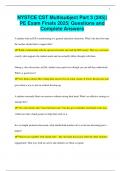
NYSTCE CST Multisubject Part 3 (245)|
PE Exam Finals 2025| Questions and
Complete Answers
A student with an IEP is transitioning to a general education classroom. What’s the best first step
the teacher should take to support this?
Build a relationship with the special ed teacher and read the IEP closely. That way you know
exactly what supports the student needs and can actually follow through with them.
During a class discussion, an ELL student stays quiet even though you can tell they understood.
What’s a good move?
Give them a choice like writing their answer first or using visuals. It lowers the pressure and
gives them a way to join in without freezing up.
A student constantly blurts out answers without raising their hand. What's an effective strategy to
manage this?
Set a rule clearly, like “raise hand and wait,” but also give reminders and maybe some non-
verbal cues like a hand gesture to help them stick to it.
In a co-taught inclusion classroom, what should both teachers do to avoid one becoming just a
helper?
Plan lessons together with shared roles—like one leads discussion while the other monitors
engagement. That way, both are active and students see them as equals.
, 2
A student with ADHD is forgetting homework a lot. What’s a reasonable classroom support?
Give them a visual checklist or routine and maybe a planner check-in before they leave class.
That helps build habits without just punishing forgetfulness.
A parent emails upset that their child is not being challenged enough. What’s a good first step in
your reply?
Thank them for the concern, then offer to meet and discuss strategies or goals. Keep it
positive and solution-focused rather than defensive.
A student’s reading level is way below grade level. What should you avoid doing during whole-
class reading?
Avoid calling on them to read aloud without support. That can embarrass them. Instead, pair
them up or let them prep with audio first.
You notice a student’s mood has changed dramatically and they’re withdrawing. What’s an
appropriate teacher response?
Talk privately and gently check in, then refer to the school counselor. Don’t ignore it, but
don’t push too hard either.
When planning a math lesson, how can you make it more accessible to students with different
learning styles?
, 3
Use a mix—like visuals, manipulatives, and short videos—plus time for group work and
independent practice. That way more kids can connect with it.
During group work, one student does everything while others slack off. What’s a simple fix?
Assign roles clearly—like recorder, timekeeper, presenter—so everyone knows what they’re
responsible for. Less chaos, more teamwork.
You want to build your students’ self-assessment skills. What’s one way to do that?
Use a simple rubric or checklist and have them rate their own work before turning it in.
Helps them think about quality, not just getting it done.
You’re teaching a science unit and want to support inquiry. What kind of question should you
ask?
Go with open-ended stuff like “What do you notice?” or “What do you think will happen
if…?” Gets them thinking instead of just guessing facts.
An ELL student uses a mix of English and their home language in writing. How should you
respond?
Encourage it as a strength—it shows they’re making connections. You can guide them on
grammar later, but don’t shut it down.
A student keeps interrupting lessons with off-topic questions. What’s a respectful classroom
management move?
NYSTCE CST Multisubject Part 3 (245)|
PE Exam Finals 2025| Questions and
Complete Answers
A student with an IEP is transitioning to a general education classroom. What’s the best first step
the teacher should take to support this?
Build a relationship with the special ed teacher and read the IEP closely. That way you know
exactly what supports the student needs and can actually follow through with them.
During a class discussion, an ELL student stays quiet even though you can tell they understood.
What’s a good move?
Give them a choice like writing their answer first or using visuals. It lowers the pressure and
gives them a way to join in without freezing up.
A student constantly blurts out answers without raising their hand. What's an effective strategy to
manage this?
Set a rule clearly, like “raise hand and wait,” but also give reminders and maybe some non-
verbal cues like a hand gesture to help them stick to it.
In a co-taught inclusion classroom, what should both teachers do to avoid one becoming just a
helper?
Plan lessons together with shared roles—like one leads discussion while the other monitors
engagement. That way, both are active and students see them as equals.
, 2
A student with ADHD is forgetting homework a lot. What’s a reasonable classroom support?
Give them a visual checklist or routine and maybe a planner check-in before they leave class.
That helps build habits without just punishing forgetfulness.
A parent emails upset that their child is not being challenged enough. What’s a good first step in
your reply?
Thank them for the concern, then offer to meet and discuss strategies or goals. Keep it
positive and solution-focused rather than defensive.
A student’s reading level is way below grade level. What should you avoid doing during whole-
class reading?
Avoid calling on them to read aloud without support. That can embarrass them. Instead, pair
them up or let them prep with audio first.
You notice a student’s mood has changed dramatically and they’re withdrawing. What’s an
appropriate teacher response?
Talk privately and gently check in, then refer to the school counselor. Don’t ignore it, but
don’t push too hard either.
When planning a math lesson, how can you make it more accessible to students with different
learning styles?
, 3
Use a mix—like visuals, manipulatives, and short videos—plus time for group work and
independent practice. That way more kids can connect with it.
During group work, one student does everything while others slack off. What’s a simple fix?
Assign roles clearly—like recorder, timekeeper, presenter—so everyone knows what they’re
responsible for. Less chaos, more teamwork.
You want to build your students’ self-assessment skills. What’s one way to do that?
Use a simple rubric or checklist and have them rate their own work before turning it in.
Helps them think about quality, not just getting it done.
You’re teaching a science unit and want to support inquiry. What kind of question should you
ask?
Go with open-ended stuff like “What do you notice?” or “What do you think will happen
if…?” Gets them thinking instead of just guessing facts.
An ELL student uses a mix of English and their home language in writing. How should you
respond?
Encourage it as a strength—it shows they’re making connections. You can guide them on
grammar later, but don’t shut it down.
A student keeps interrupting lessons with off-topic questions. What’s a respectful classroom
management move?