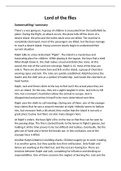
“Othello’s Virtue and Valour ultimately make him admirable”
Introduction Definition:
Virtue: Integrity Moral
Ultimately = Overall at the end of the Valour: Bravery Boldness, Strong (mentally), Prowess Upstanding
play, How do we feel about Othello Noble
Paragraph 1 Othello as admirable
Othello as Admirable ● Senate: Calm, Composed, Rational, impressive
● Immunity to Iago in the beginning
● Talks about his military achievement, bravery as a complete
warrior
● Imagery mental fortitude
● Impressive intermission of his eloquence
● Admirable to the modern audience because he allows
Desdemona to speak and he is also admirable as a warrior
Brabantio and Othello
● Act 1 S 1 prevent blood shed stopped the swords
Othello Military command
● Arrival in cyprus commands and takes control
Paragraph 2 But his obsession with maintaining his military reputation as a virtuous
brave individual obsessed with holding on to his reputation leads to his
Othello Contrast/ Contested by the (tragic) downfall
Audience
Hamartia to maintain his reputation
● A3 S3 Manipulated by Iago (no mental strength)
Desdemona as a threat to his military reputation
● Hits Desdemona publicly
● Kills Desdemona (Very end dead body’s on the stage)
Smothering her with a pillow
Dishonourable, Repulsive, Barbaric, Violent and Bestial
● The audience loses respect for Othello, distasteful to justify his
killing as repugnant (Maintain his reputation)
● Disgraceful characterising himself as a sword of justice
Critic: “To guilty of cheering himself up” TS Eliot
Conclude ○ The audience harden against Othello because of the
way he treats Desdemona (problematic), Cowardly
death escape in the end
○ Despite his admirable qualities in the beginning of the
play
Introduction Definition:
Virtue: Integrity Moral
Ultimately = Overall at the end of the Valour: Bravery Boldness, Strong (mentally), Prowess Upstanding
play, How do we feel about Othello Noble
Paragraph 1 Othello as admirable
Othello as Admirable ● Senate: Calm, Composed, Rational, impressive
● Immunity to Iago in the beginning
● Talks about his military achievement, bravery as a complete
warrior
● Imagery mental fortitude
● Impressive intermission of his eloquence
● Admirable to the modern audience because he allows
Desdemona to speak and he is also admirable as a warrior
Brabantio and Othello
● Act 1 S 1 prevent blood shed stopped the swords
Othello Military command
● Arrival in cyprus commands and takes control
Paragraph 2 But his obsession with maintaining his military reputation as a virtuous
brave individual obsessed with holding on to his reputation leads to his
Othello Contrast/ Contested by the (tragic) downfall
Audience
Hamartia to maintain his reputation
● A3 S3 Manipulated by Iago (no mental strength)
Desdemona as a threat to his military reputation
● Hits Desdemona publicly
● Kills Desdemona (Very end dead body’s on the stage)
Smothering her with a pillow
Dishonourable, Repulsive, Barbaric, Violent and Bestial
● The audience loses respect for Othello, distasteful to justify his
killing as repugnant (Maintain his reputation)
● Disgraceful characterising himself as a sword of justice
Critic: “To guilty of cheering himself up” TS Eliot
Conclude ○ The audience harden against Othello because of the
way he treats Desdemona (problematic), Cowardly
death escape in the end
○ Despite his admirable qualities in the beginning of the
play