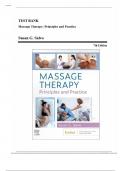
, TEST BANK Massage Therapy 7/E Susan Salvo
x x x x x x
Chapter 01: History of Massage: Prehistoric Times to the Modern Era and Professional
x x x x x x x x x x x x
xSocieties, Organizations, and Associations.
x x x
MULTIPLE x CHOICE
1. Which xmethod xis xdefined xas xmanipulation xof xsoft xtissue xusing xpressure xand xtraction
x for xclinical, xtherapeutic, xand xpalliative xpurposes?
a. Acupuncture
b. Ayurveda
c. Polarity x therapy
d. Massage x therapy
ANS: D
Massage xtherapy xthe xmanipulation xof xsoft xtissue xusing xcompression xand
x decompression/traction xfor xclinical, xtherapeutic, xand xpalliative xpurposes xor xfor xwellness
xand xself-care xpurposes.
2. Which x origin x for x the x word x massage x is x Greek?
a. Mashesh
b. Masso
c. Masser
d. Makeh
ANS: B
The xorigin x of x the x word x massage xis x unclear, x but x can x be xtraced x to x numerous x sources:
x the xHebrew x mashesh, x the x Greek x masso x and x massin, x the x Latin x massa, x the x Arabic
x mass’h, x the xSanskrit xmakeh, xand xthe xFrench xmasser.
3. When x was x the x earliest x the x term x massage x was x used x by x most x European-based x cultures?
a. 1600s
b. 1700s
c. 1800s
d. 1900s
ANS: C
By xthe x early x1800s, x the x term x massage x was x used x by x most x European-based x cultures.
xHistorically, x massage x was x referred x to x by x its x techniques x such x as x friction x or x rubbing.
4. The x first x written x records x of x massage x date x back x to x 3000 x BCE x in x which x country?
a. India
b. China
c. Egypt
d. Greece
ANS: B
Written xrecords xregarding xthe xpractice xof xmassage xgo xback xto x3000 xBCE xin x China.
x Acupuncture x was x not x mentioned x in x Chinese x writings x until x 90 x BCE.
5. Which x work x is x commonly x referred x to x as x the x classic x scripture x of x traditional x Chinese
x medicine?
, a. Tao x Te x Ching
b. Nei x Ching
c. Ayur-Veda
d. Corpus x Hippocraticum
ANS: B
At x the x time x of x Hwang x Ti, x various x ideas x and x beliefs x were x compiled x under x the x name
x of x the xYellow xEmperor x(died xin x 2599 xBCE) xwhich xbecame xthe xclassic xscripture xof
xtraditional x Chinese x medicine x known x as x the x Nei x Chang. x The x Nei x Chang x was
x written x about x 2760 xBCE, x and x this x work x contains x detailed x descriptions x of x massage
x procedures x as x well x as xherbal xmedicines.
6. What x is xthe xoriginal xmassage xtechnique xin xChina xand xthe xprecursor xto xmanual x and
x energetic xtherapies?
a. Polarity
b. Shiatsu
c. Acupuncture
d. Amma
ANS: D
Amma xis xregarded x as xthe xoriginal x massage xtechnique xand xprecursor xto x all xother
xChinese x therapies, xmanual xand xenergetic.
7. Which x healing x method x is x based x on x Hindu x tradition?
a. Ayurveda
b. Shiatsu
c. Amma
d. Polarity
ANS: A
Knowledge xof x amma xmassage xtraveled xto xthe xsubcontinent x of xIndia xfrom xChina, xand xmassage
x became x part x of x Hindu x tradition. x Massage x is x described x in x India’s x first x great x medical
x texts, x the xAyurveda x books x of x wisdom x (about x 1800 x BCE) x and x recommend x massage x as
x an x indispensable xhealing xprocedure.
8. Which xmethod xis xJapanese xbut xbased xon xChinese xmedicine xconcepts, xand xuses xpressure
xapplied x from x the x practitioner’s x thumbs, x elbows, x and x other x parts x of x the x body?
a. Ayurveda
b. Shiatsu
c. Massage
d. Amma
ANS: B
Shiatsu xis xa xJapanese xmethod x based xon xthe xsame xtraditional xChinese xmedicine xconcepts x as
x acupuncture x—energy x flows x in x the xbody xthrough xstreams x called x channels x or
xmeridians. xAcupuncturists x use x needles x at x specific x points x to xbalance x the x flow x of
x energy; x shiatsu xpractitioners x use x their x fingers, x thumbs, x forearms, x elbows, x and x even
x their x knees x and x feet.
9. Who x is x generally x recognized x as x the x father x of x modern x Western x medicine?
a. Galen
b. Celsus
c. Rhazes
, d. Hippocrates
ANS: D
Hippocrates x was x known x to x be x a x fine x physician, x founder x of x a x medical x school,
x author x of xnumerous x books, x and x advocated x the x use x of x massage x or x “rubbing.”
x These x works x are xcollectively xknown xas xthe xCorpus xHippocraticum, xand xsummarized
xmuch xof xwhat xwas x known xabout x disease x and x medicine xin x the xancient x world.
x Hippocrates x is xgenerally xrecognized x as x the x father x of x modern x Western x medicine,
x and x he x believed x that x physicians xshould xavoid xcausing xharm xto xpatients.
10. Who x wrote x the xCanon x of x Medicine, x the x most x famous x book x in xthe x history xof
x medicine x in xboth xthe xEast xand xthe xWest?
a. Rhazes
b. Celsus
c. Avicenna
d. Hippocrates
ANS: C
A xtext xentitled x or xCanon xof xMedicine xwas xwritten xby xone xof xthe
xgreatest x Persian x physicians x of x his x era, x Avicenna x (980-1037). x He x was x also x known
x as x Ibn xSina. x The x Canon x of x Medicine x is x the x most x famous x book x in x the x history
x of x medicine x in xboth xthe xEast xand xthe xWest.
11. Which x individual x discussed x the x effects x of x massage x and x used x friction x on x joints x in x the x 1500s?
a. Paré
b. Harvey
c. Galen
d. Mezger
ANS: A
Ambroise x Paré x (1515-1590) x was x a x famous x French x surgeon x who x was x among x the
x earliest xindividuals xin xthis x era xto x discuss xthe xeffects x of xmassage. x He xused x friction
x to x treat xdislocated xjoints xand xother xorthopedic xconditions.
12. Who xwas xthe xfirst xknown xscientist xto xdemonstrate xthat xblood xcirculation xdue xto
x muscular xcontraction xof xthe xheart?
a. Paré
b. Galen
c. Harvey
d. Mezger
ANS: C
English xscientist xWilliam xHarvey x(1578–1657) xdiscovered xthe xcirculation xof xblood xin
x1628, x and x his x writings x did x much x to x promote x the x acceptance x of x massage x as x a
x treatment xmeasure.
Harvey xobserved x the xhearts x of xliving xanimals x and xdetermined x that x active xphase xof x the
xheart xmuscular x contraction x (systole) x pumped x blood x through x arteries x and x veins.
13. Who x developed x the x Swedish x Movement x Cure, x which x included x the x use x of x massage?
a. Johann x Mezger
b. Pehr x H. x Ling
c. George x Henry x Taylor
x x x x x x
Chapter 01: History of Massage: Prehistoric Times to the Modern Era and Professional
x x x x x x x x x x x x
xSocieties, Organizations, and Associations.
x x x
MULTIPLE x CHOICE
1. Which xmethod xis xdefined xas xmanipulation xof xsoft xtissue xusing xpressure xand xtraction
x for xclinical, xtherapeutic, xand xpalliative xpurposes?
a. Acupuncture
b. Ayurveda
c. Polarity x therapy
d. Massage x therapy
ANS: D
Massage xtherapy xthe xmanipulation xof xsoft xtissue xusing xcompression xand
x decompression/traction xfor xclinical, xtherapeutic, xand xpalliative xpurposes xor xfor xwellness
xand xself-care xpurposes.
2. Which x origin x for x the x word x massage x is x Greek?
a. Mashesh
b. Masso
c. Masser
d. Makeh
ANS: B
The xorigin x of x the x word x massage xis x unclear, x but x can x be xtraced x to x numerous x sources:
x the xHebrew x mashesh, x the x Greek x masso x and x massin, x the x Latin x massa, x the x Arabic
x mass’h, x the xSanskrit xmakeh, xand xthe xFrench xmasser.
3. When x was x the x earliest x the x term x massage x was x used x by x most x European-based x cultures?
a. 1600s
b. 1700s
c. 1800s
d. 1900s
ANS: C
By xthe x early x1800s, x the x term x massage x was x used x by x most x European-based x cultures.
xHistorically, x massage x was x referred x to x by x its x techniques x such x as x friction x or x rubbing.
4. The x first x written x records x of x massage x date x back x to x 3000 x BCE x in x which x country?
a. India
b. China
c. Egypt
d. Greece
ANS: B
Written xrecords xregarding xthe xpractice xof xmassage xgo xback xto x3000 xBCE xin x China.
x Acupuncture x was x not x mentioned x in x Chinese x writings x until x 90 x BCE.
5. Which x work x is x commonly x referred x to x as x the x classic x scripture x of x traditional x Chinese
x medicine?
, a. Tao x Te x Ching
b. Nei x Ching
c. Ayur-Veda
d. Corpus x Hippocraticum
ANS: B
At x the x time x of x Hwang x Ti, x various x ideas x and x beliefs x were x compiled x under x the x name
x of x the xYellow xEmperor x(died xin x 2599 xBCE) xwhich xbecame xthe xclassic xscripture xof
xtraditional x Chinese x medicine x known x as x the x Nei x Chang. x The x Nei x Chang x was
x written x about x 2760 xBCE, x and x this x work x contains x detailed x descriptions x of x massage
x procedures x as x well x as xherbal xmedicines.
6. What x is xthe xoriginal xmassage xtechnique xin xChina xand xthe xprecursor xto xmanual x and
x energetic xtherapies?
a. Polarity
b. Shiatsu
c. Acupuncture
d. Amma
ANS: D
Amma xis xregarded x as xthe xoriginal x massage xtechnique xand xprecursor xto x all xother
xChinese x therapies, xmanual xand xenergetic.
7. Which x healing x method x is x based x on x Hindu x tradition?
a. Ayurveda
b. Shiatsu
c. Amma
d. Polarity
ANS: A
Knowledge xof x amma xmassage xtraveled xto xthe xsubcontinent x of xIndia xfrom xChina, xand xmassage
x became x part x of x Hindu x tradition. x Massage x is x described x in x India’s x first x great x medical
x texts, x the xAyurveda x books x of x wisdom x (about x 1800 x BCE) x and x recommend x massage x as
x an x indispensable xhealing xprocedure.
8. Which xmethod xis xJapanese xbut xbased xon xChinese xmedicine xconcepts, xand xuses xpressure
xapplied x from x the x practitioner’s x thumbs, x elbows, x and x other x parts x of x the x body?
a. Ayurveda
b. Shiatsu
c. Massage
d. Amma
ANS: B
Shiatsu xis xa xJapanese xmethod x based xon xthe xsame xtraditional xChinese xmedicine xconcepts x as
x acupuncture x—energy x flows x in x the xbody xthrough xstreams x called x channels x or
xmeridians. xAcupuncturists x use x needles x at x specific x points x to xbalance x the x flow x of
x energy; x shiatsu xpractitioners x use x their x fingers, x thumbs, x forearms, x elbows, x and x even
x their x knees x and x feet.
9. Who x is x generally x recognized x as x the x father x of x modern x Western x medicine?
a. Galen
b. Celsus
c. Rhazes
, d. Hippocrates
ANS: D
Hippocrates x was x known x to x be x a x fine x physician, x founder x of x a x medical x school,
x author x of xnumerous x books, x and x advocated x the x use x of x massage x or x “rubbing.”
x These x works x are xcollectively xknown xas xthe xCorpus xHippocraticum, xand xsummarized
xmuch xof xwhat xwas x known xabout x disease x and x medicine xin x the xancient x world.
x Hippocrates x is xgenerally xrecognized x as x the x father x of x modern x Western x medicine,
x and x he x believed x that x physicians xshould xavoid xcausing xharm xto xpatients.
10. Who x wrote x the xCanon x of x Medicine, x the x most x famous x book x in xthe x history xof
x medicine x in xboth xthe xEast xand xthe xWest?
a. Rhazes
b. Celsus
c. Avicenna
d. Hippocrates
ANS: C
A xtext xentitled x or xCanon xof xMedicine xwas xwritten xby xone xof xthe
xgreatest x Persian x physicians x of x his x era, x Avicenna x (980-1037). x He x was x also x known
x as x Ibn xSina. x The x Canon x of x Medicine x is x the x most x famous x book x in x the x history
x of x medicine x in xboth xthe xEast xand xthe xWest.
11. Which x individual x discussed x the x effects x of x massage x and x used x friction x on x joints x in x the x 1500s?
a. Paré
b. Harvey
c. Galen
d. Mezger
ANS: A
Ambroise x Paré x (1515-1590) x was x a x famous x French x surgeon x who x was x among x the
x earliest xindividuals xin xthis x era xto x discuss xthe xeffects x of xmassage. x He xused x friction
x to x treat xdislocated xjoints xand xother xorthopedic xconditions.
12. Who xwas xthe xfirst xknown xscientist xto xdemonstrate xthat xblood xcirculation xdue xto
x muscular xcontraction xof xthe xheart?
a. Paré
b. Galen
c. Harvey
d. Mezger
ANS: C
English xscientist xWilliam xHarvey x(1578–1657) xdiscovered xthe xcirculation xof xblood xin
x1628, x and x his x writings x did x much x to x promote x the x acceptance x of x massage x as x a
x treatment xmeasure.
Harvey xobserved x the xhearts x of xliving xanimals x and xdetermined x that x active xphase xof x the
xheart xmuscular x contraction x (systole) x pumped x blood x through x arteries x and x veins.
13. Who x developed x the x Swedish x Movement x Cure, x which x included x the x use x of x massage?
a. Johann x Mezger
b. Pehr x H. x Ling
c. George x Henry x Taylor