
Individual Economic Decision Making
• Rationality: assumes consumers always seek maximise satisfaction in their spending + purchasing decisions, they act in their
own interest (homo economicus)
➢ Heart of traditional demand theory
➢ People always choose what they think at time best choice, next best alternative rejected
• Imperfect Information: consumers rarely possess adequate info to make fully informed +
rational decisions
• Utility: amount satisfaction gained from consumption
➢ Consumers aim maximise utility per £ spent so compare perceived satisfaction with
good/service
• Marginal Utility: satisfaction gained consuming next unit (unit of utils)
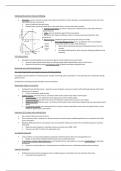
• Diminishing Marginal Utility: occurs as additional units consumed gives
Point of
successively smaller increases total satisfaction
satiation
(yields 0 ➢ Able to derive individuals downward sloping demand line from the
marginal concept
utility)
➢ As marginal utility declines, price consumer willing pay additional units
decreases
Utility Maximisation
• Assumption maximising behaviour by economic agents central traditional economic theory:
➢ Economic agents decide market plans to maximise target objective/good believe pursue self interest
➢ Objective households assume wish maximise utility for good consumption of good/service
Maximising versus Minimising behaviour
Any maximising objective can always be recast as minimising objective
Household’s assumed objective ‘maximising utility’ restated ‘minimising outlay, expenditure or cost obtaining same combination bundle
goods/services’
Consideration minimising principal elucidate economic behaviour
Maximisation subject to constraints
• If all goods free/unlimited income + capacity consume all goods; consumers maximise utility obtaining all goods which yield
utility (to point satiation)
➢ Further consumption yield disutility
• Problem scarcity: consumers face no. constraints which restrict choices they make in market place
➢ Limited income: no one unlimited income (opportunity cost for yielding utility)
➢ Given set of prices: very often consumers can’t influence market prices; consumers’ price takers
➢ Budget constraint: limited income + set of prices limit freedom action market place (opportunity cost assuming all income
spent)
➢ Limited time available: even when goods free, consumers choices impossible consume more one good at time or store
limited no. goods future consumption
Importance of the margin when making choices
• Key concept traditional economic theory
• Given consistent tastes + preferences, rational consumers choose between available goods/services to maximise total utility
from consumption
• Marginal utilities gained from consumption next unit along with relative prices determines combination goods to maximise
total utility
➢ Maximise desired objective: undertake activity up to point where MPB = MPC
➢ Consume up to MU =P (where P is opportunity cost)
Can utility be measured?
• ‘Units of utility’ as measurement happiness/satisfaction individual derives from consuming good/service
➢ Reality: no way which individual mathematically work out utility derivation
• P. Samuelson: concept ‘relative preference’: works backwards from observing how consumers actually behave to observing
preferences
➢ Consumers reveal preferences, choosing at given prices/levels income: combination goods/services purchased
Imperfect Information
• Field behavioural economics recognises humans unlikely always act rationally in face every decision they make
➢ Consumers face imperfect info
• Rationality: assumes consumers always seek maximise satisfaction in their spending + purchasing decisions, they act in their
own interest (homo economicus)
➢ Heart of traditional demand theory
➢ People always choose what they think at time best choice, next best alternative rejected
• Imperfect Information: consumers rarely possess adequate info to make fully informed +
rational decisions
• Utility: amount satisfaction gained from consumption
➢ Consumers aim maximise utility per £ spent so compare perceived satisfaction with
good/service
• Marginal Utility: satisfaction gained consuming next unit (unit of utils)
• Diminishing Marginal Utility: occurs as additional units consumed gives
Point of
successively smaller increases total satisfaction
satiation
(yields 0 ➢ Able to derive individuals downward sloping demand line from the
marginal concept
utility)
➢ As marginal utility declines, price consumer willing pay additional units
decreases
Utility Maximisation
• Assumption maximising behaviour by economic agents central traditional economic theory:
➢ Economic agents decide market plans to maximise target objective/good believe pursue self interest
➢ Objective households assume wish maximise utility for good consumption of good/service
Maximising versus Minimising behaviour
Any maximising objective can always be recast as minimising objective
Household’s assumed objective ‘maximising utility’ restated ‘minimising outlay, expenditure or cost obtaining same combination bundle
goods/services’
Consideration minimising principal elucidate economic behaviour
Maximisation subject to constraints
• If all goods free/unlimited income + capacity consume all goods; consumers maximise utility obtaining all goods which yield
utility (to point satiation)
➢ Further consumption yield disutility
• Problem scarcity: consumers face no. constraints which restrict choices they make in market place
➢ Limited income: no one unlimited income (opportunity cost for yielding utility)
➢ Given set of prices: very often consumers can’t influence market prices; consumers’ price takers
➢ Budget constraint: limited income + set of prices limit freedom action market place (opportunity cost assuming all income
spent)
➢ Limited time available: even when goods free, consumers choices impossible consume more one good at time or store
limited no. goods future consumption
Importance of the margin when making choices
• Key concept traditional economic theory
• Given consistent tastes + preferences, rational consumers choose between available goods/services to maximise total utility
from consumption
• Marginal utilities gained from consumption next unit along with relative prices determines combination goods to maximise
total utility
➢ Maximise desired objective: undertake activity up to point where MPB = MPC
➢ Consume up to MU =P (where P is opportunity cost)
Can utility be measured?
• ‘Units of utility’ as measurement happiness/satisfaction individual derives from consuming good/service
➢ Reality: no way which individual mathematically work out utility derivation
• P. Samuelson: concept ‘relative preference’: works backwards from observing how consumers actually behave to observing
preferences
➢ Consumers reveal preferences, choosing at given prices/levels income: combination goods/services purchased
Imperfect Information
• Field behavioural economics recognises humans unlikely always act rationally in face every decision they make
➢ Consumers face imperfect info


