
APNI KAKSHA 0
, Improvements in food Resources
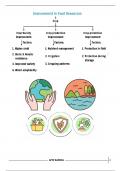
Sustainable Agriculture
The adoption of various farming and production management techniques to maximize
agricultural yield.
1. Conserving natural resources
2. Maintaining environmental balance
3. Coping with changing human needs
Advantages of Sustainable agriculture
Sustainable agriculture is an agricultural production and distribution system that
• Achieves the integration of natural biological cycles and controls.
• Protects and renews soil fertility and the natural resource base.
• Optimizes the management and use of farm resources.
• Reduces the use of non-renewable resources and purchased production inputs.
• Provides an adequate and dependable form of income.
• Promotes opportunity in family farming and farm communities.
Organic Farming
It is the practice of raising crops which have not been polluted with the use of manures,
biofertilizers and biopesticides.
• It prevents pollution of any component of our environment.
• Farm wastes are recycled.
• The foods obtained from organic farming are free pesticides and toxic chemicals.
• Organic farming maintains the soil health.
• The cropping system of organic farming keeps insect pests and weeds under check.
Improvement of Crop Yield
Agriculture is the science and practice of farming, which mainly involves rearing of livestock,
cultivating land, raising crops, harvesting and marketing the produce.
Kharif Crops
• They are monsoon or rainy season crops.
• The crops grow in hot and wet conditions.
• These crops are sown in the beginning of rainy season in June – July.
• These crops are harvested during September – October at the end of Monsoon.
APNI KAKSHA 1
, Improvements in food Resources
Sustainable Agriculture
The adoption of various farming and production management techniques to maximize
agricultural yield.
1. Conserving natural resources
2. Maintaining environmental balance
3. Coping with changing human needs
Advantages of Sustainable agriculture
Sustainable agriculture is an agricultural production and distribution system that
• Achieves the integration of natural biological cycles and controls.
• Protects and renews soil fertility and the natural resource base.
• Optimizes the management and use of farm resources.
• Reduces the use of non-renewable resources and purchased production inputs.
• Provides an adequate and dependable form of income.
• Promotes opportunity in family farming and farm communities.
Organic Farming
It is the practice of raising crops which have not been polluted with the use of manures,
biofertilizers and biopesticides.
• It prevents pollution of any component of our environment.
• Farm wastes are recycled.
• The foods obtained from organic farming are free pesticides and toxic chemicals.
• Organic farming maintains the soil health.
• The cropping system of organic farming keeps insect pests and weeds under check.
Improvement of Crop Yield
Agriculture is the science and practice of farming, which mainly involves rearing of livestock,
cultivating land, raising crops, harvesting and marketing the produce.
Kharif Crops
• They are monsoon or rainy season crops.
• The crops grow in hot and wet conditions.
• These crops are sown in the beginning of rainy season in June – July.
• These crops are harvested during September – October at the end of Monsoon.
APNI KAKSHA 1



