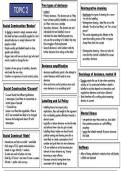
Two types of deviance
TOPIC 2 - Lambert
- Primary deviance ; The deviant acts as if they
Reintegrative shaming
- Braithwaite two types of shaming for a more
have not been publicly labelled as a criminal, +ve role for labelling
as if their crime was a mistake. - Reintegrative shaming : label the act not the
Social Construction ‘Becker’ - Secondary deviance ; The deviant acts and offender “he did a bad thing” not “he is a bad
- To Becker a deviant is simply someone whom individuals that are labelled, once an person”
the label has been successfully applied to. And individual has been labelled people may - This avoids stigmatising the offender at the
deviant behaviour is simply behaviour that only see him according to his label, they may same time making aware of the -ve impact.
people so label then struggle to nd employment Accept them back into society
- People usually get labelled based on class, - Second deviance is what Lambert calls the
gender and ethnicity further deviance form acting out the label - Disintegrative shaming : where not only the
- Argues rules and laws are due to ppl who lead crime but the criminal is labelled this causes
moral crusade to change the law secondary deviance
- Creation of new group of outsiders, deviants Deviance amplification
who break the new rules - deviance ampli cation spiral is the attempt to
- Creation or expansion of social control, police. control deviance which leads to more
Sociology of deviance, mental ill
deviance - Douglas rejects the use of stats when examining
- More and more control produces more and suicide, as it is constructed whether a death is
Social Construction ‘Cicourel’ more deviance in an escalating spiral labelled as suicide depends on interactions and
negotiations between social actors (doctors)
- Cicourel found that of cers typi cations - Stats therefore tell us nothing about meanings
( stereotypes ) lead them to concentrate on
certain types of people
Labelling and CJ Policy decision to commit
- = Criminal bias - labelling theory has import policy
- Justice is not xed but negotiable, When a implications, they add weight to the argument
M/C man arrested less likely to be charged that -ve labelling pushes offenders towards a
Mental illness
because his background doesn t t with deviant career - interpretivists reject these stats too, docs label
stereotypes - Logically to reduce deviance we should make their patients paranoia as a self ful lling
and enforce fewer rules for ppl to break prophecy
- Labelling theory implies we should avoid - Lemert the labeled mentally ill person becomes
Social Construct ‘Stats’ publicly naming and shaming since this is this label
more likely to create a perception of evil
- Interactions see Stats as invalid + unreliable outsider and push them into more deviance
- Each stage of CJS, agents make decisions - CJS can relabel an act by becoming less Goffman
based on age, ethnicity + reaction. tolerant of minor deviance eg. Truancy
- So stats are result of police not crime - effect of being admitted to institution their old identity
becoming a major offence
- Dark g. Of crime = real rate of crime is unseen - Decrease crime by having fewer laws
is killed and replaced
- Alt stats. = prefer victim surveys associated with it, legalise drugs.
fi fi fifi fi ’fi fi fi
TOPIC 2 - Lambert
- Primary deviance ; The deviant acts as if they
Reintegrative shaming
- Braithwaite two types of shaming for a more
have not been publicly labelled as a criminal, +ve role for labelling
as if their crime was a mistake. - Reintegrative shaming : label the act not the
Social Construction ‘Becker’ - Secondary deviance ; The deviant acts and offender “he did a bad thing” not “he is a bad
- To Becker a deviant is simply someone whom individuals that are labelled, once an person”
the label has been successfully applied to. And individual has been labelled people may - This avoids stigmatising the offender at the
deviant behaviour is simply behaviour that only see him according to his label, they may same time making aware of the -ve impact.
people so label then struggle to nd employment Accept them back into society
- People usually get labelled based on class, - Second deviance is what Lambert calls the
gender and ethnicity further deviance form acting out the label - Disintegrative shaming : where not only the
- Argues rules and laws are due to ppl who lead crime but the criminal is labelled this causes
moral crusade to change the law secondary deviance
- Creation of new group of outsiders, deviants Deviance amplification
who break the new rules - deviance ampli cation spiral is the attempt to
- Creation or expansion of social control, police. control deviance which leads to more
Sociology of deviance, mental ill
deviance - Douglas rejects the use of stats when examining
- More and more control produces more and suicide, as it is constructed whether a death is
Social Construction ‘Cicourel’ more deviance in an escalating spiral labelled as suicide depends on interactions and
negotiations between social actors (doctors)
- Cicourel found that of cers typi cations - Stats therefore tell us nothing about meanings
( stereotypes ) lead them to concentrate on
certain types of people
Labelling and CJ Policy decision to commit
- = Criminal bias - labelling theory has import policy
- Justice is not xed but negotiable, When a implications, they add weight to the argument
M/C man arrested less likely to be charged that -ve labelling pushes offenders towards a
Mental illness
because his background doesn t t with deviant career - interpretivists reject these stats too, docs label
stereotypes - Logically to reduce deviance we should make their patients paranoia as a self ful lling
and enforce fewer rules for ppl to break prophecy
- Labelling theory implies we should avoid - Lemert the labeled mentally ill person becomes
Social Construct ‘Stats’ publicly naming and shaming since this is this label
more likely to create a perception of evil
- Interactions see Stats as invalid + unreliable outsider and push them into more deviance
- Each stage of CJS, agents make decisions - CJS can relabel an act by becoming less Goffman
based on age, ethnicity + reaction. tolerant of minor deviance eg. Truancy
- So stats are result of police not crime - effect of being admitted to institution their old identity
becoming a major offence
- Dark g. Of crime = real rate of crime is unseen - Decrease crime by having fewer laws
is killed and replaced
- Alt stats. = prefer victim surveys associated with it, legalise drugs.
fi fi fifi fi ’fi fi fi