

Tort refresh session 1:
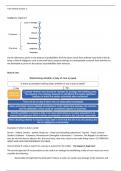
Negligence sequence:
On the claimant to prove on the balance of probabilities all of the above (must have suffered some kind of loss to
bring a claim of negligence such as personal injury, property damage or consequential economic loss) and then on
the defendant to prove on the balance of probabilities their defences.
Duty of care:
Examples of where a duty is owed:
Doctor – Patient, Dentist – patient, Road user – Road user (including pedestrians), Teacher – Pupil, Lecturer –
Student, Employer – Employee, Manufacturer (Donaghue v Stevenson) – Consumer. Fire Brigade is an odd one –
they do not owe duty to attend a fire, but once there, they owe a duty to not make things worse. GO THROUGH
ADAPT AND LOOK FOR PRECEDENTS ON THERE.
How to decide if a duty is owed if no case law is present for the matter – the Caparo 3 stage test:
The second approach (if no precedent can be used as an analogy) to establishing a duty of care means you must
establish the following:
- Reasonable foresight that the defendant’s failure to take care could cause damage to the claimant; and
, - That there was a relationship of proximity (i.e., some connection) between the claimant and the defendant;
and
- It is fair, just and reasonable that the law should recognise a duty on the defendant to take reasonable care
not to cause that damage to the claimant.
Reasonable foresight:
The claimant must fall within a class of individuals put at foreseeable risk by the defendant's action. This is an
objective test, what the reasonable person would be expected to see. It must be reasonably foreseeable that the
lack of care of the defendant would cause the claimant harm.
Evelyn Margreson v JW Roberts LTD [1996] 4 WLUK 21 – Children playing in the loading bay of the defendant's
premises developed mesothelioma in adult life – should have been reasonably foreseeable that the claimants would
be exposed to the risk of lung damage.
Bourhill v Young [1943] AC 92 – Pregnant woman suffered shock and stillbirth after witnessing cycling accident. It
was deemed not reasonably foreseeable that all the people on the street where the negligent driver drove would
suffer injury.
Proximity:
Before a duty of care can arise there needs to be a certain type of relationship between the parties before a duty of
care can arise.
Watson v British Boxing Board [2001] 2 WLR 1256 – Boxer collapsed in the ring and no resuscitation equipment was
available, boxer suffered brain damage. The board, as the only body in the UK that could licence professional boxing
matches and control what medical equipment was available at the ringside had a relationship of sufficient proximity.
Harrison v Technical Sign Co LTD and Active Commercial Interiors v Cluttons [2013] EWCA CIV 1569 – Surveyors
employed by a landlord on a commercial premises failed to notify them that a shop sign was defective. The sign fell
and injured the claimant, but they surveyors were deemed not liable as there was insufficient proximity between
them and the shop proprietor or them and the general public.
Fair, just and reasonable:
Policy considerations are taken into account to narrow or broaden the scope of claims depending on the prevailing
legal mood at the time. Some considerations are:
- Floodgates – the fear that allowing the claim would ‘open the floodgates’ to legal claims.
- Insurance of the defendant – if the defendant is (or should have been) insured they are more likely to be
liable
- Crushing liability – where allowing liability would cause the defendant to pay damages out of all proportion
to the wrong committed.
- Deterrence – deterring undesirable behaviour
- Maintenance of high standards – the standards of the public and professionals.
- Defensive practices – where the threat of liability would cause people to act in an undesirable way to avoid
claims.
McFarlane v Tayside Health Board – a claim for compensation for a wrongful birth denied. Doctor attempted a
sterilisation procedure on the father which did not work, they attempted to claim cost of raising the child against the
doctor. Although the doctor had a duty of care for the father (patient) it was not fair, just or reasonable to claim the
costs. Court held that the ‘joy or raising the child outweighs the financial loss of raising the child’.
Vowles v Evans [2003] 1 WLR 1607 – It was fair, just and reasonable to impose a duty of care between a referee of
an amateur rugby match and the player to minimise dangers to players as players’ safety was dependant on the
rules of the game being enforced.
Liability for omissions:
,There is no duty owed in relation to omissions except when:
1. There is a statutory duty
a. e.g. Occupiers’ liability Act 1957
2. There is a contractual duty
3. Where the defendant has a high degree of control over the claimant
a. e.g. parent / child
b. Police and those in custody
4. Where there is assumed responsibility
5. Where the defendant creates the risk through an omission
a. i.e. there may be an imposed duty to act if they create the risk through inaction.
b. Case where D was held liable for a naturally occurring fire that he knew, or ought to have known
about (lightning struck a tree, and he put fire out but did not douse embers), and where he failed to
mitigate the danger.
Omissions and the emergency services:
- Ambulance service have a duty to respond to 999 calls within a reasonable time.
o However, breach may not be present where the service properly exercised discretion to deal with
more pressing emergency before attending claimant.
- The fire brigade owes no duty to attend a fire, but if they do attend then they owe a duty to not make the
situation worse.
- The police owe no duty of care to respond to emergency calls.
Third party liability:
However, where the defendant failed to prevent a third party from causing harm to the claimant, it is dealt with
differently. Generally, no duty of care. If no precedent, use Caparo test (reasonable foreseeability, proximity and fair,
just and reasonable?). Liability for third party actions the following exceptions apply. They are all and / or – not all
needed.
- There must be sufficient proximity between D & C
o Contractual relationship - (E.g. Stansbie v Troman – Decorator did not lock premises when he left)
o Home office v Dorset Yacht – victims need to be identifiable over and above the public at large.
o Swinney v Chief constable of Northumbria – C provided police with info concerning a suspect
involved in the death of a police officer, she wanted to be anonymous. However, criminal found out,
and she was harassed, suffered psychiatric harm and had to give up work.
o Hill v Chief constable of West Yorkshire – mother of final victim of the Yorkshire ripper claimed
police were negligent in not catching him sooner. HL held there was loss was reasonably foreseeable
(as they had interviewed him and released him) BUT insufficient proximity.
o Mitchell v Glasgow – C was a tenant of the D. C was receiving death threats from another tenant. At
a meeting, the D told the other tenant they would be evicted if he continued the anti-social
behaviour. He then went home and killed the C. No duty of care owed – no assumption of
responsibility through words or conduct.
- There is sufficient proximity between the D and third party
o (Home Office v Dorset Yacht Co LTD – young offenders escaped and caused damage to boats. Home
office owed duty to the boat owners) - there was a supervisory relationship.
o Hill v Chief constable – the ripper was not under the care and control of the police at the relevant
time (time of the killing)
- D created the danger
o (Haynes v Harwood – defendant owed duty of care to policeman who was injured in the process of
trying to control horses who were startled by children (third party) throwing stones) and / or
- The risk is on D’s premises
, o (Clark Fixing LTD v Dudley Metropolitan Borough Council – defendant (council) liable for spread of
fire and damage to adjoining premises caused by intruders on the council land. Council knew of
danger and failed to prevent it.)
o D’s will have a duty of care where the risk on their premises is reasonably foreseeable.
Set out in Smith v Littlewoods; Maloco v Littlewoods - Supermarket chain bought cinema to demolish and turn into
shop. Intruders broke in, set fire to the cinema and this later engulfed adjoining buildings. Defendants had no prior
knowledge of any attempts to break in, as such the court held it was not reasonably foreseeable that intruders
would break in, set fire to building and that this would engulf the other shops.
Hill v Chief Constable of West Yorkshire – claimants' daughter was murdered by a wanted murderer which the police
had failed to catch. Court held NO DUTY was owed to the public in relation to ongoing investigations.
Public bodies and duty of care:
General rule is that a public body may owe a duty of care when the principles to private individuals would impose
such a duty. This is true for both acts and omissions. However, there are two complicating factors:
a) Many public bodies derive their powers from statutes – and this can have an impact on the court’s findings
in relation to duty
a. i.e. where an act or omission would usually impose a duty on an individual, it may do so on a public
body UNLESS the public body’s act or omission was authorised by statute. Even when authorised to
act in an area, an omission will not (usually) give rise to a duty for the public body.
b) When deciding whether to develop the law of negligence into a new area, the court must look at what if fair,
just and reasonable, and take into account policy considerations – public bodies often present different
concerns in this regard to those presented by individuals.
a. It is ultimately the tax payer that will front the bill when it comes to liability being imposed on a
public body.
b. Imposition of a duty may lead to resources of that body becoming restricted in their operation over
fears of litigation.
Examples of duties being imposed on public bodies:
Phelps v Hillingdon London Borough – the local authority’s psychologist misdiagnosed a child’s dyslexia. They owed a
duty of care as they had assumed responsibility for a child’s educational services and therefore owed a duty to
provide education appropriate to the child’s needs.
Jebson v Ministry of defence – the drunk claimant soldier was injured whilst returning from a night out organised by
his camp commander. The claimant was injured after attempting to climb a moving lorry. The commander owed a
duty of care by impliedly assuming responsibility for his safety on the return trip, and was in breach given his lack of
suitable supervision and transport. NOTE – the army do not owe a duty of care to soldiers during active combat.
Breach of duty:
2 stages to establishing if there has been a breach:
1. The standard of care to be expected of the defendant must be established. This is a question of law.
2. Once this has been ascertained, all the facts and circumstances must be examined to see if the defendant
has fallen below the standard. This is a question of fact.
Negligence sequence:
On the claimant to prove on the balance of probabilities all of the above (must have suffered some kind of loss to
bring a claim of negligence such as personal injury, property damage or consequential economic loss) and then on
the defendant to prove on the balance of probabilities their defences.
Duty of care:
Examples of where a duty is owed:
Doctor – Patient, Dentist – patient, Road user – Road user (including pedestrians), Teacher – Pupil, Lecturer –
Student, Employer – Employee, Manufacturer (Donaghue v Stevenson) – Consumer. Fire Brigade is an odd one –
they do not owe duty to attend a fire, but once there, they owe a duty to not make things worse. GO THROUGH
ADAPT AND LOOK FOR PRECEDENTS ON THERE.
How to decide if a duty is owed if no case law is present for the matter – the Caparo 3 stage test:
The second approach (if no precedent can be used as an analogy) to establishing a duty of care means you must
establish the following:
- Reasonable foresight that the defendant’s failure to take care could cause damage to the claimant; and
, - That there was a relationship of proximity (i.e., some connection) between the claimant and the defendant;
and
- It is fair, just and reasonable that the law should recognise a duty on the defendant to take reasonable care
not to cause that damage to the claimant.
Reasonable foresight:
The claimant must fall within a class of individuals put at foreseeable risk by the defendant's action. This is an
objective test, what the reasonable person would be expected to see. It must be reasonably foreseeable that the
lack of care of the defendant would cause the claimant harm.
Evelyn Margreson v JW Roberts LTD [1996] 4 WLUK 21 – Children playing in the loading bay of the defendant's
premises developed mesothelioma in adult life – should have been reasonably foreseeable that the claimants would
be exposed to the risk of lung damage.
Bourhill v Young [1943] AC 92 – Pregnant woman suffered shock and stillbirth after witnessing cycling accident. It
was deemed not reasonably foreseeable that all the people on the street where the negligent driver drove would
suffer injury.
Proximity:
Before a duty of care can arise there needs to be a certain type of relationship between the parties before a duty of
care can arise.
Watson v British Boxing Board [2001] 2 WLR 1256 – Boxer collapsed in the ring and no resuscitation equipment was
available, boxer suffered brain damage. The board, as the only body in the UK that could licence professional boxing
matches and control what medical equipment was available at the ringside had a relationship of sufficient proximity.
Harrison v Technical Sign Co LTD and Active Commercial Interiors v Cluttons [2013] EWCA CIV 1569 – Surveyors
employed by a landlord on a commercial premises failed to notify them that a shop sign was defective. The sign fell
and injured the claimant, but they surveyors were deemed not liable as there was insufficient proximity between
them and the shop proprietor or them and the general public.
Fair, just and reasonable:
Policy considerations are taken into account to narrow or broaden the scope of claims depending on the prevailing
legal mood at the time. Some considerations are:
- Floodgates – the fear that allowing the claim would ‘open the floodgates’ to legal claims.
- Insurance of the defendant – if the defendant is (or should have been) insured they are more likely to be
liable
- Crushing liability – where allowing liability would cause the defendant to pay damages out of all proportion
to the wrong committed.
- Deterrence – deterring undesirable behaviour
- Maintenance of high standards – the standards of the public and professionals.
- Defensive practices – where the threat of liability would cause people to act in an undesirable way to avoid
claims.
McFarlane v Tayside Health Board – a claim for compensation for a wrongful birth denied. Doctor attempted a
sterilisation procedure on the father which did not work, they attempted to claim cost of raising the child against the
doctor. Although the doctor had a duty of care for the father (patient) it was not fair, just or reasonable to claim the
costs. Court held that the ‘joy or raising the child outweighs the financial loss of raising the child’.
Vowles v Evans [2003] 1 WLR 1607 – It was fair, just and reasonable to impose a duty of care between a referee of
an amateur rugby match and the player to minimise dangers to players as players’ safety was dependant on the
rules of the game being enforced.
Liability for omissions:
,There is no duty owed in relation to omissions except when:
1. There is a statutory duty
a. e.g. Occupiers’ liability Act 1957
2. There is a contractual duty
3. Where the defendant has a high degree of control over the claimant
a. e.g. parent / child
b. Police and those in custody
4. Where there is assumed responsibility
5. Where the defendant creates the risk through an omission
a. i.e. there may be an imposed duty to act if they create the risk through inaction.
b. Case where D was held liable for a naturally occurring fire that he knew, or ought to have known
about (lightning struck a tree, and he put fire out but did not douse embers), and where he failed to
mitigate the danger.
Omissions and the emergency services:
- Ambulance service have a duty to respond to 999 calls within a reasonable time.
o However, breach may not be present where the service properly exercised discretion to deal with
more pressing emergency before attending claimant.
- The fire brigade owes no duty to attend a fire, but if they do attend then they owe a duty to not make the
situation worse.
- The police owe no duty of care to respond to emergency calls.
Third party liability:
However, where the defendant failed to prevent a third party from causing harm to the claimant, it is dealt with
differently. Generally, no duty of care. If no precedent, use Caparo test (reasonable foreseeability, proximity and fair,
just and reasonable?). Liability for third party actions the following exceptions apply. They are all and / or – not all
needed.
- There must be sufficient proximity between D & C
o Contractual relationship - (E.g. Stansbie v Troman – Decorator did not lock premises when he left)
o Home office v Dorset Yacht – victims need to be identifiable over and above the public at large.
o Swinney v Chief constable of Northumbria – C provided police with info concerning a suspect
involved in the death of a police officer, she wanted to be anonymous. However, criminal found out,
and she was harassed, suffered psychiatric harm and had to give up work.
o Hill v Chief constable of West Yorkshire – mother of final victim of the Yorkshire ripper claimed
police were negligent in not catching him sooner. HL held there was loss was reasonably foreseeable
(as they had interviewed him and released him) BUT insufficient proximity.
o Mitchell v Glasgow – C was a tenant of the D. C was receiving death threats from another tenant. At
a meeting, the D told the other tenant they would be evicted if he continued the anti-social
behaviour. He then went home and killed the C. No duty of care owed – no assumption of
responsibility through words or conduct.
- There is sufficient proximity between the D and third party
o (Home Office v Dorset Yacht Co LTD – young offenders escaped and caused damage to boats. Home
office owed duty to the boat owners) - there was a supervisory relationship.
o Hill v Chief constable – the ripper was not under the care and control of the police at the relevant
time (time of the killing)
- D created the danger
o (Haynes v Harwood – defendant owed duty of care to policeman who was injured in the process of
trying to control horses who were startled by children (third party) throwing stones) and / or
- The risk is on D’s premises
, o (Clark Fixing LTD v Dudley Metropolitan Borough Council – defendant (council) liable for spread of
fire and damage to adjoining premises caused by intruders on the council land. Council knew of
danger and failed to prevent it.)
o D’s will have a duty of care where the risk on their premises is reasonably foreseeable.
Set out in Smith v Littlewoods; Maloco v Littlewoods - Supermarket chain bought cinema to demolish and turn into
shop. Intruders broke in, set fire to the cinema and this later engulfed adjoining buildings. Defendants had no prior
knowledge of any attempts to break in, as such the court held it was not reasonably foreseeable that intruders
would break in, set fire to building and that this would engulf the other shops.
Hill v Chief Constable of West Yorkshire – claimants' daughter was murdered by a wanted murderer which the police
had failed to catch. Court held NO DUTY was owed to the public in relation to ongoing investigations.
Public bodies and duty of care:
General rule is that a public body may owe a duty of care when the principles to private individuals would impose
such a duty. This is true for both acts and omissions. However, there are two complicating factors:
a) Many public bodies derive their powers from statutes – and this can have an impact on the court’s findings
in relation to duty
a. i.e. where an act or omission would usually impose a duty on an individual, it may do so on a public
body UNLESS the public body’s act or omission was authorised by statute. Even when authorised to
act in an area, an omission will not (usually) give rise to a duty for the public body.
b) When deciding whether to develop the law of negligence into a new area, the court must look at what if fair,
just and reasonable, and take into account policy considerations – public bodies often present different
concerns in this regard to those presented by individuals.
a. It is ultimately the tax payer that will front the bill when it comes to liability being imposed on a
public body.
b. Imposition of a duty may lead to resources of that body becoming restricted in their operation over
fears of litigation.
Examples of duties being imposed on public bodies:
Phelps v Hillingdon London Borough – the local authority’s psychologist misdiagnosed a child’s dyslexia. They owed a
duty of care as they had assumed responsibility for a child’s educational services and therefore owed a duty to
provide education appropriate to the child’s needs.
Jebson v Ministry of defence – the drunk claimant soldier was injured whilst returning from a night out organised by
his camp commander. The claimant was injured after attempting to climb a moving lorry. The commander owed a
duty of care by impliedly assuming responsibility for his safety on the return trip, and was in breach given his lack of
suitable supervision and transport. NOTE – the army do not owe a duty of care to soldiers during active combat.
Breach of duty:
2 stages to establishing if there has been a breach:
1. The standard of care to be expected of the defendant must be established. This is a question of law.
2. Once this has been ascertained, all the facts and circumstances must be examined to see if the defendant
has fallen below the standard. This is a question of fact.


