
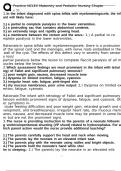
Practice NCLEX Maternity and Pediatric Nursing Chapte
vc vc vc vc vc vc
r 21 vc
1.In the infant diagnosed with spina bifida with myelomeningocele, the inf
vc vc vc vc vc vc vc vc vc vc
ant will likely have:
vc vc vc
1.) a partial to complete paralysis in the lower extremities.
vc vc vc vc vc vc vc vc
2.) a protruding sac that contains abdominal contents.
vc vc vc vc vc vc
3.) an extremely large and rapidly growing head.
vc vc vc vc vc vc
4.) a membrane between the rectum and the anus.: 1.) A partial to co
vc vc vc vc vc vc vc vc vc vc vc vc
mplete paralysis in the lower extremities.
vc vc vc vc vc
Rationale:In spina bifida with myelomeningocele, there is a protrusion
vc vc vc vc vc vc vc vc vc
of the spinal cord and the meninges, with nerve roots embedded in the
vc vc vc vc vc vc vc vc vc vc vc vc v
wall of the cyst. The effects of this defect vary in severity from sensor
c vc vc vc vc vc vc vc vc vc vc vc vc vc
y loss/
vc
partial paralysis below the lesion to complete flaccid paralysis of all m
vc vc vc vc vc vc vc vc vc vc vc
uscles below the lesion. vc vc vc
2.Which assessment findings are most prominent in the infant with tetral
vc vc vc vc vc vc vc vc vc vc
ogy of Fallot and significant pulmonary stenosis?
vc vc vc vc vc vc
1.) poor weight gain, nausea, decreased muscle tone
vc vc vc vc vc vc
2.) dyspnea on limited exertion, fatigue, cyanosis
vc vc vc vc vc
3.) irregular heart rate, fatigue, pink-tinged skin
vc vc vc vc vc
4.) dry mucous membranes, poor urine output: 2.) Dyspnea on limited ex
vc vc vc vc vc vc vc vc vc vc
ertion, fatigue, cyanosis vc vc
Rationale:The infant with tetralogy of Fallot and significant pulmonary
vc vc vc vc vc vc vc vc v
tenosis exhibits prominent signs of dyspnea, fatigue, and cyanosis. Oth
vc vc vc vc vc vc vc vc vc
er symptoms in-
vc vc
clude feeding difficulties and poor weight gain, retarded growth and d
vc vc vc vc vc vc vc vc vc vc vc
velopment, and breathlessness. Irregular heart rate, dry mucous memb
vc vc vc vc vc vc vc vc
anes, nausea, and decreased muscle tone may be present in some for
vc vc vc vc vc vc vc vc vc vc vc
m but are not the prominent signs.
vc vc vc vc vc vc
3.The nurse is providing instruction to the parents of a neonate followin
vc vc vc vc vc vc vc vc vc vc vc
g ventriculoperitoneal shunting (VP shunt) related to hydrocephalus. For w
vc vc vc vc vc vc vc vc vc
hich parent action would the nurse provide additional teaching?
vc vc vc vc vc vc vc vc
1.) The parents carefully support the head and neck when moving.
vc vc vc vc vc vc vc vc vc
2.) The parents lay the neonate in an elevated infant seat.
vc vc vc vc vc vc vc vc vc
3.) The parents play with the neonate using rattles and bright objects.
vc vc vc vc vc vc vc vc vc vc
4.) The parents hold the neonate's hand while she/
vc vc vc vc vc vc vc
he is sleeping.: 2.) The parents lay the neonate in an elevated infa
vc vc vc vc vc vc vc vc vc vc vc vc
1vc/
vc11
, Practice NCLEX Maternity and Pediatric Nursing Chapte
vc vc vc vc vc vc
r 21
nt seat.
vc
vc
Rationale:Postoperatively, the neonate is to be kept flat to prevent a r
vc vc vc vc vc vc vc vc vc vc vc
apid decrease in intracranial pressure. Touch is important to the neon
vc vc vc vc vc vc vc vc vc vc
ate and holding the child's
vc vc vc vc
2vc/
vc11
vc vc vc vc vc vc
r 21 vc
1.In the infant diagnosed with spina bifida with myelomeningocele, the inf
vc vc vc vc vc vc vc vc vc vc
ant will likely have:
vc vc vc
1.) a partial to complete paralysis in the lower extremities.
vc vc vc vc vc vc vc vc
2.) a protruding sac that contains abdominal contents.
vc vc vc vc vc vc
3.) an extremely large and rapidly growing head.
vc vc vc vc vc vc
4.) a membrane between the rectum and the anus.: 1.) A partial to co
vc vc vc vc vc vc vc vc vc vc vc vc
mplete paralysis in the lower extremities.
vc vc vc vc vc
Rationale:In spina bifida with myelomeningocele, there is a protrusion
vc vc vc vc vc vc vc vc vc
of the spinal cord and the meninges, with nerve roots embedded in the
vc vc vc vc vc vc vc vc vc vc vc vc v
wall of the cyst. The effects of this defect vary in severity from sensor
c vc vc vc vc vc vc vc vc vc vc vc vc vc
y loss/
vc
partial paralysis below the lesion to complete flaccid paralysis of all m
vc vc vc vc vc vc vc vc vc vc vc
uscles below the lesion. vc vc vc
2.Which assessment findings are most prominent in the infant with tetral
vc vc vc vc vc vc vc vc vc vc
ogy of Fallot and significant pulmonary stenosis?
vc vc vc vc vc vc
1.) poor weight gain, nausea, decreased muscle tone
vc vc vc vc vc vc
2.) dyspnea on limited exertion, fatigue, cyanosis
vc vc vc vc vc
3.) irregular heart rate, fatigue, pink-tinged skin
vc vc vc vc vc
4.) dry mucous membranes, poor urine output: 2.) Dyspnea on limited ex
vc vc vc vc vc vc vc vc vc vc
ertion, fatigue, cyanosis vc vc
Rationale:The infant with tetralogy of Fallot and significant pulmonary
vc vc vc vc vc vc vc vc v
tenosis exhibits prominent signs of dyspnea, fatigue, and cyanosis. Oth
vc vc vc vc vc vc vc vc vc
er symptoms in-
vc vc
clude feeding difficulties and poor weight gain, retarded growth and d
vc vc vc vc vc vc vc vc vc vc vc
velopment, and breathlessness. Irregular heart rate, dry mucous memb
vc vc vc vc vc vc vc vc
anes, nausea, and decreased muscle tone may be present in some for
vc vc vc vc vc vc vc vc vc vc vc
m but are not the prominent signs.
vc vc vc vc vc vc
3.The nurse is providing instruction to the parents of a neonate followin
vc vc vc vc vc vc vc vc vc vc vc
g ventriculoperitoneal shunting (VP shunt) related to hydrocephalus. For w
vc vc vc vc vc vc vc vc vc
hich parent action would the nurse provide additional teaching?
vc vc vc vc vc vc vc vc
1.) The parents carefully support the head and neck when moving.
vc vc vc vc vc vc vc vc vc
2.) The parents lay the neonate in an elevated infant seat.
vc vc vc vc vc vc vc vc vc
3.) The parents play with the neonate using rattles and bright objects.
vc vc vc vc vc vc vc vc vc vc
4.) The parents hold the neonate's hand while she/
vc vc vc vc vc vc vc
he is sleeping.: 2.) The parents lay the neonate in an elevated infa
vc vc vc vc vc vc vc vc vc vc vc vc
1vc/
vc11
, Practice NCLEX Maternity and Pediatric Nursing Chapte
vc vc vc vc vc vc
r 21
nt seat.
vc
vc
Rationale:Postoperatively, the neonate is to be kept flat to prevent a r
vc vc vc vc vc vc vc vc vc vc vc
apid decrease in intracranial pressure. Touch is important to the neon
vc vc vc vc vc vc vc vc vc vc
ate and holding the child's
vc vc vc vc
2vc/
vc11


