
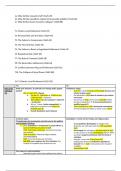
1a: Why did the monarchy fall? (1625-49)
1b: Why did the republican regime fail to provide stability? (1649-60)
1c: Why did the Stuart monarchy collapse? (1660-88)
T1: Charles I and Parliament (1625-29)
T2: Personal Rule and Its Failure (1629-40)
T3: The Failure to Compromise (1640-42)
T4: The First Civil War (1642-46)
T5: The Failure to Reach a Negotiated Settlement (1646-49)
T6: Republican Rule (1649-60)
T7: The Role of Cromwell (1640-58)
T8: The Restoration Settlement (1660-64)
T9: Conflicts between King and Parliament (1665-81)
T10: The Collapse of Royal Power (1681-88)
1a T1 (Charles I and Parliament (1625-29))
Yes No
Role of the Made poor decisions, in particular over foreign policy against Parliament= stingy
individual Spanish - June 25: CI raised Tonnage and Poundage because parl
(CI) - War w/ spain 1625: disaster refused to give money
o Oct-Dec 25: Cadiz fiasco 12,000 set out, - Parl dissolved in 1626 when it refused to give charles
5,000 returned = unpopular more loans
o 1627 military rule also unpopular- expensive - Forced loan of 1626, which raised £240,000 fuelled
+ martial law this fear of absolutism it increased parliament’s
o War w/ France= further unpopularity, in hostility towards CI
particular in response to the failures of - Three resolutions in 1629: denounced armenianism
Rochelle 1627-28 and encouraged merchants to refuse to pay T and P
o Overall: Buckinham and CI blamed
Armenian policy Buckingham- carried out the foreign and religious policy
CI’s preference for Armenianism sets the tone for the political
and theological divisions - CI was guided by Buckingham to engage in the
- 1625: promotions + involvement in secular affairs eg disastrous war with spain with the Cadiz expedition
Laud to the Bishop of London in 1628 1625
- 1626: York House conference: favoured Armenians - He arranged the marriage to Henrietta Maria in 1625,
over puritans in order to form a strong anti-habsburg alliance- effect
- 1628; 39 articles Banned religious debate was that it angeres protestants with the threat of
(AUTHORITARIAN) catholism
- 1629: more than ½ episcopy Armenian - No gains- at war with France from 1627
- Feb 1629: parl condemns the ‘fire of division’ this - Unpopularity shown by parliaments attempts to
created exemplifies how divisive this was impeach him in 1626- CI dissolved parl in response=
instability
- Assasianation 1628
Over-abuse of royal prerogative
- Attempts to gain control over parliament by charles=
, anger
o 2nd parliament called Feb 1626- he tried to
remove his most persistent opp (Coke and
Wentworth). This failed, as new opp
emerged as a result, eg pym
o Parl tried to impeach D of B jun 26- he
dissolved in resction
= no subsidies
o 5 knights case in 1627: example of
exploitation of the royal prerogative
o Petition of Right- June 28: parl’s reaction to
this abuse of the royal pre-rog- aimed to
reduce kings power
o 1628-29, CI manipulated P of Right so it
didn’t affect his royal prerogative- angered
parliament
o Further tension when C dissolved parl in
march 28 + arrested 9 MPs
Role of the Buckingham's failures in the area of religious policy worsened Over-abuse of royal prerogative
individual- existing conflict between Parliament and Charles - Attempts to gain control over parliament by charles=
DofB anger
- 1625: promotions + involvement in secular affairs eg o 2nd parliament called Feb 1626- he tried to
Laud to the Bishop of Bath remove his most persistent opp (Coke and
- 1626: York House conference: favoured Armenians Wentworth). This failed, as new opp
emerged as a result, eg pym
over puritans + made his anti-calvanist veiws clear
o Parl tried to impeach D of B jun 26- he
- He arranged the marriage to Henrietta Maria in 1625,
dissolved in resction
in order to form a strong anti-habsburg alliance
= no subsidies
- effect was that it angeres protestants with the threat
o 5 knights case in 1627: example of
of catholism
exploitation of the royal prerogative
- o Petition of Right- June 28: parl’s reaction to
this abuse of the royal pre-rog- aimed to
reduce kings power
o 1628-29, CI manipulated P of Right so it
didn’t affect his royal prerogative- angered
parliament
o Further tension when C dissolved parl in
march 28 + arrested 9 MPs
-
Buckingham - Foreign policy failures Parliament= uncooperative
- War w/ spain 1625: disaster - June 25: CI raised Tonnage and Poundage because parl
o Oct-Dec 25: Cadiz fiasco 12,000 set out, refused to give money
5,000 returned = unpopular - Parl dissolved in 1626 when it refused to give charles
o 1627 military rule also unpopular- expensive more loans
+ martial law - Forced loan of 1626, which raised £240,000 fuelled
o War w/ France= further unpopularity, in this fear of absolutism it increased parliament’s
particular in response to the failures of hostility towards CI
- Three resolutions in 1629: denounced armenianism
Rochelle 1627-28
and encouraged merchants to refuse to pay T and P
---
Religion Buckingham= anti-calvanist so parl distrust Over-abuse of royal prerogative
- Attempts to gain control over parliament by charles=
anger
o 2nd parliament called Feb 1626- he tried to
remove his most persistent opp (Coke and
Wentworth). This failed, as new opp
, emerged as a result, eg pym
o Parl tried to impeach D of B jun 26- he
dissolved in resction
= no subsidies
o 5 knights case in 1627: example of
exploitation of the royal prerogative
o Petition of Right- June 28: parl’s reaction to
this abuse of the royal pre-rog- aimed to
reduce kings power
o 1628-29, CI manipulated P of Right so it
didn’t affect his royal prerogative- angered
parliament
o Further tension when C dissolved parl in
march 28 + arrested 9 MPs
CI’s preference for Armenianism sets the tone for the political Foreign policy
and theological divisions - War w/ spain 1625: disaster
- 1625: promotions + involvement in secular affairs eg o Oct-Dec 25: Cadiz fiasco 12,000 set out,
Laud to the Bishop of London in 1628 5,000 returned = unpopular
- 1626: York House conference: favoured Armenians o 1627 military rule also unpopular- expensive
over puritans + martial law
- 1628; 39 articles Banned religious debate o War w/ France= further unpopularity, in
(AUTHORITARIAN) particular in response to the failures of
- 1629: more than ½ episcopy Armenian Rochelle 1627-28
- Feb 1629: parl condemns the ‘fire of division’ this
o Overall: Buckinham and CI blamed
created exemplifies how divisive this was
Parliament- uncooperative
- June 25: CI raised Tonnage and Poundage because parl
refused to give money
- Parl dissolved in 1626 when it refused to give charles
more loans
- Forced loan of 1626, which raised £240,000 fuelled
this fear of absolutism it increased parliament’s
hostility towards CI
- Three resolutions in 1629: denounced armenianism
and encouraged merchants to refuse to pay T and P
Financial Worsened foreign policy Charles- abused royal prerogative
- War w/ spain 1625: disaster o 2nd parliament called Feb 1626- he tried to
o Oct-Dec 25: Cadiz fiasco 12,000 set out, remove his most persistent opp (Coke and
5,000 returned = unpopular Wentworth). This failed, as new opp
o 1627 military rule also unpopular- expensive emerged as a result, eg pym
+ martial law o Parl tried to impeach D of B jun 26- he
o War w/ France= further unpopularity, in dissolved in resction
particular in response to the failures of = no subsidies
Rochelle 1627-28 o 5 knights case in 1627: example of
o Overall: Buckinham and CI blamed exploitation of the royal prerogative
o Petition of Right- June 28: parl’s reaction to
this abuse of the royal pre-rog- aimed to
reduce kings power
o 1628-29, CI manipulated P of Right so it
didn’t affect his royal prerogative- angered
parliament
o Further tension when C dissolved parl in
march 28 + arrested 9 MPs
Enabled parliament to express discontent Armenian reform
, - June 25: CI raised Tonnage and Poundage because parl - 1625: promotions + involvement in secular affairs eg
refused to give money Laud to the Bishop of London in 1628
- Parl dissolved in 1626 when it refused to give charles - 1626: York House conference: favoured Armenians
more loans over puritans
- Forced loan of 1626, which raised £240,000 fuelled - 1628; 39 articles Banned religious debate
this fear of absolutism it increased parliament’s (AUTHORITARIAN)
hostility towards CI - 1629: more than ½ episcopy Armenian
- Three resolutions in 1629: denounced armenianism - Feb 1629: parl condemns the ‘fire of division’ this
and encouraged merchants to refuse to pay T and P created exemplifies how divisive this was
-
Foreign Sparked disagreement and financial tensions Charles- abused royal prerogative
policy - War w/ spain 1625: disaster o 2nd parliament called Feb 1626- he tried to
o Oct-Dec 25: Cadiz fiasco 12,000 set out, remove his most persistent opp (Coke and
5,000 returned = unpopular Wentworth). This failed, as new opp
o 1627 military rule also unpopular- expensive emerged as a result, eg pym
+ martial law o Parl tried to impeach D of B jun 26- he
o War w/ France= further unpopularity, in dissolved in resction
particular in response to the failures of = no subsidies
Rochelle 1627-28 o 5 knights case in 1627: example of
o Overall: Buckinham and CI blamed exploitation of the royal prerogative
o Petition of Right- June 28: parl’s reaction to
-
this abuse of the royal pre-rog- aimed to
reduce kings power
o 1628-29, CI manipulated P of Right so it
didn’t affect his royal prerogative- angered
parliament
o Further tension when C dissolved parl in
march 28 + arrested 9 MPs
financial tensions Armenian reform
- June 25: CI raised Tonnage and Poundage because parl - 1625: promotions + involvement in secular affairs eg
refused to give money Laud to the Bishop of London in 1628
- Parl dissolved in 1626 when it refused to give charles - 1626: York House conference: favoured Armenians
more loans over puritans
- Forced loan of 1626, which raised £240,000 fuelled - 1628; 39 articles Banned religious debate
this fear of absolutism it increased parliament’s (AUTHORITARIAN)
hostility towards CI - 1629: more than ½ episcopy Armenian
Three resolutions in 1629: denounced armenianism and - Feb 1629: parl condemns the ‘fire of division’ this
encouraged merchants to refuse to pay T and P created exemplifies how divisive this was
---
parliament Meddled with the royal prerogative Charles- abused royal prerogative
o 2nd parliament called Feb 1626- he tried to
remove his most persistent opp (Coke and
Wentworth). This failed, as new opp
emerged as a result, eg pym
o Parl tried to impeach D of B jun 26- he
dissolved in resction
= no subsidies
o 5 knights case in 1627: example of
exploitation of the royal prerogative
o Petition of Right- June 28: parl’s reaction to
this abuse of the royal pre-rog- aimed to
reduce kings power
1b: Why did the republican regime fail to provide stability? (1649-60)
1c: Why did the Stuart monarchy collapse? (1660-88)
T1: Charles I and Parliament (1625-29)
T2: Personal Rule and Its Failure (1629-40)
T3: The Failure to Compromise (1640-42)
T4: The First Civil War (1642-46)
T5: The Failure to Reach a Negotiated Settlement (1646-49)
T6: Republican Rule (1649-60)
T7: The Role of Cromwell (1640-58)
T8: The Restoration Settlement (1660-64)
T9: Conflicts between King and Parliament (1665-81)
T10: The Collapse of Royal Power (1681-88)
1a T1 (Charles I and Parliament (1625-29))
Yes No
Role of the Made poor decisions, in particular over foreign policy against Parliament= stingy
individual Spanish - June 25: CI raised Tonnage and Poundage because parl
(CI) - War w/ spain 1625: disaster refused to give money
o Oct-Dec 25: Cadiz fiasco 12,000 set out, - Parl dissolved in 1626 when it refused to give charles
5,000 returned = unpopular more loans
o 1627 military rule also unpopular- expensive - Forced loan of 1626, which raised £240,000 fuelled
+ martial law this fear of absolutism it increased parliament’s
o War w/ France= further unpopularity, in hostility towards CI
particular in response to the failures of - Three resolutions in 1629: denounced armenianism
Rochelle 1627-28 and encouraged merchants to refuse to pay T and P
o Overall: Buckinham and CI blamed
Armenian policy Buckingham- carried out the foreign and religious policy
CI’s preference for Armenianism sets the tone for the political
and theological divisions - CI was guided by Buckingham to engage in the
- 1625: promotions + involvement in secular affairs eg disastrous war with spain with the Cadiz expedition
Laud to the Bishop of London in 1628 1625
- 1626: York House conference: favoured Armenians - He arranged the marriage to Henrietta Maria in 1625,
over puritans in order to form a strong anti-habsburg alliance- effect
- 1628; 39 articles Banned religious debate was that it angeres protestants with the threat of
(AUTHORITARIAN) catholism
- 1629: more than ½ episcopy Armenian - No gains- at war with France from 1627
- Feb 1629: parl condemns the ‘fire of division’ this - Unpopularity shown by parliaments attempts to
created exemplifies how divisive this was impeach him in 1626- CI dissolved parl in response=
instability
- Assasianation 1628
Over-abuse of royal prerogative
- Attempts to gain control over parliament by charles=
, anger
o 2nd parliament called Feb 1626- he tried to
remove his most persistent opp (Coke and
Wentworth). This failed, as new opp
emerged as a result, eg pym
o Parl tried to impeach D of B jun 26- he
dissolved in resction
= no subsidies
o 5 knights case in 1627: example of
exploitation of the royal prerogative
o Petition of Right- June 28: parl’s reaction to
this abuse of the royal pre-rog- aimed to
reduce kings power
o 1628-29, CI manipulated P of Right so it
didn’t affect his royal prerogative- angered
parliament
o Further tension when C dissolved parl in
march 28 + arrested 9 MPs
Role of the Buckingham's failures in the area of religious policy worsened Over-abuse of royal prerogative
individual- existing conflict between Parliament and Charles - Attempts to gain control over parliament by charles=
DofB anger
- 1625: promotions + involvement in secular affairs eg o 2nd parliament called Feb 1626- he tried to
Laud to the Bishop of Bath remove his most persistent opp (Coke and
- 1626: York House conference: favoured Armenians Wentworth). This failed, as new opp
emerged as a result, eg pym
over puritans + made his anti-calvanist veiws clear
o Parl tried to impeach D of B jun 26- he
- He arranged the marriage to Henrietta Maria in 1625,
dissolved in resction
in order to form a strong anti-habsburg alliance
= no subsidies
- effect was that it angeres protestants with the threat
o 5 knights case in 1627: example of
of catholism
exploitation of the royal prerogative
- o Petition of Right- June 28: parl’s reaction to
this abuse of the royal pre-rog- aimed to
reduce kings power
o 1628-29, CI manipulated P of Right so it
didn’t affect his royal prerogative- angered
parliament
o Further tension when C dissolved parl in
march 28 + arrested 9 MPs
-
Buckingham - Foreign policy failures Parliament= uncooperative
- War w/ spain 1625: disaster - June 25: CI raised Tonnage and Poundage because parl
o Oct-Dec 25: Cadiz fiasco 12,000 set out, refused to give money
5,000 returned = unpopular - Parl dissolved in 1626 when it refused to give charles
o 1627 military rule also unpopular- expensive more loans
+ martial law - Forced loan of 1626, which raised £240,000 fuelled
o War w/ France= further unpopularity, in this fear of absolutism it increased parliament’s
particular in response to the failures of hostility towards CI
- Three resolutions in 1629: denounced armenianism
Rochelle 1627-28
and encouraged merchants to refuse to pay T and P
---
Religion Buckingham= anti-calvanist so parl distrust Over-abuse of royal prerogative
- Attempts to gain control over parliament by charles=
anger
o 2nd parliament called Feb 1626- he tried to
remove his most persistent opp (Coke and
Wentworth). This failed, as new opp
, emerged as a result, eg pym
o Parl tried to impeach D of B jun 26- he
dissolved in resction
= no subsidies
o 5 knights case in 1627: example of
exploitation of the royal prerogative
o Petition of Right- June 28: parl’s reaction to
this abuse of the royal pre-rog- aimed to
reduce kings power
o 1628-29, CI manipulated P of Right so it
didn’t affect his royal prerogative- angered
parliament
o Further tension when C dissolved parl in
march 28 + arrested 9 MPs
CI’s preference for Armenianism sets the tone for the political Foreign policy
and theological divisions - War w/ spain 1625: disaster
- 1625: promotions + involvement in secular affairs eg o Oct-Dec 25: Cadiz fiasco 12,000 set out,
Laud to the Bishop of London in 1628 5,000 returned = unpopular
- 1626: York House conference: favoured Armenians o 1627 military rule also unpopular- expensive
over puritans + martial law
- 1628; 39 articles Banned religious debate o War w/ France= further unpopularity, in
(AUTHORITARIAN) particular in response to the failures of
- 1629: more than ½ episcopy Armenian Rochelle 1627-28
- Feb 1629: parl condemns the ‘fire of division’ this
o Overall: Buckinham and CI blamed
created exemplifies how divisive this was
Parliament- uncooperative
- June 25: CI raised Tonnage and Poundage because parl
refused to give money
- Parl dissolved in 1626 when it refused to give charles
more loans
- Forced loan of 1626, which raised £240,000 fuelled
this fear of absolutism it increased parliament’s
hostility towards CI
- Three resolutions in 1629: denounced armenianism
and encouraged merchants to refuse to pay T and P
Financial Worsened foreign policy Charles- abused royal prerogative
- War w/ spain 1625: disaster o 2nd parliament called Feb 1626- he tried to
o Oct-Dec 25: Cadiz fiasco 12,000 set out, remove his most persistent opp (Coke and
5,000 returned = unpopular Wentworth). This failed, as new opp
o 1627 military rule also unpopular- expensive emerged as a result, eg pym
+ martial law o Parl tried to impeach D of B jun 26- he
o War w/ France= further unpopularity, in dissolved in resction
particular in response to the failures of = no subsidies
Rochelle 1627-28 o 5 knights case in 1627: example of
o Overall: Buckinham and CI blamed exploitation of the royal prerogative
o Petition of Right- June 28: parl’s reaction to
this abuse of the royal pre-rog- aimed to
reduce kings power
o 1628-29, CI manipulated P of Right so it
didn’t affect his royal prerogative- angered
parliament
o Further tension when C dissolved parl in
march 28 + arrested 9 MPs
Enabled parliament to express discontent Armenian reform
, - June 25: CI raised Tonnage and Poundage because parl - 1625: promotions + involvement in secular affairs eg
refused to give money Laud to the Bishop of London in 1628
- Parl dissolved in 1626 when it refused to give charles - 1626: York House conference: favoured Armenians
more loans over puritans
- Forced loan of 1626, which raised £240,000 fuelled - 1628; 39 articles Banned religious debate
this fear of absolutism it increased parliament’s (AUTHORITARIAN)
hostility towards CI - 1629: more than ½ episcopy Armenian
- Three resolutions in 1629: denounced armenianism - Feb 1629: parl condemns the ‘fire of division’ this
and encouraged merchants to refuse to pay T and P created exemplifies how divisive this was
-
Foreign Sparked disagreement and financial tensions Charles- abused royal prerogative
policy - War w/ spain 1625: disaster o 2nd parliament called Feb 1626- he tried to
o Oct-Dec 25: Cadiz fiasco 12,000 set out, remove his most persistent opp (Coke and
5,000 returned = unpopular Wentworth). This failed, as new opp
o 1627 military rule also unpopular- expensive emerged as a result, eg pym
+ martial law o Parl tried to impeach D of B jun 26- he
o War w/ France= further unpopularity, in dissolved in resction
particular in response to the failures of = no subsidies
Rochelle 1627-28 o 5 knights case in 1627: example of
o Overall: Buckinham and CI blamed exploitation of the royal prerogative
o Petition of Right- June 28: parl’s reaction to
-
this abuse of the royal pre-rog- aimed to
reduce kings power
o 1628-29, CI manipulated P of Right so it
didn’t affect his royal prerogative- angered
parliament
o Further tension when C dissolved parl in
march 28 + arrested 9 MPs
financial tensions Armenian reform
- June 25: CI raised Tonnage and Poundage because parl - 1625: promotions + involvement in secular affairs eg
refused to give money Laud to the Bishop of London in 1628
- Parl dissolved in 1626 when it refused to give charles - 1626: York House conference: favoured Armenians
more loans over puritans
- Forced loan of 1626, which raised £240,000 fuelled - 1628; 39 articles Banned religious debate
this fear of absolutism it increased parliament’s (AUTHORITARIAN)
hostility towards CI - 1629: more than ½ episcopy Armenian
Three resolutions in 1629: denounced armenianism and - Feb 1629: parl condemns the ‘fire of division’ this
encouraged merchants to refuse to pay T and P created exemplifies how divisive this was
---
parliament Meddled with the royal prerogative Charles- abused royal prerogative
o 2nd parliament called Feb 1626- he tried to
remove his most persistent opp (Coke and
Wentworth). This failed, as new opp
emerged as a result, eg pym
o Parl tried to impeach D of B jun 26- he
dissolved in resction
= no subsidies
o 5 knights case in 1627: example of
exploitation of the royal prerogative
o Petition of Right- June 28: parl’s reaction to
this abuse of the royal pre-rog- aimed to
reduce kings power


