

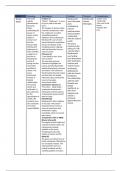
Poem Meaning Techniques Context Themes Comparisons
To My The poem Imagery (L) Wordsworth Relationship -Captain Cook
Sister reflects "March" "redbreast" "a sense was a Romantic Nature - Sunday Dip
Wordsworth’s of joy to yield to the bare poet, Belonging -Clear and Gentle
Romantic trees" Stream
emphasizing
ideals, The imagery of spring evokes -Peckham Rye
nature’s
celebrating the renewal and optimism, with Lane
spiritual power
power of the "redbreast" (a robin) and humanity’s
nature and its symbolizing spiritual relationship
ability to fulfilment and contentment.
with the natural
nurture and Wordsworth’s use of vivid
world.
heal the natural elements emphasizes
The poem
human spirit. the joy and beauty of the
Wordsworth changing seasons, aligning represents the
addresses his with the Romantic focus on spring of 1798,
sister, Dorothy, nature’s power. a period when
urging her to Chiasmus (L) Wordsworth
join him in "From Earth to man, from was healing
enjoying the man to Earth" from depression
arrival of The mirrored structure after leaving his
spring and the (chiasmus) highlights the mistress and
restorative cyclical and interdependent child in France
qualities of relationship between humans and feeling
nature. The and nature. This reinforces disillusioned
poem the Romantic idea that nature with the French
intertwines and humanity are deeply Revolution.
themes of interconnected, and that life His relationship
familial is part of a greater, with his sister
relationships, harmonious whole. Dorothy was
the natural Exclamatory phrases (L)
deeply
world, and "My sister!... Make haste,"
significant, as
spirituality. It emphasize Wordsworth’s
they lived
also advocates enthusiasm and the urgency
for the of sharing the natural world together and
appreciation of with his sister. shared a
simple, idle Repetition(S) profound
moments over Wordsworth’s direct address appreciation for
the constraints to his sister ("My Sister!" nature.
of societal repeated twice) conveys a
responsibilities sense of importance and
. enthusiasm, urging
immediate action to connect
with nature.
10 Quatrains with an ABAB
Rhyme Scheme(S)
The regular stanza length and
consistent rhythm add to the
calming and soothing
qualities of the poem,
mimicking the peaceful
rhythm of nature and life.
Ballad (F)
The poem uses three lines of
iambic tetrameter followed by
one of iambic trimeter. This
natural rhythm mirrors a
resting heartbeat and the
soothing qualities of nature.
, Sunday reflects on the Dynamic Verbs (L) John Clare: Born Happiness -Clear and Gentle
Dip innocence and Verbs like "thronged," "dance," in 1793 to a poor Innocence Stream
joy of "wade," and "dash" evoke labourer, Clare Nature -Us
childhood excitement and playfulness, experienced Nostalgia -I Remember,
during a creating a vivid portrayal of the hardship I Remember
carefree boys' activities. throughout his -Mild the Mist
summer day Imagery (L) life. His Upon the Hill
"beneath the willow trees",
spent playing background
"dance about the waters"
in nature. Clare deeply
Clare uses rich sensory imagery
depicts a group influenced his
to describe the natural setting
of boys on a and the boys' actions. poetry, which
Sunday Polysyndeton (L) often reflects a
morning, The repeated use of "and" at longing for the
indulging in the beginning of lines simplicity and
playful emphasizes the abundance of beauty of nature,
activities by joy and the spontaneous, contrasting with
the water. The carefree nature of childhood. the emerging
poem conveys Metaphor (L) industrialization
nostalgia for "and laugh to hear the thunder of the time.
simpler times, in their ears" As a Romantic
highlighting to express the boys' joyful poet, Clare
the blissful disregard for potential dangers, shared the
moments of emphasizing their innocence movement’s
youth when and carefree spirit. focus on nature,
the burdens of Volta (S) emotion, and the
"the awkward load will scarcely
adulthood and human
bear them up."
societal experience. His
A subtle shift occurs in the
expectations poetry often
tone, particularly in lines that
are absent. introduce danger, such as. This
celebrates the
Although the volta marks a transition from rural English
boys embrace the joyous exploration of countryside and
nature and its childhood to the implicit risks advocates for the
pleasures, involved. restoration of
there are End-stopped Lines (S) human
subtle hints of "And dance about the water in connections to
danger, the shade." nature. Clare's
suggesting a Certain lines end with struggles with
complex punctuation, allowing moments mental health,
relationship of reflection. This gives the including bouts
with the reader a chance to absorb the of depression
natural world scene. and delusions,
that carries Sonnet (F) coloured his
both joy and The poem is structured as a work and his
risk. loose Petrarchan sonnet, with perspective on
14 lines typically associated
life and nature.
with love poetry. However,
instead of love for a person,
Clare expresses a profound
affection for nature and
childhood.
Rhyming Couplet (F)
The poem is divided into 8
rhyming couplets. This
structure creates a rhythmic
flow, contributing to the joyous
tone and allowing the reader to
experience the scene without
interruptions.
To My The poem Imagery (L) Wordsworth Relationship -Captain Cook
Sister reflects "March" "redbreast" "a sense was a Romantic Nature - Sunday Dip
Wordsworth’s of joy to yield to the bare poet, Belonging -Clear and Gentle
Romantic trees" Stream
emphasizing
ideals, The imagery of spring evokes -Peckham Rye
nature’s
celebrating the renewal and optimism, with Lane
spiritual power
power of the "redbreast" (a robin) and humanity’s
nature and its symbolizing spiritual relationship
ability to fulfilment and contentment.
with the natural
nurture and Wordsworth’s use of vivid
world.
heal the natural elements emphasizes
The poem
human spirit. the joy and beauty of the
Wordsworth changing seasons, aligning represents the
addresses his with the Romantic focus on spring of 1798,
sister, Dorothy, nature’s power. a period when
urging her to Chiasmus (L) Wordsworth
join him in "From Earth to man, from was healing
enjoying the man to Earth" from depression
arrival of The mirrored structure after leaving his
spring and the (chiasmus) highlights the mistress and
restorative cyclical and interdependent child in France
qualities of relationship between humans and feeling
nature. The and nature. This reinforces disillusioned
poem the Romantic idea that nature with the French
intertwines and humanity are deeply Revolution.
themes of interconnected, and that life His relationship
familial is part of a greater, with his sister
relationships, harmonious whole. Dorothy was
the natural Exclamatory phrases (L)
deeply
world, and "My sister!... Make haste,"
significant, as
spirituality. It emphasize Wordsworth’s
they lived
also advocates enthusiasm and the urgency
for the of sharing the natural world together and
appreciation of with his sister. shared a
simple, idle Repetition(S) profound
moments over Wordsworth’s direct address appreciation for
the constraints to his sister ("My Sister!" nature.
of societal repeated twice) conveys a
responsibilities sense of importance and
. enthusiasm, urging
immediate action to connect
with nature.
10 Quatrains with an ABAB
Rhyme Scheme(S)
The regular stanza length and
consistent rhythm add to the
calming and soothing
qualities of the poem,
mimicking the peaceful
rhythm of nature and life.
Ballad (F)
The poem uses three lines of
iambic tetrameter followed by
one of iambic trimeter. This
natural rhythm mirrors a
resting heartbeat and the
soothing qualities of nature.
, Sunday reflects on the Dynamic Verbs (L) John Clare: Born Happiness -Clear and Gentle
Dip innocence and Verbs like "thronged," "dance," in 1793 to a poor Innocence Stream
joy of "wade," and "dash" evoke labourer, Clare Nature -Us
childhood excitement and playfulness, experienced Nostalgia -I Remember,
during a creating a vivid portrayal of the hardship I Remember
carefree boys' activities. throughout his -Mild the Mist
summer day Imagery (L) life. His Upon the Hill
"beneath the willow trees",
spent playing background
"dance about the waters"
in nature. Clare deeply
Clare uses rich sensory imagery
depicts a group influenced his
to describe the natural setting
of boys on a and the boys' actions. poetry, which
Sunday Polysyndeton (L) often reflects a
morning, The repeated use of "and" at longing for the
indulging in the beginning of lines simplicity and
playful emphasizes the abundance of beauty of nature,
activities by joy and the spontaneous, contrasting with
the water. The carefree nature of childhood. the emerging
poem conveys Metaphor (L) industrialization
nostalgia for "and laugh to hear the thunder of the time.
simpler times, in their ears" As a Romantic
highlighting to express the boys' joyful poet, Clare
the blissful disregard for potential dangers, shared the
moments of emphasizing their innocence movement’s
youth when and carefree spirit. focus on nature,
the burdens of Volta (S) emotion, and the
"the awkward load will scarcely
adulthood and human
bear them up."
societal experience. His
A subtle shift occurs in the
expectations poetry often
tone, particularly in lines that
are absent. introduce danger, such as. This
celebrates the
Although the volta marks a transition from rural English
boys embrace the joyous exploration of countryside and
nature and its childhood to the implicit risks advocates for the
pleasures, involved. restoration of
there are End-stopped Lines (S) human
subtle hints of "And dance about the water in connections to
danger, the shade." nature. Clare's
suggesting a Certain lines end with struggles with
complex punctuation, allowing moments mental health,
relationship of reflection. This gives the including bouts
with the reader a chance to absorb the of depression
natural world scene. and delusions,
that carries Sonnet (F) coloured his
both joy and The poem is structured as a work and his
risk. loose Petrarchan sonnet, with perspective on
14 lines typically associated
life and nature.
with love poetry. However,
instead of love for a person,
Clare expresses a profound
affection for nature and
childhood.
Rhyming Couplet (F)
The poem is divided into 8
rhyming couplets. This
structure creates a rhythmic
flow, contributing to the joyous
tone and allowing the reader to
experience the scene without
interruptions.


