

Unit 9 assignment 1
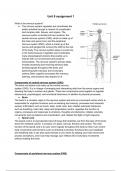
What is the nervous system?
● The nervous system regulates and coordinates the
bodily activities through a network of complicated
and complex cells, tissues, and organs. The
nervous system is divided into two sections: the
central nervous system (CNS), which is made up of
the brain and spinal cord, and the peripheral
nervous system (PNS), which is made up of the
nerves and ganglia that connect the CNS to the rest
of the body. The nervous system plays a crucial role
in the body because it regulates and coordinates
many physiological functions that enable us to
interact with our environment and preserve
homeostasis. The nervous system's primary tasks
include processing and receiving sensory data,
sending signals throughout the body, and
performing both voluntary and involuntary
actions.Other cognitive processes like memory,
learning, and emotions also depend on it.
Components of central nervous system (CNS)
The brain and spinal cord make up the central nervous
system (CNS). It is in charge of arranging and interpreting data from the sense organs and
directing the body's muscles and glands. These two components work together to regulate
behavioural, psychological, and emotional behaviours in addition to physical processes.
● Brain
The brain is a complex organ in the nervous system and acts as a command centre which is
responsible for cognitive functions such as learning and memory, processes and interprets
sensory information such as touch, taste, smell, hear, feel, initiates automatic behaviour
such as breathing, heart rate, sleep and temperature control, regulates the function of
organs, processes and responses to emotions, thoughts and decisions, initiates voluntary
movements such as balance and coordination, and initiates the flight or fight response
● Spinal cord
The spinal cord is a long tube-like band of tissue that stretches out from the base of the brain
down the vertebral column. It consists of 3 parts; cervical, thoracic and lumbar. The main
function of the spinal cord is to carry nerve signals throughout the body so that it can control
body movements and functions such as directing involuntary functions like your heartbeat
and breathing rate, it can also report senses to your brain by helping your brain record and
process sensations, and it can help manage your reflexes like involuntary movements
without needing the brain.
Components of peripheral nervous system (PNS)
, The peripheral nervous system is made up of all the ganglia and nerves that are not part of
the central nervous system. The PNS connects the body's various systems, including
muscles, organs, and sensory receptors, to the central nervous system (CNS). The PNS is
made up of two systems:
Somatic nervous system (SNS)
● The somatic nervous system spreads out from the brain to the spinal cord; it is made
up of neurons, glial cells, nuclei, and ganglia. The SNS controls voluntary
movements such as walking and it transmits sensory information to the CNS from the
body. It consists of motor neurons that transmit impulses from the CNS to smooth
and skeletal muscles so that it can control all of our muscle contractions. It also
consists of sensory neurons that are activated by physical and chemical stimuli
creating sensations like touch, pain, itching and temperature which sends these
sensations and other information about the external environment to the CNS.
Autonomic nervous system (ANS)
● Sympathetic nervous system (SNS)
The sympathetic nervous system is a network of nerves that helps the body initiate its fight
or flight response. It is activated by your body responding to stressful situations, danger or
intense physical activity. In response to these situations, the body responds in different ways
such as; enlarging the pupils of the eyes to allow more light in and improve your ability to
see, increases heart rate to improve the amount of oxygen being delivered to the other parts
of the body, causes the airway muscles to be relaxed so that oxygen can be delivered
efficiently to the lungs, slows down digestion so that its energy can be provided to other
parts of the body, and activates energy stores in the liver to a type of energy that can be
used fast.
● Parasympathetic nervous system (PSNS)
The parasympathetic nervous system is a network of nerves that helps the body initiate its
rest and digest response. Its function is to help relax the body after stressful or dangerous
situations. The PSNS is the opposite of the SNS, while the SNS controls the body's flight or
fight response the PSNS controls the body's rest and digest response. The body activates
different parts in order to relax the body it; constricts the pupils to limit how much light enters
the eyes, it activates the salivary glands to produce saliva and the submucosal glands in the
nose to produce mucus, it tightens the airway muscles to reduce the amount of work the
lungs do during times of rest, it lowers the heart rate and the pumping force of the heart, it
increases the rate of digestion and diverse the energy to help the food consumed to be
digested properly on top of this it signals the pancreas to make insulin.
Neurons
The fundamental unit of the nervous system, a neuron is designed specifically for sending
and receiving information. It is made up of an axon, dendrites, and a cell body. Axons carry
messages away from neurons, whereas dendrites receive signals from neighbouring
neurons.Neurons communicate through electrical impulses and chemical signals called
neurotransmitters. There are 3 types of neurons:
● Sensory neurons
Sensory neurons are essential for the detection of many stimuli, including touch, light, and
sound. Their axons are little, but their dendrites are long. They provide the function of
transmitting sensory information from skin, eye, and ear receptors to the central nervous
system, enabling the brain to interpret the body's environment.
● Motor neurons
What is the nervous system?
● The nervous system regulates and coordinates the
bodily activities through a network of complicated
and complex cells, tissues, and organs. The
nervous system is divided into two sections: the
central nervous system (CNS), which is made up of
the brain and spinal cord, and the peripheral
nervous system (PNS), which is made up of the
nerves and ganglia that connect the CNS to the rest
of the body. The nervous system plays a crucial role
in the body because it regulates and coordinates
many physiological functions that enable us to
interact with our environment and preserve
homeostasis. The nervous system's primary tasks
include processing and receiving sensory data,
sending signals throughout the body, and
performing both voluntary and involuntary
actions.Other cognitive processes like memory,
learning, and emotions also depend on it.
Components of central nervous system (CNS)
The brain and spinal cord make up the central nervous
system (CNS). It is in charge of arranging and interpreting data from the sense organs and
directing the body's muscles and glands. These two components work together to regulate
behavioural, psychological, and emotional behaviours in addition to physical processes.
● Brain
The brain is a complex organ in the nervous system and acts as a command centre which is
responsible for cognitive functions such as learning and memory, processes and interprets
sensory information such as touch, taste, smell, hear, feel, initiates automatic behaviour
such as breathing, heart rate, sleep and temperature control, regulates the function of
organs, processes and responses to emotions, thoughts and decisions, initiates voluntary
movements such as balance and coordination, and initiates the flight or fight response
● Spinal cord
The spinal cord is a long tube-like band of tissue that stretches out from the base of the brain
down the vertebral column. It consists of 3 parts; cervical, thoracic and lumbar. The main
function of the spinal cord is to carry nerve signals throughout the body so that it can control
body movements and functions such as directing involuntary functions like your heartbeat
and breathing rate, it can also report senses to your brain by helping your brain record and
process sensations, and it can help manage your reflexes like involuntary movements
without needing the brain.
Components of peripheral nervous system (PNS)
, The peripheral nervous system is made up of all the ganglia and nerves that are not part of
the central nervous system. The PNS connects the body's various systems, including
muscles, organs, and sensory receptors, to the central nervous system (CNS). The PNS is
made up of two systems:
Somatic nervous system (SNS)
● The somatic nervous system spreads out from the brain to the spinal cord; it is made
up of neurons, glial cells, nuclei, and ganglia. The SNS controls voluntary
movements such as walking and it transmits sensory information to the CNS from the
body. It consists of motor neurons that transmit impulses from the CNS to smooth
and skeletal muscles so that it can control all of our muscle contractions. It also
consists of sensory neurons that are activated by physical and chemical stimuli
creating sensations like touch, pain, itching and temperature which sends these
sensations and other information about the external environment to the CNS.
Autonomic nervous system (ANS)
● Sympathetic nervous system (SNS)
The sympathetic nervous system is a network of nerves that helps the body initiate its fight
or flight response. It is activated by your body responding to stressful situations, danger or
intense physical activity. In response to these situations, the body responds in different ways
such as; enlarging the pupils of the eyes to allow more light in and improve your ability to
see, increases heart rate to improve the amount of oxygen being delivered to the other parts
of the body, causes the airway muscles to be relaxed so that oxygen can be delivered
efficiently to the lungs, slows down digestion so that its energy can be provided to other
parts of the body, and activates energy stores in the liver to a type of energy that can be
used fast.
● Parasympathetic nervous system (PSNS)
The parasympathetic nervous system is a network of nerves that helps the body initiate its
rest and digest response. Its function is to help relax the body after stressful or dangerous
situations. The PSNS is the opposite of the SNS, while the SNS controls the body's flight or
fight response the PSNS controls the body's rest and digest response. The body activates
different parts in order to relax the body it; constricts the pupils to limit how much light enters
the eyes, it activates the salivary glands to produce saliva and the submucosal glands in the
nose to produce mucus, it tightens the airway muscles to reduce the amount of work the
lungs do during times of rest, it lowers the heart rate and the pumping force of the heart, it
increases the rate of digestion and diverse the energy to help the food consumed to be
digested properly on top of this it signals the pancreas to make insulin.
Neurons
The fundamental unit of the nervous system, a neuron is designed specifically for sending
and receiving information. It is made up of an axon, dendrites, and a cell body. Axons carry
messages away from neurons, whereas dendrites receive signals from neighbouring
neurons.Neurons communicate through electrical impulses and chemical signals called
neurotransmitters. There are 3 types of neurons:
● Sensory neurons
Sensory neurons are essential for the detection of many stimuli, including touch, light, and
sound. Their axons are little, but their dendrites are long. They provide the function of
transmitting sensory information from skin, eye, and ear receptors to the central nervous
system, enabling the brain to interpret the body's environment.
● Motor neurons


