

Unit 4 assignment B
What is ethyl ethanoate and what is it used for?
Ethyl ethanoate also called ethyl acetate, is an organic compound with the formula C₄H₈O₂. It
is the ester of ethanol and acetic acid and is manufactured on a large scale for use as a
solvent. It is a flammable and irritant liquid. Ethyl ethanoate appears as a clear colourless
liquid with a fruity smell. It is used in glues, nail polish remover, perfumes, flavourings,
pharmaceuticals and in the decaffeination process of coffees and teas.
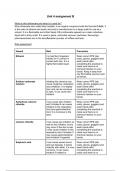
Risk assessment
Hazard Risk Precaution
Ethanol It is harmful if ingested, Wear correct PPE (lab
inhaled or if it comes in coats, gloves, goggles) and
contact with skin. It is a wash hands after
highly flammable liquid. completing the practical to
make sure there is no
chemical residue on your
hands. Keep it away from
any flammable sources such
as flames.
Sodium carbonate Inhaling this chemical can Wear correct PPE (lab
solution cause coughing, respiratory coats, gloves, goggles) and
tract irritations. It is slightly wash hands after
toxic and can be corrosive completing the practical to
to eyes. It can cause skin make sure there is no
irritation. chemical residue on your
hands.
Anhydrous calcium It can cause skin irritation Wear correct PPE (lab
chloride and if inhaled it can cause coats, gloves, goggles) and
irritation to the respiratory wash hands after
tract and gastrointestinal completing the practical to
tract. It is corrosive to the make sure there is no
eyes. chemical residue on your
hands.
calcium chloride It can cause eye irritation as Wear correct PPE (lab
well as skin irritation, burns coats, gloves, goggles) and
may occur if the skin is wet. wash hands after
It may cause irritation in the completing the practical to
respiratory tract if inhaled. It make sure there is no
may cause gastrointestinal chemical residue on your
tract irritation if ingested hands.
Sulphuric acid It can cause severe burns Wear correct PPE (lab
and eye damage. It reacts coats, gloves, goggles) and
violently with water. It is very wash hands after
corrosive. It can cause completing the practical to
irritation if inhaled or make sure there is no
, ingested. chemical residue on your
hands.
Ethanoic acid It is corrosive and causes Wear correct PPE (lab
severe skin burns and eye coats, gloves, goggles) and
damage. It also causes wash hands after
irritation to the respiratory completing the practical to
tract. make sure there is no
chemical residue on your
hands.
Equipment:
● Ethanol
● Pear-shaped flask
● Beaker
● Clamp
● Clamp stand
● Ice water
● Dropping pipette
● Measuring cylinder
● Sulfuric acid
● Ethanoic acid
● Dropping funnel
● Thermometer
● Heating mantle
● Distillation flask
● Condenser
● Separating funnel
● Sodium carbonate solution
● Calcium chloride
● Distilled water
● Test tube
● Anhydrous calcium chloride
● Anti-bumping granules
Method:
Part 1: distillation
1. 4.0cm3 of ethanol was measured using a measuring
cylinder and added into a pear-shaped flask which has
been placed in a beaker filled with ice, ice speeds up the
melting process and prevents the surface from icing up. It
was then clamped using a clamp and clamp stand. 3.0cm3
of concentrated sulfuric acid was carefully added to the
ethanol drop by drop and the flask was mixed well, sulfuric
acid is used as a catalyst to speed up the reflux reaction.
2. 5.0cm3 of ethanol was measured along with 5.0cm3 of
ethanoic acid and they were added in a dropping funnel.
What is ethyl ethanoate and what is it used for?
Ethyl ethanoate also called ethyl acetate, is an organic compound with the formula C₄H₈O₂. It
is the ester of ethanol and acetic acid and is manufactured on a large scale for use as a
solvent. It is a flammable and irritant liquid. Ethyl ethanoate appears as a clear colourless
liquid with a fruity smell. It is used in glues, nail polish remover, perfumes, flavourings,
pharmaceuticals and in the decaffeination process of coffees and teas.
Risk assessment
Hazard Risk Precaution
Ethanol It is harmful if ingested, Wear correct PPE (lab
inhaled or if it comes in coats, gloves, goggles) and
contact with skin. It is a wash hands after
highly flammable liquid. completing the practical to
make sure there is no
chemical residue on your
hands. Keep it away from
any flammable sources such
as flames.
Sodium carbonate Inhaling this chemical can Wear correct PPE (lab
solution cause coughing, respiratory coats, gloves, goggles) and
tract irritations. It is slightly wash hands after
toxic and can be corrosive completing the practical to
to eyes. It can cause skin make sure there is no
irritation. chemical residue on your
hands.
Anhydrous calcium It can cause skin irritation Wear correct PPE (lab
chloride and if inhaled it can cause coats, gloves, goggles) and
irritation to the respiratory wash hands after
tract and gastrointestinal completing the practical to
tract. It is corrosive to the make sure there is no
eyes. chemical residue on your
hands.
calcium chloride It can cause eye irritation as Wear correct PPE (lab
well as skin irritation, burns coats, gloves, goggles) and
may occur if the skin is wet. wash hands after
It may cause irritation in the completing the practical to
respiratory tract if inhaled. It make sure there is no
may cause gastrointestinal chemical residue on your
tract irritation if ingested hands.
Sulphuric acid It can cause severe burns Wear correct PPE (lab
and eye damage. It reacts coats, gloves, goggles) and
violently with water. It is very wash hands after
corrosive. It can cause completing the practical to
irritation if inhaled or make sure there is no
, ingested. chemical residue on your
hands.
Ethanoic acid It is corrosive and causes Wear correct PPE (lab
severe skin burns and eye coats, gloves, goggles) and
damage. It also causes wash hands after
irritation to the respiratory completing the practical to
tract. make sure there is no
chemical residue on your
hands.
Equipment:
● Ethanol
● Pear-shaped flask
● Beaker
● Clamp
● Clamp stand
● Ice water
● Dropping pipette
● Measuring cylinder
● Sulfuric acid
● Ethanoic acid
● Dropping funnel
● Thermometer
● Heating mantle
● Distillation flask
● Condenser
● Separating funnel
● Sodium carbonate solution
● Calcium chloride
● Distilled water
● Test tube
● Anhydrous calcium chloride
● Anti-bumping granules
Method:
Part 1: distillation
1. 4.0cm3 of ethanol was measured using a measuring
cylinder and added into a pear-shaped flask which has
been placed in a beaker filled with ice, ice speeds up the
melting process and prevents the surface from icing up. It
was then clamped using a clamp and clamp stand. 3.0cm3
of concentrated sulfuric acid was carefully added to the
ethanol drop by drop and the flask was mixed well, sulfuric
acid is used as a catalyst to speed up the reflux reaction.
2. 5.0cm3 of ethanol was measured along with 5.0cm3 of
ethanoic acid and they were added in a dropping funnel.


