Legal estates & interests
Numerus clausus principle
Individual parties cannot simply decide that a right given to another is a legal property right in land;
It can only have that effect if its content (the property) matches that of one of the rights on the list
of legal property rights in land
Hill v Tupper
Held that Hill only had a personal right from the canal company, not a property right
Reasoning: Individuals cannot create new property rights as they wish because this would
allow them to create obligations on third parties that third parties are not aware of
undermines legal certainty
s.1 of LPA 1925
Recognizes two categories of legal property rights in land. Any other property right must take effect
in equity
Legal estates in land
Legal interests in land
Legal Estates:
s.1(1) LPA 1925
The only estates in land which are capable of subsisting or being conveyed or created at law are –
(a) An estate in fee simple absolute in possession;
(b) A term of years absolute.
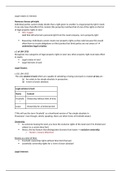
Legal estates in land
Name Content
Freehold Ownership without limit of time
*
Lease Ownership for a limited period
[*We will use the term ‘freehold’ as a shorthand version of ‘fee simple absolute in
Possession’ even though, strictly speaking, there are other forms of freehold estate]
Ownership
As someone leasing the land, you have the exclusive rights of the land even if its limited and
subject to a certain time limit
Hence, the key feature that distinguishes licenses from leases → exclusive ownership
o Hunter v Canary Wharf Ltd
Estates as a slice of time
Freehold: ownership rights without time limit (forever)
Leasehold: ownership rights for a ‘term of years absolute’
Legal Interests
Numerus clausus principle
Individual parties cannot simply decide that a right given to another is a legal property right in land;
It can only have that effect if its content (the property) matches that of one of the rights on the list
of legal property rights in land
Hill v Tupper
Held that Hill only had a personal right from the canal company, not a property right
Reasoning: Individuals cannot create new property rights as they wish because this would
allow them to create obligations on third parties that third parties are not aware of
undermines legal certainty
s.1 of LPA 1925
Recognizes two categories of legal property rights in land. Any other property right must take effect
in equity
Legal estates in land
Legal interests in land
Legal Estates:
s.1(1) LPA 1925
The only estates in land which are capable of subsisting or being conveyed or created at law are –
(a) An estate in fee simple absolute in possession;
(b) A term of years absolute.
Legal estates in land
Name Content
Freehold Ownership without limit of time
*
Lease Ownership for a limited period
[*We will use the term ‘freehold’ as a shorthand version of ‘fee simple absolute in
Possession’ even though, strictly speaking, there are other forms of freehold estate]
Ownership
As someone leasing the land, you have the exclusive rights of the land even if its limited and
subject to a certain time limit
Hence, the key feature that distinguishes licenses from leases → exclusive ownership
o Hunter v Canary Wharf Ltd
Estates as a slice of time
Freehold: ownership rights without time limit (forever)
Leasehold: ownership rights for a ‘term of years absolute’
Legal Interests