
DNA
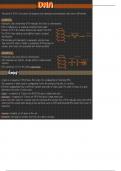
Structure of DNA is the same in all organisms but eukaryotic and prokaryotic cells store it differently
Eukaryotic:
Eukaryotic cells contain linear DNA molecules that exist as chromosomes
!
DNA is really long so is wound up around proteins called DNA double-helix
histones to fit in the nucleus. Histones also support the DNA -
The DNA is then coiled up very tightly to make a compact --
DNA wound around histones
--
Chromosome
chromosome -- -
Mitochondria and chloroplasts in eukaryotic cells also have - -
their own DNA which is similar to prokaryotic DNA because its
circular, short and is not associated with histone proteins
Prokaryotic: DNA double-helix
&
Prokaryotes also carry DNA as chromosomes - -
Coiled chromosome
Circular chromosome
DNA molecules are shorter, circular and isn't wound around
8 8
Supercoiled chromosome
--
histones --
-
- -
zg
DNA condenses to fit in the cell by supercoiling - -
Genes:
A gene is a sequence of DNA bases that codes for a polypeptide or functional RNA
The sequence of amino acids in a polypeptide forms the primary structure of a protein.
Different polypeptides have a different number and order of amino acids. The order of bases in a gene
- determines the order of amino acids.
Codon = a sequence of 3 bases on mRNA that gives a single amino acid
Anticodon = a sequence of 3 bases on tRNA that gives a single amino acid
Genes that don't code for a protein code for functional RNA instead. This is RNA molecules other than mRNA
which perform special tasks during protein synthesis such as tRNA and ribosomal RNA which forms part of
ribosomes.
-
Genome= Complete set of genes in the cell
·
Proteome= full range of proteins that the cell is able to produce
, Non-polypeptide coDons:
Sections of DNA that do not code for polypeptides are called introns. The parts that do code for amino
I
acids are called exons.
Introns are removed during protein synthesis in a process called splicing so that they don't affect the amino
acid order. Prokaryotic DNA doesn't have introns
Eukaryotic DNA also contains regions of multiple repeats outside of genes. These are DNA sequences that
repeat over and over and do not code for amino acids. They're called non-coding repeats
Alleles:
A different version of the same gene
The order of bases in each allele is slightly different so they code for slightly different versions of the same
polypeptide
Humans have 23 pairs of chromosomes. Pairs of matching chromosomes are called homologous pairs.
Both chromosomes are the same size and have the same genes but possibly different alleles.
Alleles coding for the same characteristic will be found at the same position on a chromosome called the
locus
Chromosomes will only have the X shape during DNA replication.
Genetic Code:
Genetic code is the sequence of base triplets in mRNA which code for a specific amino acid.
The code is:
Non-overlapping: it is read in one direction and each base is only read once
Degenerate: each amino acid can be coded for by more than one codon
Universal: The same codon will give the same amino acid in all living organisms
Start & Stop codons: some triplets are used to tell the cell when to start and stop production of
protein. They're found at the beginning and end of mRNA
Structure of DNA is the same in all organisms but eukaryotic and prokaryotic cells store it differently
Eukaryotic:
Eukaryotic cells contain linear DNA molecules that exist as chromosomes
!
DNA is really long so is wound up around proteins called DNA double-helix
histones to fit in the nucleus. Histones also support the DNA -
The DNA is then coiled up very tightly to make a compact --
DNA wound around histones
--
Chromosome
chromosome -- -
Mitochondria and chloroplasts in eukaryotic cells also have - -
their own DNA which is similar to prokaryotic DNA because its
circular, short and is not associated with histone proteins
Prokaryotic: DNA double-helix
&
Prokaryotes also carry DNA as chromosomes - -
Coiled chromosome
Circular chromosome
DNA molecules are shorter, circular and isn't wound around
8 8
Supercoiled chromosome
--
histones --
-
- -
zg
DNA condenses to fit in the cell by supercoiling - -
Genes:
A gene is a sequence of DNA bases that codes for a polypeptide or functional RNA
The sequence of amino acids in a polypeptide forms the primary structure of a protein.
Different polypeptides have a different number and order of amino acids. The order of bases in a gene
- determines the order of amino acids.
Codon = a sequence of 3 bases on mRNA that gives a single amino acid
Anticodon = a sequence of 3 bases on tRNA that gives a single amino acid
Genes that don't code for a protein code for functional RNA instead. This is RNA molecules other than mRNA
which perform special tasks during protein synthesis such as tRNA and ribosomal RNA which forms part of
ribosomes.
-
Genome= Complete set of genes in the cell
·
Proteome= full range of proteins that the cell is able to produce
, Non-polypeptide coDons:
Sections of DNA that do not code for polypeptides are called introns. The parts that do code for amino
I
acids are called exons.
Introns are removed during protein synthesis in a process called splicing so that they don't affect the amino
acid order. Prokaryotic DNA doesn't have introns
Eukaryotic DNA also contains regions of multiple repeats outside of genes. These are DNA sequences that
repeat over and over and do not code for amino acids. They're called non-coding repeats
Alleles:
A different version of the same gene
The order of bases in each allele is slightly different so they code for slightly different versions of the same
polypeptide
Humans have 23 pairs of chromosomes. Pairs of matching chromosomes are called homologous pairs.
Both chromosomes are the same size and have the same genes but possibly different alleles.
Alleles coding for the same characteristic will be found at the same position on a chromosome called the
locus
Chromosomes will only have the X shape during DNA replication.
Genetic Code:
Genetic code is the sequence of base triplets in mRNA which code for a specific amino acid.
The code is:
Non-overlapping: it is read in one direction and each base is only read once
Degenerate: each amino acid can be coded for by more than one codon
Universal: The same codon will give the same amino acid in all living organisms
Start & Stop codons: some triplets are used to tell the cell when to start and stop production of
protein. They're found at the beginning and end of mRNA


