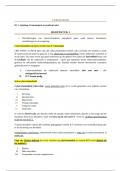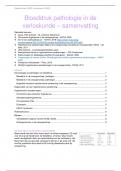
Approaches Revision List
(For each of the Following Know the Key Assumptions and the Evaluation)
Origins of Psychology (Wundt & Introspection & philosophy and the
emergence of Psychology as a science)
The Psychodynamic Approach (The Unconscious, Preconscious, and
Conscious Part of the Mind, Tripartite Personality- Id, Ego,
Superego, Psychosexual Stages, Defence Mechanisms and Little
Hans case study and Oedipus & Electra Complex)
The Learning Approach Behaviourism (Classical Conditioning-Pavlov’s
Dog Study, Operant Conditioning- Skinner Box)
The Learning Approach: Social Learning Theory (Modelling,
Vicarious Reinforcement, Identification, Mediational Processes-
Attention, Retention, Motor Reproduction and Motivation, Bandura's
Bobo Doll Study)
Humanistic Approach (Free-Will, Self-Actualisation, The Self,
Congruence and Conditions of worth)
Cognitive Approach (Role of Schemas, Inference’s, Theoretical and
Computer Models, The emergence of Cognitive Neuroscience)
The Biological Approach (The Neurochemical basis of Behaviour,
The genetic basis of Behaviour, Genotype and Phenotype, Evolution)
, Wundt and Introspection
Philosophical Roots
Cartesian Dualism – The Mind and Body are separate entities, proposed by Rene Descartes ‘I
think therefore I am’
John Locke – Empiricist, idea that all behaviour comes from our senses, that we are born with a
blank slate ‘tabula rasa’, influenced researchers to see how behaviour was learnt, Behaviourist
approach.
Charles Darwin- came up with the evolutionary theory, our genes are adapted to aid survival
through generations, the stronger genes survive ‘survival of the fittest’. His theory introduced
the role of biology and its influence on human behaviour.
Wundt’s Lab
Opened the 1st lab ever in Leipzig, Germany, dedicated to Psychology giving it right and discipline
and it was no longer seen as a philosophy but a science.
Psychology was now defined as the Scientific study of the mind, behaviour and experience.
His aim was to analyse the human consciousness.
Introspection is the first systematic attempt to study the mind under controlled conditions by breaking up
conscious awareness into basic structures, thoughts, images, and sensations.
Standardised procedures
Another aim was to find theories about mental processes, such as language and perception.
His co-workers self-reported or recorded their experiences, with some different stimuli e.g. sounds or
objects.
They divided their observations in 3 categories, thoughts, images or sensations.
Structuralism
The stimuli that Wundt experienced was always present and in the same order and same instructions to all of
the participants..
Evaluation
One Strength of Wundt’s work is that some of his methods would be classified as scientific today. For instance, all
introspections were within a controlled environment. He also Standardised his procedures so that all participants
received the same information and were also tested the same way. Consequently his research can be considered a
forerunner to later scientific approaches that were to come.
However, some aspects of his Research would be considered unscientific today. This is because Wundt relied on
Participants self-reporting their mental Processes, such data is subjective as some of the participants may have hidden
some of their thoughts. Participants would also not have had exactly the same thoughts every time, so establishing
general principles would not have been possible, general laws are useful in predicting future behaviours, one of the aims
of science. To conclude, many Psychologists would claim for this reason scientific approach to the study of human
thought and experience is not possible.
On the other hand, not all approaches use objective methods, As the Humanistic approach is anti-scientific and doesn’t
attempt to formulate general laws of behaviour and is only concerned with unique subjective experiences. Although case
studies are open to bias and don't attempt to gather a representative sample of the population. This suggests that it’s
better to take a more scientific approach to studying human behaviour.
(For each of the Following Know the Key Assumptions and the Evaluation)
Origins of Psychology (Wundt & Introspection & philosophy and the
emergence of Psychology as a science)
The Psychodynamic Approach (The Unconscious, Preconscious, and
Conscious Part of the Mind, Tripartite Personality- Id, Ego,
Superego, Psychosexual Stages, Defence Mechanisms and Little
Hans case study and Oedipus & Electra Complex)
The Learning Approach Behaviourism (Classical Conditioning-Pavlov’s
Dog Study, Operant Conditioning- Skinner Box)
The Learning Approach: Social Learning Theory (Modelling,
Vicarious Reinforcement, Identification, Mediational Processes-
Attention, Retention, Motor Reproduction and Motivation, Bandura's
Bobo Doll Study)
Humanistic Approach (Free-Will, Self-Actualisation, The Self,
Congruence and Conditions of worth)
Cognitive Approach (Role of Schemas, Inference’s, Theoretical and
Computer Models, The emergence of Cognitive Neuroscience)
The Biological Approach (The Neurochemical basis of Behaviour,
The genetic basis of Behaviour, Genotype and Phenotype, Evolution)
, Wundt and Introspection
Philosophical Roots
Cartesian Dualism – The Mind and Body are separate entities, proposed by Rene Descartes ‘I
think therefore I am’
John Locke – Empiricist, idea that all behaviour comes from our senses, that we are born with a
blank slate ‘tabula rasa’, influenced researchers to see how behaviour was learnt, Behaviourist
approach.
Charles Darwin- came up with the evolutionary theory, our genes are adapted to aid survival
through generations, the stronger genes survive ‘survival of the fittest’. His theory introduced
the role of biology and its influence on human behaviour.
Wundt’s Lab
Opened the 1st lab ever in Leipzig, Germany, dedicated to Psychology giving it right and discipline
and it was no longer seen as a philosophy but a science.
Psychology was now defined as the Scientific study of the mind, behaviour and experience.
His aim was to analyse the human consciousness.
Introspection is the first systematic attempt to study the mind under controlled conditions by breaking up
conscious awareness into basic structures, thoughts, images, and sensations.
Standardised procedures
Another aim was to find theories about mental processes, such as language and perception.
His co-workers self-reported or recorded their experiences, with some different stimuli e.g. sounds or
objects.
They divided their observations in 3 categories, thoughts, images or sensations.
Structuralism
The stimuli that Wundt experienced was always present and in the same order and same instructions to all of
the participants..
Evaluation
One Strength of Wundt’s work is that some of his methods would be classified as scientific today. For instance, all
introspections were within a controlled environment. He also Standardised his procedures so that all participants
received the same information and were also tested the same way. Consequently his research can be considered a
forerunner to later scientific approaches that were to come.
However, some aspects of his Research would be considered unscientific today. This is because Wundt relied on
Participants self-reporting their mental Processes, such data is subjective as some of the participants may have hidden
some of their thoughts. Participants would also not have had exactly the same thoughts every time, so establishing
general principles would not have been possible, general laws are useful in predicting future behaviours, one of the aims
of science. To conclude, many Psychologists would claim for this reason scientific approach to the study of human
thought and experience is not possible.
On the other hand, not all approaches use objective methods, As the Humanistic approach is anti-scientific and doesn’t
attempt to formulate general laws of behaviour and is only concerned with unique subjective experiences. Although case
studies are open to bias and don't attempt to gather a representative sample of the population. This suggests that it’s
better to take a more scientific approach to studying human behaviour.