To what extent can the problem of poverty in the UK be solved through the operation of
market forces? (25 marks)
Intro - define poverty, the difference between absolute and relative, and include current level of
UK poverty (14.3m), UK has low absolute poverty but high relative poverty showing inequality.
Point Laissez-faire Low taxation Merit goods Equity
Knowledge Leaving markets Is an injection Can reduce Leaving to FM
alone can lead into the poverty through will lead to
to growth, wealth economy leading positive inequality.
creation & trickle to growth and externalities.
down. job creation.
Application Back to work Attracts NHS helps 320,000
schemes enterprise, other tackle poverty in homeless people
ineffective, may countries have the UK. would be left
be better for FM. lower tax rates. behind by FM.
Analysis Jobs up means Higher incentive Market failure, Inequality is the
AD up. Higher to work and underproduced main cause of
TR and skills. higher DI in FM and often poverty, best
Increases living creates mult. necessities. reduced through
standards for all. redistribution.
Diagram AD shift right. Laffer curve. Merit good. LRAS shift left.
Evaluation Could be Lower tax could Information Welfare benefits
inflationary at still allow more failure could still can have
FC, regressive revenue anyway, lead to disincentive
effect on poor. which could then underconsumpti effects and lead
Trickle down be reinvested. on and merit to a lack of
may not happen. However, the goods are a productivity
Potential of new likely effect is a burden on the harming the
job may not loss of revenue budget, conflicts LRAS and
defeat so less spending with objectives. making poverty
unemployment on welfare. Sub worse.
trap. effect too.
Conclusion - poverty against government objectives, but too important to be left entirely to the
FM, and merit goods are a good way without direct intervention to help. Compared to other
countries, the UK has low poverty, may not be gov. priority, but intervention could lead to a
better allocation of resources.
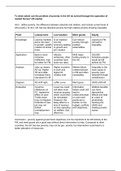
market forces? (25 marks)
Intro - define poverty, the difference between absolute and relative, and include current level of
UK poverty (14.3m), UK has low absolute poverty but high relative poverty showing inequality.
Point Laissez-faire Low taxation Merit goods Equity
Knowledge Leaving markets Is an injection Can reduce Leaving to FM
alone can lead into the poverty through will lead to
to growth, wealth economy leading positive inequality.
creation & trickle to growth and externalities.
down. job creation.
Application Back to work Attracts NHS helps 320,000
schemes enterprise, other tackle poverty in homeless people
ineffective, may countries have the UK. would be left
be better for FM. lower tax rates. behind by FM.
Analysis Jobs up means Higher incentive Market failure, Inequality is the
AD up. Higher to work and underproduced main cause of
TR and skills. higher DI in FM and often poverty, best
Increases living creates mult. necessities. reduced through
standards for all. redistribution.
Diagram AD shift right. Laffer curve. Merit good. LRAS shift left.
Evaluation Could be Lower tax could Information Welfare benefits
inflationary at still allow more failure could still can have
FC, regressive revenue anyway, lead to disincentive
effect on poor. which could then underconsumpti effects and lead
Trickle down be reinvested. on and merit to a lack of
may not happen. However, the goods are a productivity
Potential of new likely effect is a burden on the harming the
job may not loss of revenue budget, conflicts LRAS and
defeat so less spending with objectives. making poverty
unemployment on welfare. Sub worse.
trap. effect too.
Conclusion - poverty against government objectives, but too important to be left entirely to the
FM, and merit goods are a good way without direct intervention to help. Compared to other
countries, the UK has low poverty, may not be gov. priority, but intervention could lead to a
better allocation of resources.