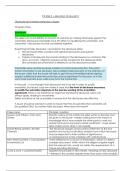
Analyse two explanations of the causes of crime put forward by right realist (10 marks)
Right realist view inadequate socialisation as a major cause of crime. They argue that the
nuclear family is the best agency of socialisation as it involves learning self-control instils moral
values of right and wrong, these are considered key in decreasing the likelihood of committing a
crime and steering clear of offending. However, Right realist highlight that lone parent mothers
are ineffective socialisation agents for boys as the lack of paternal discipline and appropriate
role model, will lead young males to have delinquent, street role models. Instead of prioritizing
education and maintaining a steady job, young males will seek status through crime. Thus,
suggesting the lack of acceptable socialisation into society’s norms and values can lead
individuals to deviate as they have not learnt or understood the vital traits to co-exist in society
but rather the traits for deviation. Although, it must be acknowledged that the right realist focus
on the ‘ideal’ nuclear family and their ability to provide adequate socialisation and ignore the
possibility that nuclear families may consist of alcoholic or abusive parents who may not be able
to socialize their children to prevent crime. Also, lone parent families shouldn’t be isolated as the
sole cause for crime as factors such as, social class and ethnicity may be more important.
Right realist use the rational choice theory to explain that crime is caused when individuals
also known as ‘rational actors’ see crime as feasible. Clarke argues that the decision to commit
crime is choice, based on a rational calculation of the likely consequences. If the potential
rewards of the crime outweigh the potential costs then they will commit the crime, this suggests
that the likelihood of individuals using their free will to commit a crime increases based on the
ease of executing it. Also, right realist would argue that individuals are not deterred by
punishments as they’re lenient compared to crime. However, such an explanation tends to
overlook that many crimes are committed for praise such as, gang crime, vandalism and theft.
Also, it fails to explore the concept that people commit crimes due to their circumstances and for
survival such as, poverty and they might not consider the potential punishment at all. Hence, the
rational choice theory places an over-emphasis on free will and pre-calculation than on real
situations.
Right realist view inadequate socialisation as a major cause of crime. They argue that the
nuclear family is the best agency of socialisation as it involves learning self-control instils moral
values of right and wrong, these are considered key in decreasing the likelihood of committing a
crime and steering clear of offending. However, Right realist highlight that lone parent mothers
are ineffective socialisation agents for boys as the lack of paternal discipline and appropriate
role model, will lead young males to have delinquent, street role models. Instead of prioritizing
education and maintaining a steady job, young males will seek status through crime. Thus,
suggesting the lack of acceptable socialisation into society’s norms and values can lead
individuals to deviate as they have not learnt or understood the vital traits to co-exist in society
but rather the traits for deviation. Although, it must be acknowledged that the right realist focus
on the ‘ideal’ nuclear family and their ability to provide adequate socialisation and ignore the
possibility that nuclear families may consist of alcoholic or abusive parents who may not be able
to socialize their children to prevent crime. Also, lone parent families shouldn’t be isolated as the
sole cause for crime as factors such as, social class and ethnicity may be more important.
Right realist use the rational choice theory to explain that crime is caused when individuals
also known as ‘rational actors’ see crime as feasible. Clarke argues that the decision to commit
crime is choice, based on a rational calculation of the likely consequences. If the potential
rewards of the crime outweigh the potential costs then they will commit the crime, this suggests
that the likelihood of individuals using their free will to commit a crime increases based on the
ease of executing it. Also, right realist would argue that individuals are not deterred by
punishments as they’re lenient compared to crime. However, such an explanation tends to
overlook that many crimes are committed for praise such as, gang crime, vandalism and theft.
Also, it fails to explore the concept that people commit crimes due to their circumstances and for
survival such as, poverty and they might not consider the potential punishment at all. Hence, the
rational choice theory places an over-emphasis on free will and pre-calculation than on real
situations.