

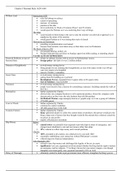
Charles I Personal Rule 1629-1640
William Laud Instructions 1633
rules for bishops to enforce
control of preaching
increase of ceremony
position of the altar
strict conformity to ‘Book of Common Prayer’ and 39 Articles
would upset the Puritans as it was restricting their ways of things
The Altar
Laud insisted on them being in the east so only the minister was allowed to approach it, to
emphasize the status of the minister
would upset Puritans as it was ruining their style of church
Destruction of Puritanism
preaching on predestination was banned
licenses from lecturers were taken away as their ideas were too Puritanism
The Book of Sports 1633
encouraged dancing, archery etc
Puritans objected most activities on Sundays apart from bible reading, or attending church
FACED LOTS OF OPPOSITION
Financial Problems at start of reliant on ordinary income with no access to Parliamentary money
Personal Rule foreign policy- left debt of over £1 million dollars
Distraint of Knighthoods revived money raising device
fining people for not claiming their knighthoods, as men with estates worth over £40 per
year were meant to be knighted
raised £170,000 {3 subsidies}
Forest Fines revived money raising device
getting fined for building on royal land
Rockingham Forest- expanded from 6 square miles to 60 square miles
Earl of Salisbury- fined £20,000
Nuisances revived money raising device
people were forced to buy a license for committing a nuisance {building outside the walls of
the City}
Monopolies further exploited by Charles
allowed only one company/business to sell a particular product, where this company could
increase prices as they were the only business that sold this product
Sir Richard Weston- soap monopoly known as ‘popish soap’ as it was a group of Catholics
£750,000 gained
Court of Wards further exploited by Charles
continued to exploit wardships
£83,000 gained from 1638-1640
Customs Farmers further exploited by Charles
King- appointed people to collect the custom duties on products, this person would give the
King a large sum of money that they thought would be the amount they collected, raised the
tax prices to earn profits
majorly affected poor merchants
Ship Money Before
coastal towns- occasionally been required to provide ships in times of emergency, and
charged most inhabitants a rate and sent money rather than ships
JP’s- ordered to collect ship money and it raised problems
Charles
1635- extended to all counties, tax collected every year until 1640
essentially establishing a new annual tax without Parliament’s consent
offered long term financial independence
John Hampden 1637
refused to pay ship money and challenged the legality of the tax in courts
significance- test case, arguments revolved around whether the King had the right to declare
an emergency and tax subjects, 7:5 in King’s favour but was narrow margin, even though
Hampden was found guilty, non- payment increased to 20% in 1638
Policy of Thorough ultimately wanted to make royal government more efficient, strengthen the King’s power
William Laud Instructions 1633
rules for bishops to enforce
control of preaching
increase of ceremony
position of the altar
strict conformity to ‘Book of Common Prayer’ and 39 Articles
would upset the Puritans as it was restricting their ways of things
The Altar
Laud insisted on them being in the east so only the minister was allowed to approach it, to
emphasize the status of the minister
would upset Puritans as it was ruining their style of church
Destruction of Puritanism
preaching on predestination was banned
licenses from lecturers were taken away as their ideas were too Puritanism
The Book of Sports 1633
encouraged dancing, archery etc
Puritans objected most activities on Sundays apart from bible reading, or attending church
FACED LOTS OF OPPOSITION
Financial Problems at start of reliant on ordinary income with no access to Parliamentary money
Personal Rule foreign policy- left debt of over £1 million dollars
Distraint of Knighthoods revived money raising device
fining people for not claiming their knighthoods, as men with estates worth over £40 per
year were meant to be knighted
raised £170,000 {3 subsidies}
Forest Fines revived money raising device
getting fined for building on royal land
Rockingham Forest- expanded from 6 square miles to 60 square miles
Earl of Salisbury- fined £20,000
Nuisances revived money raising device
people were forced to buy a license for committing a nuisance {building outside the walls of
the City}
Monopolies further exploited by Charles
allowed only one company/business to sell a particular product, where this company could
increase prices as they were the only business that sold this product
Sir Richard Weston- soap monopoly known as ‘popish soap’ as it was a group of Catholics
£750,000 gained
Court of Wards further exploited by Charles
continued to exploit wardships
£83,000 gained from 1638-1640
Customs Farmers further exploited by Charles
King- appointed people to collect the custom duties on products, this person would give the
King a large sum of money that they thought would be the amount they collected, raised the
tax prices to earn profits
majorly affected poor merchants
Ship Money Before
coastal towns- occasionally been required to provide ships in times of emergency, and
charged most inhabitants a rate and sent money rather than ships
JP’s- ordered to collect ship money and it raised problems
Charles
1635- extended to all counties, tax collected every year until 1640
essentially establishing a new annual tax without Parliament’s consent
offered long term financial independence
John Hampden 1637
refused to pay ship money and challenged the legality of the tax in courts
significance- test case, arguments revolved around whether the King had the right to declare
an emergency and tax subjects, 7:5 in King’s favour but was narrow margin, even though
Hampden was found guilty, non- payment increased to 20% in 1638
Policy of Thorough ultimately wanted to make royal government more efficient, strengthen the King’s power


