
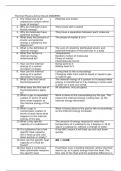
Thermal Physics Active Recall ANSWERS:
1. The molecules of all Potential and kinetic
substances contain which
types of energy?
2. Why do molecules have They travel with a speed
kinetic energy?
3. Why do molecules have They have a separation between each molecule
potential energy?
4. What does the amount of The phase of matter it is in
kinetic and potential
energy a substance has
depend on?
5. What is the definition of The sum of randomly distributed kinetic and
internal energy? potential energies of the particles in a body
6. What four factors is Temperature
internal energy Random motion of molecules
determined by? Phase of matter
Intermolecular forces
7. How can the internal Doing work to it
energy of a system Adding heat to it
increase? (2 ways)
8. How can the internal Losing heat to the surroundings
energy of a system Changing state from solid to liquid or liquid to gas
decrease? (2 ways) or solid to gas
9. What is the first law of The internal energy of a system in increased when
thermodynamics? energy is transferred to it by heating or when work
is done on it and vice versa.
10.What does the first law of All situations, not just gases
thermodynamics apply
to?
11.When a gas is expanded, Work is done to the surroundings by the gas. This
explain in terms of work means the internal energy is being lost, so the
done what happens to internal energy decreases.
the internal energy of the
gas
12.When a gas is Work is being done to the gas by the surroundings,
compressed, explain in so the internal energy increases.
terms of work done what
happens to the internal
energy of the gas
13.What is the specific The amount of energy required to raise the
capacity of a substance? temperature of a substance by 1 degree or 1K of
1kg of a substance, without a change of state.
14.If a substance has a low A low SHC means it will heat up and cool down
specific heat capacity, quickly
will it heat up and cool
down quickly or slowly?
15.How can the specific heat ΔQ = mcΔθ
capacity of a fluid be
found?
16.How does a continuous Fluid flows over a heating element, where the fluid
flow calorimeter measure warms up, as it gains energy from the heat. The
the specific heat flow rate of the fluid and the potential difference is
, capacity? changed to keep the change in temperature of the
fluid constant. The raise in temperatures is
measured and then the mass is found using the
flow rate multiplied by the time taken to give the
mass of the fluid that flows in. The current and
potential difference are recorded to gain the
power. The fluid rate is then change to give an
altered mass and the potential difference is
changed so the temperature stays the same. The
SHC is found by IVt=Q=mcθ + Elost
17.Why does the fluid flow So the fluid can gain energy
over a heating element?
18.What is changed in order The potential difference and the fluid flow rate
to keep the change in
temperature constant?
19.How do they find the They record the flow rate and multiply by the time
mass of the fluid? taken to give the mass of the fluid that flows in
20.The specific heat capacity The thermal losses to the surroundings for both
if found by assuming flow rates.
what is constant?
21.During a change of state, Potential energy
which energies are
changing?
22.What is needed to change energy
the state of a substance?
23.Which energies change The potential energy
when a substance is
changing state?
24.What is latent heat? The energy needed to change the state of 1kg of
substance without changing the temperature.
25.What are the two types of Fusion and vaporisation
latent heat?
26.What is the specific latent The thermal energy needed to change a 1kg solid
heat of fusion? to a liquid with no change in state
27.What is the specific latent The thermal energy needed to change 1kg liquid
heat of vaporisation? to a gas with no change in state
28.The larger the mass of More energy to change state
the substance, how much
energy is needed to
change its state?
29.How can you see the Straight line between two positive gradient lines
latent heat of fusion from between points where the solid and liquid lines are
a temperature heat
graph?
30.How can you see the Straight line between two positive gradient lines
latent heat of between points where the liquid and gas lines are
vaporisation from a
temperature heat graph?
31.How do you calculate
specific latent heat?
32.How do you calculate ΔQ = mcΔθ
specific heat capacity?
33.Why does evaporating Energy is required to increase molecule separation
1. The molecules of all Potential and kinetic
substances contain which
types of energy?
2. Why do molecules have They travel with a speed
kinetic energy?
3. Why do molecules have They have a separation between each molecule
potential energy?
4. What does the amount of The phase of matter it is in
kinetic and potential
energy a substance has
depend on?
5. What is the definition of The sum of randomly distributed kinetic and
internal energy? potential energies of the particles in a body
6. What four factors is Temperature
internal energy Random motion of molecules
determined by? Phase of matter
Intermolecular forces
7. How can the internal Doing work to it
energy of a system Adding heat to it
increase? (2 ways)
8. How can the internal Losing heat to the surroundings
energy of a system Changing state from solid to liquid or liquid to gas
decrease? (2 ways) or solid to gas
9. What is the first law of The internal energy of a system in increased when
thermodynamics? energy is transferred to it by heating or when work
is done on it and vice versa.
10.What does the first law of All situations, not just gases
thermodynamics apply
to?
11.When a gas is expanded, Work is done to the surroundings by the gas. This
explain in terms of work means the internal energy is being lost, so the
done what happens to internal energy decreases.
the internal energy of the
gas
12.When a gas is Work is being done to the gas by the surroundings,
compressed, explain in so the internal energy increases.
terms of work done what
happens to the internal
energy of the gas
13.What is the specific The amount of energy required to raise the
capacity of a substance? temperature of a substance by 1 degree or 1K of
1kg of a substance, without a change of state.
14.If a substance has a low A low SHC means it will heat up and cool down
specific heat capacity, quickly
will it heat up and cool
down quickly or slowly?
15.How can the specific heat ΔQ = mcΔθ
capacity of a fluid be
found?
16.How does a continuous Fluid flows over a heating element, where the fluid
flow calorimeter measure warms up, as it gains energy from the heat. The
the specific heat flow rate of the fluid and the potential difference is
, capacity? changed to keep the change in temperature of the
fluid constant. The raise in temperatures is
measured and then the mass is found using the
flow rate multiplied by the time taken to give the
mass of the fluid that flows in. The current and
potential difference are recorded to gain the
power. The fluid rate is then change to give an
altered mass and the potential difference is
changed so the temperature stays the same. The
SHC is found by IVt=Q=mcθ + Elost
17.Why does the fluid flow So the fluid can gain energy
over a heating element?
18.What is changed in order The potential difference and the fluid flow rate
to keep the change in
temperature constant?
19.How do they find the They record the flow rate and multiply by the time
mass of the fluid? taken to give the mass of the fluid that flows in
20.The specific heat capacity The thermal losses to the surroundings for both
if found by assuming flow rates.
what is constant?
21.During a change of state, Potential energy
which energies are
changing?
22.What is needed to change energy
the state of a substance?
23.Which energies change The potential energy
when a substance is
changing state?
24.What is latent heat? The energy needed to change the state of 1kg of
substance without changing the temperature.
25.What are the two types of Fusion and vaporisation
latent heat?
26.What is the specific latent The thermal energy needed to change a 1kg solid
heat of fusion? to a liquid with no change in state
27.What is the specific latent The thermal energy needed to change 1kg liquid
heat of vaporisation? to a gas with no change in state
28.The larger the mass of More energy to change state
the substance, how much
energy is needed to
change its state?
29.How can you see the Straight line between two positive gradient lines
latent heat of fusion from between points where the solid and liquid lines are
a temperature heat
graph?
30.How can you see the Straight line between two positive gradient lines
latent heat of between points where the liquid and gas lines are
vaporisation from a
temperature heat graph?
31.How do you calculate
specific latent heat?
32.How do you calculate ΔQ = mcΔθ
specific heat capacity?
33.Why does evaporating Energy is required to increase molecule separation


