JUR 120
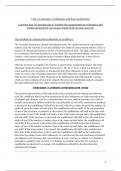
Study note: Criminal Law
Beginner's Guide (2018) chapter 10
Criminal case distinguished from civil case
Sources of criminal law
Specific crimes
Elements of a crime
Punishment and sentence
The death penalty
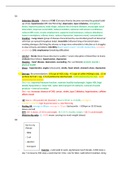
Criminal case distinguished from civil case
Criminal case Civil case
Public law Private law
State v accused (S v Botha) Plaintiff v defendant / applicant v
respondent
Unequal relationship between the parties Equal relationship between the parties?
State bears the burden of proof The party who alleges (usually
plaintiff/applicant) bears the burden of
proof
Burden of proof: Beyond reasonable doubt* Burden of proof: Balance of probabilities*
State dominus litis The parties decide how they want to
proceed
Aim: punishment Aim: clarify legal position; obtain remedy
Outcome: guilty and punishment / not guilty Action or application granted or dismissed
and walks free (and costs follow the result)
* This is the reason why on the same set of facts an accused could be found not guilty but in
the civil case be ordered to pay damages to the defendant (eg assault - found not guilty in the
criminal trial but be ordered to pay damages for the defendant's medical expenses following
the assault).
Same set of facts can the basis of a criminal case and a civil case
Beginner's Guide (2018) p259-260 (murder/maintenance)
Two UP students hit each other at a party: the crime of assault (and a disciplinary charge at
UP); civil claims for their medical expenses
Motor collision: the crime of negligent or reckless driving; civil claims for repair costs of the
vehicles
Student puts an expensive bottle of wine in his backpack and walks out of the store without
paying; drinks the bottle of wine very quickly: the crime of theft; civil claim of the store against
the student for the cost of the bottle of wine
Sources of criminal law (common law and legislation)
Common law
(Revise JUR 110: what are the sources of the common law?)
1
, For common law crimes: where do you find the definition (the requirements/elements) of
these crimes? NOT in legislation.
Legislation
Legislation is a stronger source of law than the common law. Legislation can override or
amend the common law. (Example in Beginner's Guide (2018) p262-263).
Matter of statutory interpretation which form is fault is sufficient and whether causation is
an element of these statutory crimes.
Specific crimes
Take note of the examples in the Beginner's Guide (2018) p263-264.
Against another person
Against property
Against the state
Against community mores
Elements of a crime
(Overlaps with delict: compare the study note for delict with Beginner's Guide (2018) 265-
275)
Fault: another way to refer to dolus eventualis (foresee and reconcile) is constructive
intention.
Causation: Not all crimes require causation as an element of that crime - read and carefully
consider the definition of the crime to work out of the element of causation is required or
not.
In criminal law the usual way in which causation may not be present is if a novus actus
interveniens (a new intervening cause) interrupts the causal chain of events. For example: A
stabs B. B would have died from the stab wound if left unattended. While dying, C stabs B as
well and B dies immediately thereafter. Who is guilty of murder: A, or C, or A and C? Another
example: B stabs his girlfriend. She is rushed to a state hospital. The hospital nursing staff and
doctors are overworked and B does not receive adequate medical care. She dies. Is B guilty of
murder?
Some examples of overlap (or no overlap) between crime and delict:
Crime and delict
Assault that leads to injuries that leads to medical expenses and pain
Motor collision that involves serious negligence
Crime only
Driving under the influence of alcohol (and no damage caused)
Speeding (and no damage caused)
High treason (if no damage caused)
Public indecency
Delict only
Neighbours insult one another (and not so serious as to constitute crimen iniuria)
Motor collision that does not involve serious negligence (eg two cars reverse into each other
in a parking garage at a shopping mall)
2
Study note: Criminal Law
Beginner's Guide (2018) chapter 10
Criminal case distinguished from civil case
Sources of criminal law
Specific crimes
Elements of a crime
Punishment and sentence
The death penalty
Criminal case distinguished from civil case
Criminal case Civil case
Public law Private law
State v accused (S v Botha) Plaintiff v defendant / applicant v
respondent
Unequal relationship between the parties Equal relationship between the parties?
State bears the burden of proof The party who alleges (usually
plaintiff/applicant) bears the burden of
proof
Burden of proof: Beyond reasonable doubt* Burden of proof: Balance of probabilities*
State dominus litis The parties decide how they want to
proceed
Aim: punishment Aim: clarify legal position; obtain remedy
Outcome: guilty and punishment / not guilty Action or application granted or dismissed
and walks free (and costs follow the result)
* This is the reason why on the same set of facts an accused could be found not guilty but in
the civil case be ordered to pay damages to the defendant (eg assault - found not guilty in the
criminal trial but be ordered to pay damages for the defendant's medical expenses following
the assault).
Same set of facts can the basis of a criminal case and a civil case
Beginner's Guide (2018) p259-260 (murder/maintenance)
Two UP students hit each other at a party: the crime of assault (and a disciplinary charge at
UP); civil claims for their medical expenses
Motor collision: the crime of negligent or reckless driving; civil claims for repair costs of the
vehicles
Student puts an expensive bottle of wine in his backpack and walks out of the store without
paying; drinks the bottle of wine very quickly: the crime of theft; civil claim of the store against
the student for the cost of the bottle of wine
Sources of criminal law (common law and legislation)
Common law
(Revise JUR 110: what are the sources of the common law?)
1
, For common law crimes: where do you find the definition (the requirements/elements) of
these crimes? NOT in legislation.
Legislation
Legislation is a stronger source of law than the common law. Legislation can override or
amend the common law. (Example in Beginner's Guide (2018) p262-263).
Matter of statutory interpretation which form is fault is sufficient and whether causation is
an element of these statutory crimes.
Specific crimes
Take note of the examples in the Beginner's Guide (2018) p263-264.
Against another person
Against property
Against the state
Against community mores
Elements of a crime
(Overlaps with delict: compare the study note for delict with Beginner's Guide (2018) 265-
275)
Fault: another way to refer to dolus eventualis (foresee and reconcile) is constructive
intention.
Causation: Not all crimes require causation as an element of that crime - read and carefully
consider the definition of the crime to work out of the element of causation is required or
not.
In criminal law the usual way in which causation may not be present is if a novus actus
interveniens (a new intervening cause) interrupts the causal chain of events. For example: A
stabs B. B would have died from the stab wound if left unattended. While dying, C stabs B as
well and B dies immediately thereafter. Who is guilty of murder: A, or C, or A and C? Another
example: B stabs his girlfriend. She is rushed to a state hospital. The hospital nursing staff and
doctors are overworked and B does not receive adequate medical care. She dies. Is B guilty of
murder?
Some examples of overlap (or no overlap) between crime and delict:
Crime and delict
Assault that leads to injuries that leads to medical expenses and pain
Motor collision that involves serious negligence
Crime only
Driving under the influence of alcohol (and no damage caused)
Speeding (and no damage caused)
High treason (if no damage caused)
Public indecency
Delict only
Neighbours insult one another (and not so serious as to constitute crimen iniuria)
Motor collision that does not involve serious negligence (eg two cars reverse into each other
in a parking garage at a shopping mall)
2