Summary Telescopes
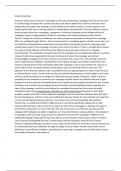
Stars are classified based on their spectral characteristics and temperature. The main classification system is the Hertzsprung-Russell (H-R) diagram, which categorizes stars into several spectral types: O-Type: Very hot (over 30,000 K), blue stars. They are massive and have strong ionized helium lines. B-Type: Hot (10,000-30,000 K), blue to blue-white stars. They show neutral helium lines and strong hydrogen lines. A-Type: White to blue-white stars (7,500-10,000 K). They have strong hydrogen lines and are less hot than B-type stars. F-Type: Yellow-white stars (6,000-7,500 K). They show metallic lines and weaker hydrogen lines. G-Type: Yellow stars (5,000-6,000 K), like the Sun. They have strong metallic lines and moderate hydrogen lines. K-Type: Orange stars (3,500-5,000 K). They have prominent metal lines and weak hydrogen lines. M-Type: Red stars (below 3,500 K). They are cooler and have strong molecular bands. These classifications also consider a star's luminosity, leading to further divisions into main sequence, giants, and supergiants.
Written for
- Study Level
-
A/AS Level
- Examinator
-
AQA
- Subject
-
Physics
Document information
- Uploaded on
- September 10, 2024
- Number of pages
- 1
- Written in
- 2024/2025
- Type
- SUMMARY
Subjects