Sampling methods
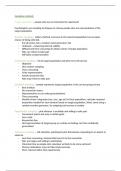
Target population – people who we are interested to experiment
Psychologists use sampling techniques to choose people who are representative of the
target population
Random sampling – lottery method, everyone in the selected population has an equal
chance of being selected.
- Put all names into a random name generator/ hat
- Unbiased – enhancing internal validity.
- Difficult and time consuming to obtain names of target population
- Ppts can refuse to take part
- Still fairly unrepresentative
Systematic sampling – list of target population and pick every nth person
- Objective
- Like random sampling
- Time consuming
- Fairly representative
- Avoids researcher bias
- Ppts may refuse to take part
Stratified sampling – sample represents target population in the correct groups/strata
- Best method
- No researcher biases
- Representative so can make generalisations
- Time consuming
- Identify strata/ subgroups (sex, race, age etc) in their population, calculate required
proportion needed for each stratum based on target population. Select same using a
random number generator, by assigning each person a number
Opportunity sampling – pick whoever is available and willing to take part
- Convenient (quick and easy to obtain ppts)
- Less costly
- Researcher Bias
- Not representative of target group as a whole so findings can't be confidently
generalised.
Volunteer sampling – self-selection, participants pick themselves responding to an advert or
asked to.
- Less time consuming, minimal effort put in by the researcher
- Ppts are happy and willing to participate
- Volunteer bias as people who volunteer as likely to be more extrovert
- Money motivations may not take study seriously.
- More representative than opportunity.
Target population – people who we are interested to experiment
Psychologists use sampling techniques to choose people who are representative of the
target population
Random sampling – lottery method, everyone in the selected population has an equal
chance of being selected.
- Put all names into a random name generator/ hat
- Unbiased – enhancing internal validity.
- Difficult and time consuming to obtain names of target population
- Ppts can refuse to take part
- Still fairly unrepresentative
Systematic sampling – list of target population and pick every nth person
- Objective
- Like random sampling
- Time consuming
- Fairly representative
- Avoids researcher bias
- Ppts may refuse to take part
Stratified sampling – sample represents target population in the correct groups/strata
- Best method
- No researcher biases
- Representative so can make generalisations
- Time consuming
- Identify strata/ subgroups (sex, race, age etc) in their population, calculate required
proportion needed for each stratum based on target population. Select same using a
random number generator, by assigning each person a number
Opportunity sampling – pick whoever is available and willing to take part
- Convenient (quick and easy to obtain ppts)
- Less costly
- Researcher Bias
- Not representative of target group as a whole so findings can't be confidently
generalised.
Volunteer sampling – self-selection, participants pick themselves responding to an advert or
asked to.
- Less time consuming, minimal effort put in by the researcher
- Ppts are happy and willing to participate
- Volunteer bias as people who volunteer as likely to be more extrovert
- Money motivations may not take study seriously.
- More representative than opportunity.