Role of the father
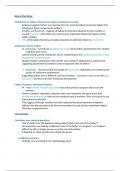
Attachment to fathers (found from stages of attachment study)
- Evidence suggests fathers are important but are much less likely to become babies first
attachment figure compared to mothers.
- Schaffer and Emerson – majority of babies first became attached to their mother at
around 7 months. most fathers go onto become important attachment figures of the
babies studied.
- 75% of the babies formed a secondary attachment with their father by 18 months.
Distinctive role for fathers
Grossman – carried out a longitudinal study where babies attachments were studied
until they were teens
- Looked at both parent’s behaviour and its relationship to the quality of their baby's later
attachments to other people
- Quality of baby’s attachment with mother was related to attachment in adolescence,
suggesting attachment to mothers is more important than to fathers
Grossman – also found that the quality of fathers play with babies was related to the
quality of adolescent attachments.
- Suggesting fathers have a different role from mothers – one that is more to do with play
stimulation and less to do with emotional development
Father as primary attachment figures
Field – filmed 4-month-old babies found that primary caregiver fathers are like
mothers.
- Primary caregiver regardless of gender were more attentive and spent more time
smiling and imitating and take on the emotional role of mothers. (Part of reciprocity and
interactional synchrony)
- This suggests although mothers are often expected to become primary caregivers,
fathers have the potential to be the more emotion focused primary attachment figure.
(Sensitive responsiveness).
EVALUATION
Confusion over research questions
- Lack of clarity over the questions being asked (what is the role of the father?)
- All researchers are looking at different roles of the father as caregivers, so it makes it
difficult to offer a simple answer as to the role of the father
- It depends on what specific role is being discussed.
Conflicting evidence
- Findings vary according to the methodology used
Attachment to fathers (found from stages of attachment study)
- Evidence suggests fathers are important but are much less likely to become babies first
attachment figure compared to mothers.
- Schaffer and Emerson – majority of babies first became attached to their mother at
around 7 months. most fathers go onto become important attachment figures of the
babies studied.
- 75% of the babies formed a secondary attachment with their father by 18 months.
Distinctive role for fathers
Grossman – carried out a longitudinal study where babies attachments were studied
until they were teens
- Looked at both parent’s behaviour and its relationship to the quality of their baby's later
attachments to other people
- Quality of baby’s attachment with mother was related to attachment in adolescence,
suggesting attachment to mothers is more important than to fathers
Grossman – also found that the quality of fathers play with babies was related to the
quality of adolescent attachments.
- Suggesting fathers have a different role from mothers – one that is more to do with play
stimulation and less to do with emotional development
Father as primary attachment figures
Field – filmed 4-month-old babies found that primary caregiver fathers are like
mothers.
- Primary caregiver regardless of gender were more attentive and spent more time
smiling and imitating and take on the emotional role of mothers. (Part of reciprocity and
interactional synchrony)
- This suggests although mothers are often expected to become primary caregivers,
fathers have the potential to be the more emotion focused primary attachment figure.
(Sensitive responsiveness).
EVALUATION
Confusion over research questions
- Lack of clarity over the questions being asked (what is the role of the father?)
- All researchers are looking at different roles of the father as caregivers, so it makes it
difficult to offer a simple answer as to the role of the father
- It depends on what specific role is being discussed.
Conflicting evidence
- Findings vary according to the methodology used