Behavioural approach to treating phobias.
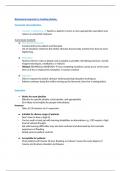
Systematic desensitisation
- Counter conditioning Teaches a patient to learn a more appropriate association and
reduce an unwanted response.
3 processes involved:
The anxiety hierarchy
- Constructed by the patient and therapist.
- List of situations related to the phobic stimulus that provoke anxiety from least to most
frightening.
Relaxation
- Teaches client to relax as deeply and as quickly as possible. (breathing exercises, mental
imagery techniques, meditation, or Valium)
- (Wolpe) RECIPROCAL INHIBITION two competing emotions cannot occur at the same
time so if fear is replaced by relaxation, it cannot continue
Exposure
- Client is exposed to phobic stimulus whilst practicing relaxation techniques.
- Patient continues doing this whilst moving up the hierarchy, then fear is extinguished.
Evaluation
Works for most phobias
- Effective for specific phobia, social phobia, and agoraphobia
- SD is likely to be helpful for people with phobias
However
- Takes 25-30 sessions so it’s expensive.
Suitable for diverse range of patients
- Don’t have to have a high IQ.
- Can be used to treat ppl with learning disabilities as alternatives e.g., CBT require a high
level of rational thought
- Ppl with learning difficulties may also feel confused and distressed by the traumatic
experience of flooding
- Simple process patient controls
Acceptable for patients
- Most patients will choose SD over flooding as it doesn’t cause the same degree of
trauma and involves relaxation techniques.
Systematic desensitisation
- Counter conditioning Teaches a patient to learn a more appropriate association and
reduce an unwanted response.
3 processes involved:
The anxiety hierarchy
- Constructed by the patient and therapist.
- List of situations related to the phobic stimulus that provoke anxiety from least to most
frightening.
Relaxation
- Teaches client to relax as deeply and as quickly as possible. (breathing exercises, mental
imagery techniques, meditation, or Valium)
- (Wolpe) RECIPROCAL INHIBITION two competing emotions cannot occur at the same
time so if fear is replaced by relaxation, it cannot continue
Exposure
- Client is exposed to phobic stimulus whilst practicing relaxation techniques.
- Patient continues doing this whilst moving up the hierarchy, then fear is extinguished.
Evaluation
Works for most phobias
- Effective for specific phobia, social phobia, and agoraphobia
- SD is likely to be helpful for people with phobias
However
- Takes 25-30 sessions so it’s expensive.
Suitable for diverse range of patients
- Don’t have to have a high IQ.
- Can be used to treat ppl with learning disabilities as alternatives e.g., CBT require a high
level of rational thought
- Ppl with learning difficulties may also feel confused and distressed by the traumatic
experience of flooding
- Simple process patient controls
Acceptable for patients
- Most patients will choose SD over flooding as it doesn’t cause the same degree of
trauma and involves relaxation techniques.